Imagine your heart suddenly racing, your chest tightening, and an overwhelming wave of terror washing over you — even though you’re perfectly safe at home or in a meeting. For approximately 6 million American adults living with panic disorder, this frightening scenario isn’t rare; it’s a recurring reality that can strike without warning.
Many people spend years trying ineffective home remedies, avoiding triggers, or fearing the side effects of medication, which only delays meaningful relief and allows symptoms to worsen. The good news is that 2026 brings more proven, accessible solutions than ever before.
In this comprehensive, updated guide, you’ll discover the most effective panic attacks treatment options available today — including breakthrough intensive therapies, proven non-drug techniques, and clear guidance on when medication fits into the picture. You’ll learn exactly what works, why it works, and how to choose the right approach for your life.
For a broader foundation, see our guide on Signs of Mental Health Issues: The Ultimate Guide to Panic Attacks: Causes, Symptoms & How to Overcome Them for Good (2026)
What Are Panic Attacks and Panic Disorder?
Panic attacks and panic disorder are more than just feeling stressed — they involve sudden, intense surges of fear accompanied by strong physical symptoms. Understanding the difference is the first step toward effective panic attacks treatment options.
Recognizing the Signs of a Panic Attack
A true panic attack reaches peak intensity within minutes and includes at least four of these symptoms:
- Heart palpitations or accelerated heart rate
- Shortness of breath or sensations of choking
- Chest pain or discomfort
- Dizziness, lightheadedness, or feeling faint
- Trembling or shaking
- Fear of dying, losing control, or “going crazy”
These episodes often lead people to emergency rooms because the physical sensations feel life-threatening — even though they are not.
Panic Disorder vs. Occasional Panic Attacks
Not everyone who has a panic attack develops panic disorder. Panic disorder is diagnosed when someone experiences recurrent unexpected attacks followed by at least one month of persistent worry about having another attack or significant behavior changes (such as avoiding places or situations). According to the National Institute of Mental Health, about 2.7% of U.S. adults — roughly 6 million people — meet criteria for panic disorder in any given year.
Why Early Intervention Matters
Starting treatment early prevents complications like agoraphobia (fear of situations where escape might be difficult) and secondary depression. The sooner you address panic attacks treatment options, the faster you can regain control of your life.
Why Choosing the Right Panic Attacks Treatment Options Matters in 2026
Untreated panic disorder carries a heavy price. People often miss work, strain relationships, and make frequent ER visits. The annual economic burden in the United States runs into billions, but the personal cost — constant fear and limited freedom — is even greater.
The Cost of Untreated Panic Disorder
Beyond lost productivity, untreated panic disorder increases risk of depression, substance use, and social isolation. Many describe living in a state of “high alert,” always scanning for the next attack.
Long-Term Benefits of Evidence-Based Care
With proper treatment, 70–90% of people achieve significant or complete remission. Modern panic attacks treatment options not only reduce attacks but also rebuild confidence and restore daily functioning. The difference between struggling for years and living freely often comes down to choosing evidence-based care early.
Evidence-Based Panic Attacks Treatment Options in 2026
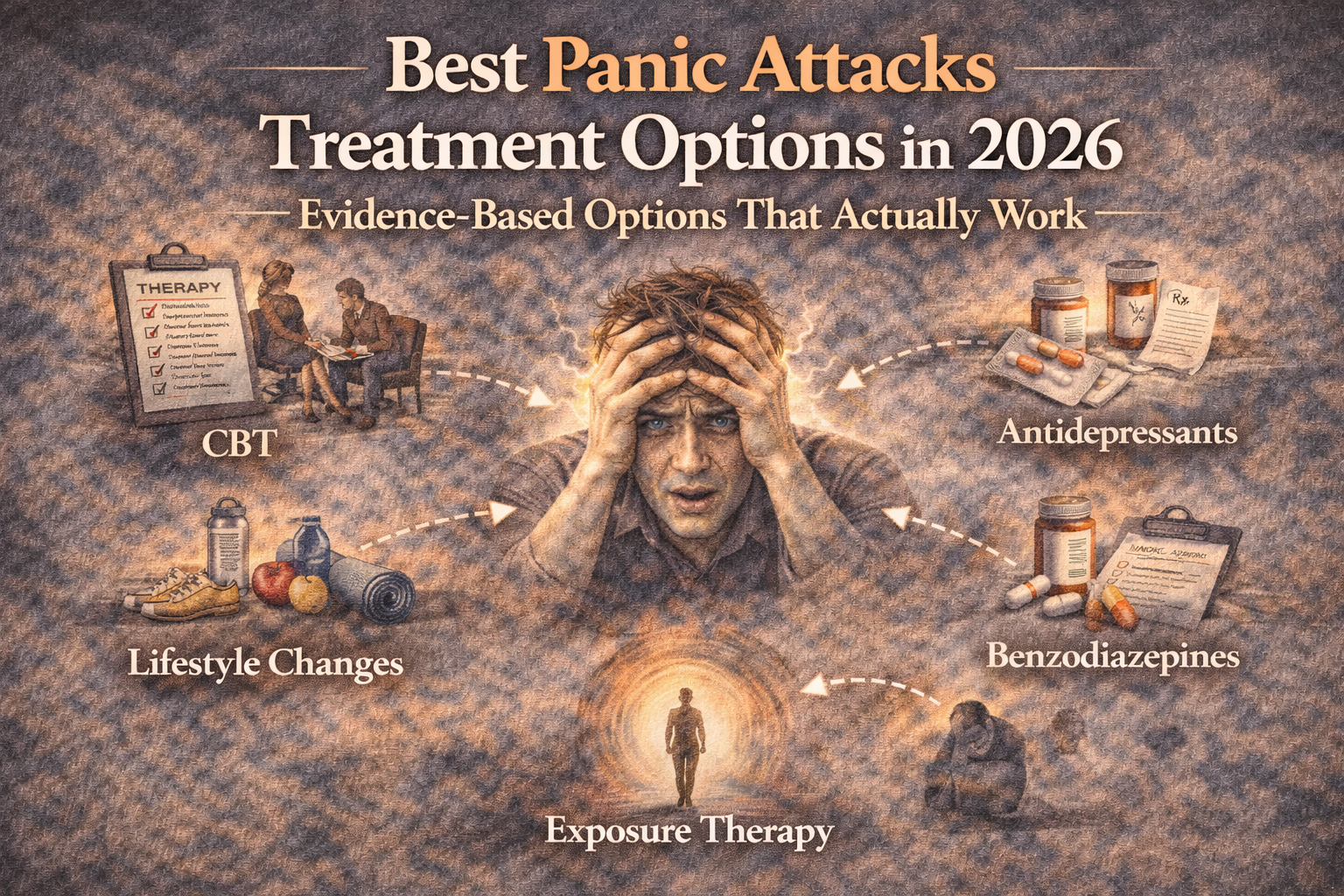
The landscape of panic attacks treatment options has advanced significantly. Today’s first-line approaches combine proven psychological techniques with, when needed, targeted medication.
Best Panic Attack Treatments 2026 – Overview Table
| Treatment Approach | Best For | Typical Success Rate | Time to Notice Improvement |
| Cognitive Behavioral Therapy (CBT) | Most people, especially long-term relief | 60–80% remission | 4–12 weeks |
| Intensive formats (e.g., Bergen 4-Day) | Those wanting rapid results | Up to 90% remission | 4 days + follow-up |
| Medication (SSRIs/SNRIs) | Moderate-severe symptoms | 50–70% response | 4–6 weeks |
| Medication-free techniques + lifestyle | Mild cases or preference for non-drug | 60–80% with consistency | 2–8 weeks |
| Combined CBT + Medication | Severe or complex cases | Highest long-term | Varies |
First-Line Recommendations from Latest Guidelines
APA, AAFP, and NICE guidelines continue to position CBT as the treatment with the strongest evidence base for panic disorder. It addresses both the physical sensations and the catastrophic thoughts that fuel the cycle.
Emerging 2026 Options
New research highlights concentrated formats and innovative interoceptive methods (more on these below). These options make effective care more accessible and faster-acting than ever.
For a broader foundation, see our guide on Signs of Mental Health Issues: What Causes Panic Attacks? The Real Risk Factors Doctors Want You to Know
How to Stop Panic Attacks Without Medication
Many people successfully manage or eliminate panic attacks using natural evidence-based panic relief techniques. These strategies work by teaching your body and mind that the sensations are safe.
Stop Panic Attacks Without Medication – Proven Strategies
- 4-7-8 Breathing: Inhale quietly through the nose for 4 seconds, hold for 7, exhale through the mouth for 8. Repeat 4 times.
- 5-4-3-2-1 Grounding: Name 5 things you see, 4 you can touch, 3 you hear, 2 you smell, 1 you taste.
- Progressive Muscle Relaxation: Tense and release muscle groups from toes to head.
Natural Evidence-Based Panic Relief Techniques
Mindfulness-based practices and apps can reinforce these skills. Many people find guided sessions particularly helpful during early recovery.
Lifestyle Changes That Deliver Results
Regular aerobic exercise (30 minutes most days), cutting caffeine, and prioritizing 7–9 hours of sleep dramatically reduce attack frequency for many.
Pro Tip: Keep a “panic attack log” noting triggers, symptoms, and what helped. Patterns emerge quickly and make future episodes far less scary.
Best Therapy for Panic Attacks 2026
Cognitive behavioral therapy remains the gold-standard best therapy for panic attacks 2026, but delivery formats have evolved for faster, more powerful results.
Cognitive Therapy for Panic Attacks – The Gold Standard
CBT helps you identify and reframe catastrophic thoughts (“This heart racing means I’m having a heart attack”) while using exposure to prove the sensations are harmless.
Interoceptive Exposure Panic Treatment Explained
This technique intentionally brings on feared body sensations in a safe, controlled way so your brain learns they are not dangerous.
Bergen 4-Day Intensive CBT – Breakthrough Results
This concentrated format delivers CBT over four consecutive days with therapist support. A 2025 longer-term follow-up study found 90% of participants in remission at 18 months, with gains stable over time.
Expert Insight: “The concentrated format removes the waiting between sessions that can allow avoidance to creep back in,” notes clinicians familiar with the Bergen model.
Panic Attacks Treatment Options With Medication
Medication can be a helpful part of panic attacks treatment options when symptoms are severe or CBT alone isn’t enough initially.
When Medication Becomes Part of Your Plan
SSRIs (sertraline, fluoxetine, escitalopram) and SNRIs (venlafaxine) are first-line choices. They reduce the frequency and intensity of attacks by balancing brain chemistry and are generally well-tolerated long-term.
Short-Term vs. Long-Term Use
Benzodiazepines (e.g., alprazolam) provide rapid relief but are recommended only for acute crises due to dependence risk. They are not a long-term solution.
Important: Always discuss medication with your healthcare provider. This article is for informational purposes only and is not a substitute for professional medical advice.
How to Choose the Best Panic Attacks Treatment Options for You
The right choice depends on your symptoms, preferences, and lifestyle.
Factors to Consider in 2026
- Severity and frequency of attacks
- Access to in-person or teletherapy
- Preference for medication-free approaches
- Co-occurring conditions like depression
Many start with CBT or intensive formats. If symptoms interfere significantly with daily life, combining therapy with medication often gives the fastest relief.
Scientific Evidence & Research
Decades of research support today’s panic attacks treatment options, with exciting new data in 2025–2026.
Clinical Studies
- The 2025 longer-term follow-up of Bergen 4-Day Treatment showed 90% remission sustained at 18 months (PMC full text available).
- A February 2026 randomized controlled trial in Frontiers in Psychiatry found a 12-week program of brief intense intermittent exercise (as interoceptive exposure) superior to relaxation training for reducing panic severity.
- The largest 2025 CBT meta-analysis confirmed large effect sizes for panic disorder.
Expert Opinions
UpToDate (May 2025 update) continues to recommend CBT, with or without medication, as first-line treatment.
Statistical Data
Combined approaches achieve 70–90% success rates, with many people maintaining gains years later.
External Links:
- Mayo Clinic Panic Disorder Treatment Page
- NIH/NIMH Panic Disorder Statistics & Research
- PMC Full Text – Bergen 4DT Long-Term Follow-Up
Common Mistakes to Avoid
Even with excellent panic attacks treatment options, certain pitfalls can slow progress.
Mistake #1: Relying Only on Benzodiazepines Long-Term
Why it’s problematic: Risk of dependence and tolerance. Better approach: Use CBT as the foundation and reserve short-acting meds for crises only.
Mistake #2: Avoiding Triggers Instead of Facing Them
This leads to agoraphobia and shrinks your world. Better: Guided, gradual exposure with professional support.
Mistake #3: Expecting Instant Results
CBT typically takes 8–12 weeks for full benefits. Consistency and patience are key.
Frequently Asked Questions (FAQs)
What are the best panic attack treatments 2026?
The most effective panic attacks treatment options in 2026 combine cognitive behavioral therapy (especially with interoceptive exposure) and, when needed, SSRIs. New intensive 4-day protocols and brief intense exercise programs show the highest long-term remission rates. Work with a provider to personalize your plan.
Can you stop panic attacks without medication?
Yes — 60–80% of people achieve significant or complete relief using CBT, interoceptive techniques, breathing exercises, and lifestyle changes alone. Many prefer this route and maintain results long-term when they practice consistently.
How effective is cognitive therapy for panic attacks?
CBT is the gold-standard treatment with large effect sizes across multiple 2025 meta-analyses. Most people see substantial improvement within 8–12 weeks, with many reaching full remission.
What is interoceptive exposure panic treatment?
It is a proven technique that safely recreates the physical sensations of panic (through exercise, breathing, or other methods) so your brain learns they are not dangerous. The February 2026 RCT showed brief intense intermittent exercise as a highly effective form.
Are there new evidence-based panic treatments in 2026?
Yes — concentrated Bergen 4-Day CBT (90% remission at 18 months) and brief intense intermittent exercise protocols stand out as exciting, accessible advances.
How long until panic attacks treatment options work?
Many notice meaningful improvement in 4–6 weeks with consistent CBT or lifestyle work. Full benefits often appear by 8–12 weeks; intensive formats can accelerate this timeline dramatically.
Conclusion
Evidence-based panic attacks treatment options — especially CBT, interoceptive exposure, the Bergen 4-Day intensive format, and targeted lifestyle changes — offer genuine hope and lasting freedom in 2026. You no longer have to live in fear or let panic control your choices.
Your next step is clear: Schedule a consultation with a CBT-trained therapist or speak with your doctor this week. Even one conversation can start the transformation.
Download our free “Panic Relief Toolkit” (breathing scripts, symptom tracker, and resource list) or book a telehealth session today. You deserve to feel safe and in control again.
Effective help is available right now — and you’ve already taken the first step by reading this far. You’ve got this.
Medical Disclaimer:
This article is for informational and educational purposes only and does not constitute medical advice. The information provided should not be used for diagnosing or treating a health problem or disease. Always consult with a qualified healthcare professional before making any changes to your mental health treatment, starting new medications, or trying new techniques.
If you are experiencing a mental health crisis, please call or text 988 (Suicide & Crisis Lifeline) or visit your nearest emergency room. For non-emergency support, contact the SAMHSA National Helpline at 1-800-662-HELP (4357).
Content based on research and expert consensus as of February 2026; medical knowledge continues to evolve.