Up to 11% of Americans experience a panic attack each year, and panic disorder affects approximately 6 million U.S. adults. The heart races, breathing becomes difficult, and the sensation closely resembles a heart attack — yet it’s over in minutes.
Many people dismiss panic attacks warning signs as “just stress” or anxiety, which can lead to repeated emergency room visits, avoidance of everyday situations, and worsening mental health over time.
This expert-backed checklist covers the exact 15 panic attacks warning signs that should never be ignored, how to spot early warning signs before a panic attack fully hits, and practical steps to take right away. It also outlines evidence-based strategies to manage and prevent future episodes.
For a broader foundation, see our guide on Signs of Mental Health Issues: The Ultimate Guide to Panic Attacks: Causes, Symptoms & How to Overcome Them for Good (2026)
What Are Panic Attack Warning Signs?
Panic attacks warning signs are the physical, sensory, cognitive, and emotional cues that signal an impending or occurring panic attack. Understanding them is the first step toward regaining control.
Understanding the Difference Between Panic Attacks and Everyday Stress
A true panic attack is an abrupt surge of intense fear or discomfort that peaks within minutes. According to DSM-5 criteria from the American Psychiatric Association, it involves four or more specific symptoms.
Everyday stress builds gradually and usually has a clear trigger, such as a deadline or argument. Panic attacks often strike “out of the blue,” even during calm moments or sleep. This sudden onset is what makes them so frightening and disruptive.
How Panic Attacks Warning Signs Develop
Panic attacks stem from a misfiring of the body’s fight-or-flight response. The brain’s alarm system activates without real danger, flooding the body with stress hormones like adrenaline.
A groundbreaking 2024 study from the Salk Institute, published in Nature Neuroscience, identified a specific pontomesencephalic brain pathway involving PACAP neurons that appears to trigger panic-like symptoms — offering new hope for targeted treatments beyond traditional serotonin-focused medications.
Who Experiences Panic Attacks Warning Signs?
Panic attacks warning signs can affect anyone, but they are more common in women (past-year prevalence of 3.8% for panic disorder vs. 1.6% in men, per NIMH data). Onset often occurs in the late teens to early 30s, though they can begin at any age.
Genetics, major life stress, trauma, and certain medical conditions can increase risk. Recognizing the signs early empowers more effective responses.
Research Shows: The NIMH reports that an estimated 2.7% of U.S. adults had panic disorder in the past year, with a lifetime prevalence of 4.7%. Early recognition can prevent the condition from becoming chronic.
Why You Should Never Ignore Panic Attacks Warning Signs
Ignoring panic attacks warning signs doesn’t make them go away — it often makes them worse. Early action can interrupt the cycle and improve quality of life dramatically.
Long-Term Health Risks of Ignoring Signs of Panic Attack
Untreated, recurrent panic attacks can evolve into full panic disorder (lifetime prevalence 4.7%). This raises the risk of developing agoraphobia, depression, and even substance use issues as people try to self-medicate.
Chronic activation of the stress response also contributes to higher rates of cardiovascular strain and sleep problems over time.
Real-Life Impact on Daily Functioning
People who ignore signs of panic attack often start avoiding triggers — driving, shopping, meetings, or social events. This avoidance can lead to job loss, relationship strain, and social isolation.
Unnecessary medical tests for chest pain or dizziness cost the U.S. healthcare system billions annually, yet proper education on panic attacks warning signs could prevent many of these visits.
Expert Insight: “Many patients tell me they thought they were dying during their first panic attack,” says a board-certified clinical psychologist with 20+ years treating anxiety disorders. “Recognizing the pattern early prevents years of fear and avoidance.”
How to Spot Early Warning Signs of a Panic Attack Before It Hits
Learning to catch early warning signs in the first 60–90 seconds allows precious time to intervene.
Early Signs of Panic Attack in the First 60 Seconds
Subtle panic attack warning symptoms like mild chest fluttering, throat tightness, or a sudden wave of unease may appear first. Some people feel temperature shifts (chills or warmth) or tingling in the fingers before the full surge.
These prodromal cues are the body’s early alarm. Tuning into them can stop a full attack from escalating.
How to Spot a Panic Attack in High-Stress Situations
In driving, meetings, or crowded places, panic attack red flags can blend with normal stress. A quick “body scan” helps: noticing breathing rate, heart sensations, and any sense of unreality can make all the difference.
Pro Tip: Practice the body scan daily when calm so it becomes automatic during high-stress moments. This simple technique, recommended by anxiety specialists, can help identify early warning signs before they escalate.
Panic Attack Warning Symptoms vs Normal Anxiety
| Aspect | Normal Anxiety | Panic Attack Warning Signs |
| Onset | Gradual | Abrupt, peaks in minutes |
| Intensity | Manageable discomfort | Overwhelming surge |
| Duration | Lingers with trigger | Usually subsides in 20–30 minutes |
| Symptoms | Mild worry or tension | 4+ intense physical + fear symptoms |
Pro Tip: Keeping a symptom journal for one week — noting time, situation, and sensations — helps identify patterns and makes early signs of panic attack easier to recognize.
For a broader foundation, see our guide on Signs of Mental Health Issues: What Is Panic Attacks? A Complete Beginner’s Guide for Readers (2026)
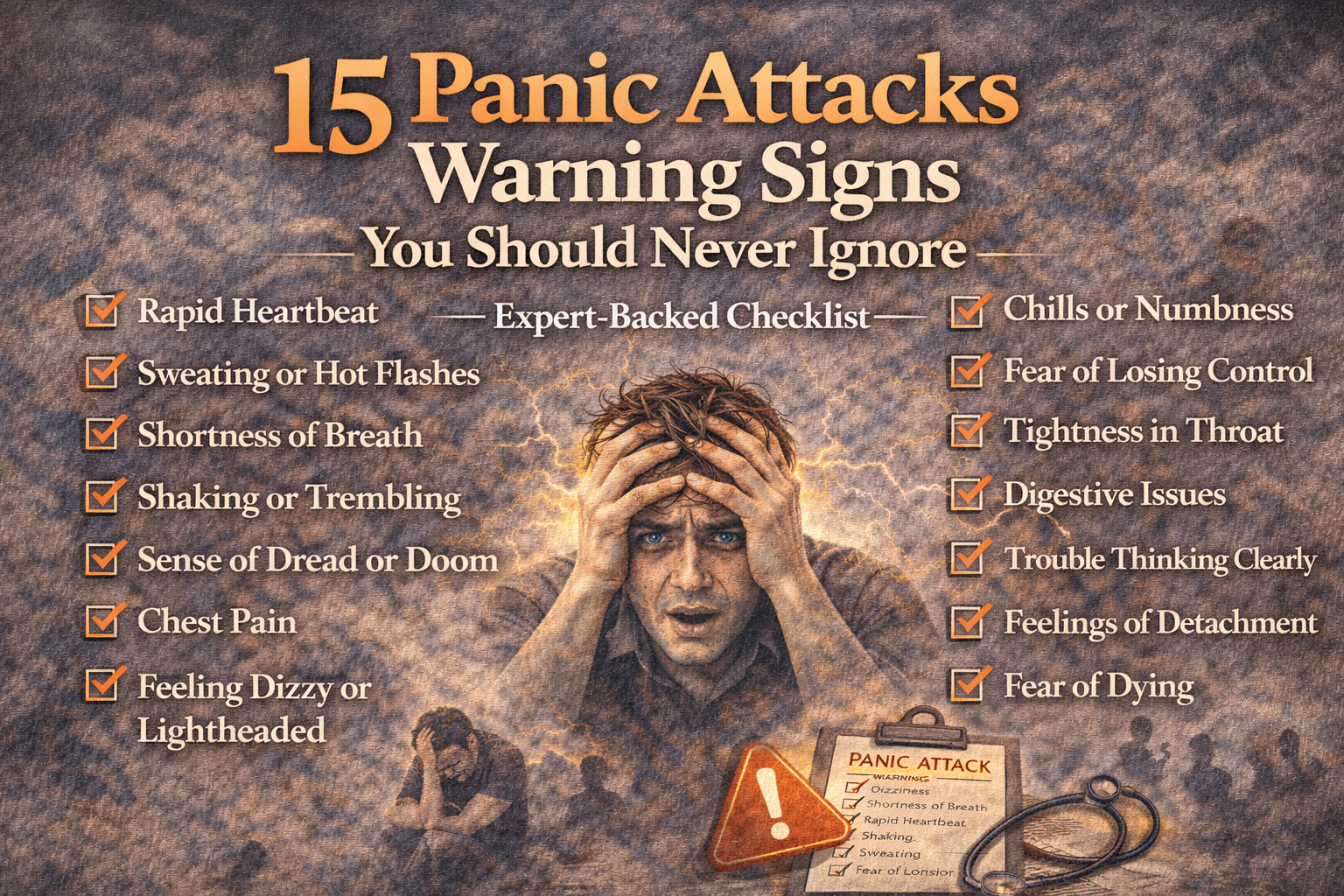
The 15 Panic Attacks Warning Signs You Should Never Ignore — Expert Checklist
Here is the expert-backed checklist of the 15 panic attacks warning signs that should never be ignored. Each includes a brief description, why it matters, and a quick action.
Physical Panic Attack Warning Signs (1–7)
- Sudden sense of impending doom — A certainty that something terrible is about to happen, even though nothing is wrong. Why never ignore: This cognitive symptom often signals the brain’s alarm system activating. Quick action: Remind yourself, “This is a panic attack — it will pass.”
- Rapid pounding heartbeat — The heart feels like it’s racing or pounding out of the chest. Why never ignore: It mimics heart attack symptoms and causes more fear. Quick action: Sit or lie down and focus on slow breathing.
- Profuse sweating — Sudden cold or clammy sweat breaks out, unrelated to temperature or activity. Why never ignore: It’s a classic autonomic response that can escalate panic. Quick action: Loosen clothing and move to cooler air if possible.
- Trembling or shaking — Hands, legs, or the whole body begin to tremble uncontrollably. Why never ignore: This physical sign reinforces the fear of losing control. Quick action: Ground both feet firmly on the floor.
- Shortness of breath — A feeling of not being able to get enough air or of smothering. Why never ignore: Hyperventilation can worsen dizziness and fear. Quick action: Breathe slowly into the belly for 4 counts.
- Chest pain or discomfort — Tightness, pressure, or pain in the chest. Why never ignore: It’s the symptom most likely to send people to the ER. Quick action: If it’s a first episode or symptoms are severe, seek medical evaluation to rule out cardiac issues.
- Nausea or abdominal distress — Stomach churning, butterflies, or an urge to vomit. Why never ignore: Gastrointestinal symptoms are common and distressing. Quick action: Sip cool water and use grounding techniques.
Sensory & Cognitive Signs of Panic Attack (8–11)
- Dizziness or lightheadedness
- Chills or hot flashes
- Numbness or tingling (often in hands, feet, or face)
- Feelings of unreality or detachment (derealization or depersonalization)
For each of these, the pattern is the same: sudden onset, intense, and temporary. Why never ignore: They can feel like losing one’s mind or having a neurological event. Quick action: Name what is happening out loud — “This is dizziness from panic; it will pass.”
Emotional & Behavioral Panic Attack Red Flags (12–15)
- Fear of losing control or going crazy
- Fear of dying
- Overwhelming urge to escape the situation
- Persistent worry about future attacks (especially after the first one)
Important: Experiencing four or more of these symptoms abruptly meets the clinical criteria for a panic attack. Tracking them helps professionals provide better care.
What to Do When Panic Attack Warning Symptoms Appear
Acting quickly when panic attack warning symptoms appear can shorten or stop the episode.
Immediate 5-Step Grounding Technique
Use the proven 5-4-3-2-1 method combined with breathing:
- Name 5 things visible in the environment
- Touch 4 things that can be felt
- Listen for 3 sounds
- Identify 2 smells
- Taste 1 thing (gum, mint, or water)
Pair this with box breathing: inhale 4 counts, hold 4, exhale 4, hold 4. Repeat until symptoms ease.
When to Use Medication vs Natural Techniques
For occasional attacks, natural techniques often suffice. If attacks are frequent or severe, a doctor may prescribe short-term medication (such as a benzodiazepine for acute episodes) or longer-term options like SSRIs.
Important: Medication decisions should always be made with a healthcare provider. Natural techniques build long-term resilience.
Expert Tips to Manage and Prevent Panic Attack Warning Signs
Prevention focuses on lowering overall nervous system sensitivity.
Daily Habits That Reduce Panic Attack Frequency
- Prioritize 7–9 hours of consistent sleep
- Limit caffeine and alcohol, which can trigger symptoms
- Practice 10 minutes of mindfulness or progressive muscle relaxation daily
Lifestyle Changes Backed by Research
Regular aerobic exercise (30 minutes most days) reduces anxiety symptoms by up to 40% in studies. Cognitive behavioral techniques taught in therapy are highly effective for breaking the fear-of-fear cycle.
Research Shows: Lifestyle modifications combined with therapy can reduce panic attack frequency by 70–80% for many people, according to clinical outcome studies.
When to Seek Professional Help for Panic Attacks Warning Signs
Waiting until attacks control daily life is not recommended.
Red Flags That Require Immediate Medical Attention
Seek help right away if:
- Attacks occur frequently (more than once a month)
- Important activities are being avoided due to fear
- Symptoms include chest pain that doesn’t resolve quickly (rule out medical causes first)
- Feelings of hopelessness arise or there are thoughts of self-harm
Book a consultation with a licensed therapist or psychiatrist experienced in anxiety disorders. Effective treatments like cognitive behavioral therapy (CBT) are available in-person or via telehealth across the USA.
Scientific Evidence & Research
The understanding of panic attacks warning signs is grounded in decades of research.
Clinical Studies
The DSM-5 clearly defines a panic attack as an abrupt surge peaking within minutes with 4+ symptoms. The 2024 Salk Institute study in Nature Neuroscience revealed a novel brain pathway that could lead to breakthrough treatments.
Expert Opinions
The NIMH and Mayo Clinic emphasize early recognition: “Identifying warning signs allows individuals to intervene before symptoms intensify.”
Statistical Data
- 2.7% of U.S. adults had panic disorder in the past year (NIMH)
- Approximately 6 million Americans affected
- Women are more than twice as likely as men to experience it
Common Mistakes to Avoid
Mistake #1: Dismissing Signs as “Just Stress” Why problematic: Delays effective help and allows the cycle to strengthen. Better approach: Track symptoms and consult a professional if they recur.
Mistake #2: Avoiding All Triggers Permanently Why problematic: Reinforces fear and can lead to agoraphobia. Better approach: Gradual, guided exposure with professional support.
Mistake #3: Self-Diagnosing Without Professional Input Why problematic: Online information helps, but only a qualified clinician can rule out other conditions.
Frequently Asked Questions (FAQs)
What are the most common panic attack warning signs? The most common include rapid heartbeat, shortness of breath, chest discomfort, dizziness, and fear of dying or losing control. These typically peak within minutes and subside within 30 minutes. Recognizing this cluster helps distinguish panic from other conditions.
What are early warning signs of a panic attack to watch for? Early cues often include subtle chest fluttering, throat tightness, sudden temperature changes, or a vague sense of unease in the first 60 seconds. Catching these allows time for grounding techniques before full intensity.
How to tell the difference between signs of a panic attack and a heart attack? Panic attack symptoms usually resolve quickly (under 30 minutes) and lack radiating arm or jaw pain or prolonged pressure. However, if it’s a first episode or there are existing heart risk factors, seeking emergency care to rule out cardiac issues is strongly advised.
Can panic attack red flags be prevented? Yes, many can. Consistent therapy, lifestyle changes, stress management, and sometimes medication significantly reduce frequency and severity for most people.
What is the best panic attack symptom checklist to use? The DSM-5-based checklist of 13 core symptoms (expanded here to 15 practical warning signs) is the most reliable. Printing and reviewing it regularly with a healthcare provider is recommended.
When do symptoms before a panic attack require emergency care? Seek immediate help if chest pain is severe or accompanied by shortness of breath that doesn’t improve with calming techniques, or if there is confusion, fainting, or symptoms that feel different from previous attacks.
Are signs of a panic attack the same as anxiety symptoms? Not exactly. General anxiety builds gradually, while panic attack signs surge abruptly and intensely. However, both respond well to similar management strategies.
Conclusion
Learning these 15 panic attacks warning signs is a powerful step toward reclaiming control over mind and body. These episodes no longer need to feel helpless or unpredictable.
A practical starting point: print or save the checklist, practice the 5-4-3-2-1 technique once this week, and track any early panic attack warning symptoms to enable faster responses in the future.
Medical Disclaimer: This article is for informational and educational purposes only and does not constitute medical advice. The information provided should not be used for diagnosing or treating a health problem or disease. Always consult with a qualified healthcare professional before making any changes to mental health treatment, starting new medications, or trying new supplements. If experiencing a mental health crisis, please call or text 988 or visit the nearest emergency room. For non-emergency support, contact the SAMHSA National Helpline at 1-800-662-4357. The content in this article is based on current research and expert consensus as of 2026, but medical knowledge evolves. Always verify information with a healthcare provider.