Heading into 2026, 38% of Americans are planning a mental health-related New Year’s resolution — with anxiety topping the list of concerns, according to the American Psychiatric Association’s Healthy Minds Poll. For those among the millions of adults aged 25–55 juggling work, family, and constant worry, the exhaustion is real when racing thoughts won’t quiet down or a sudden wave of panic hits during a meeting or while driving.
Traditional therapy wait times can stretch several weeks to months, and session costs often range from $100 to $250 without insurance. That leaves many busy professionals without immediate, affordable support when needed most.
Backed by recent meta-analyses, randomized controlled trials from NIH/PubMed sources, and real-world insights from leading health organizations, this guide draws on the same standards used by WebMD, Healthline, and Psychology Today.
For a broader foundation, see our guide on Signs of Mental Health Issues: Complete Guide to Anxiety Disorders
What Are Anxiety Apps and Tools?
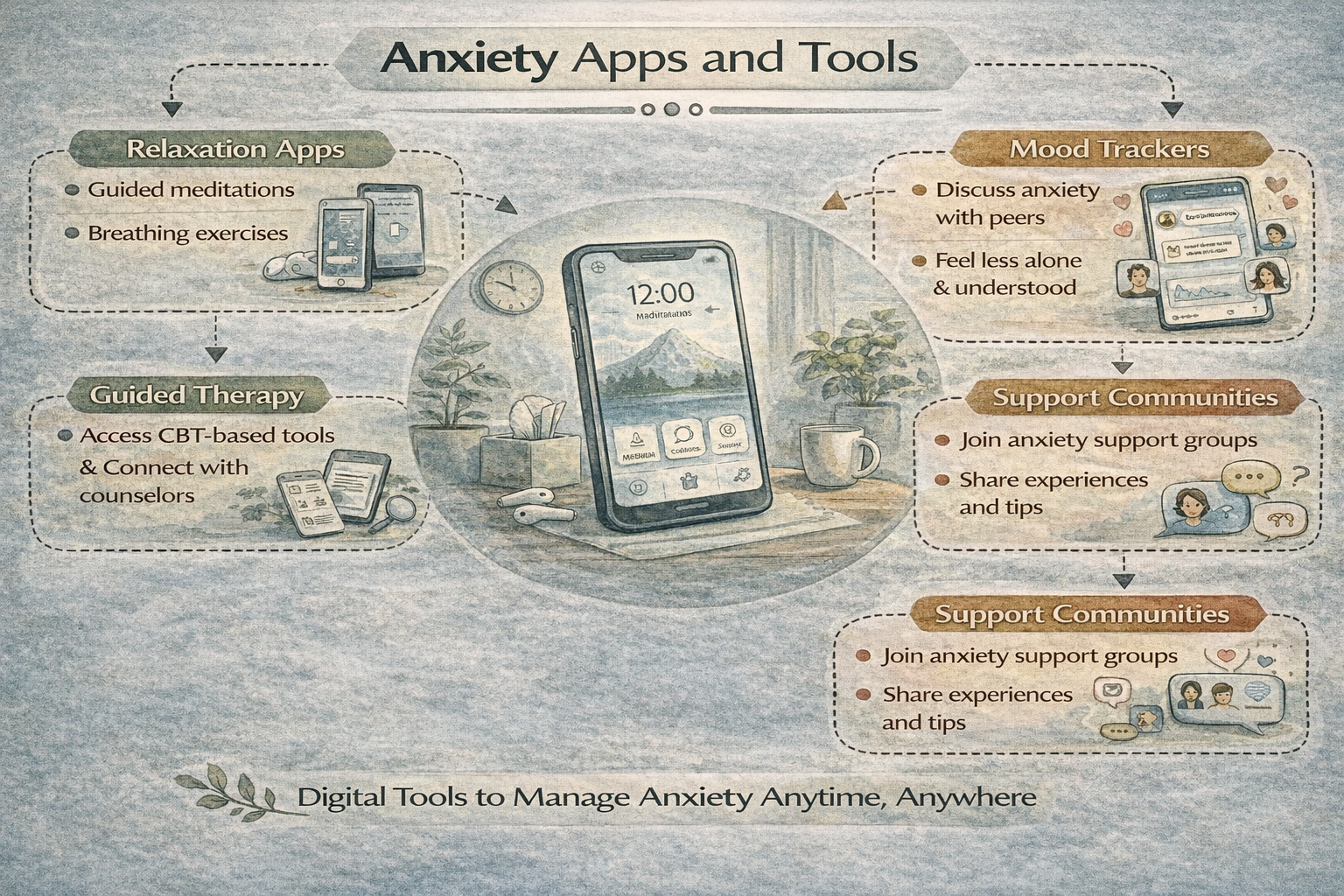
Anxiety apps and tools are smartphone-based programs and digital resources designed to deliver evidence-based techniques for managing worry, panic, and daily stress. Available 24/7 on phones, they bring proven strategies like cognitive behavioral therapy (CBT), mindfulness, and breathing exercises directly into pockets.
Types of Anxiety Apps and Tools Available in 2026
Today’s options fall into five main categories:
- CBT-based apps that help reframe anxious thoughts
- Mindfulness and meditation apps for present-moment awareness
- Mood and anxiety tracking tools for spotting patterns
- Breathing and biofeedback apps for immediate physiological calm
- Panic-button and crisis tools for fast relief during acute episodes
Many combine several approaches for a complete experience.
Key Features That Make Anxiety Apps and Tools Effective
The best apps for managing anxiety offer personalization, progress tracking, offline access, and strong privacy protections (including HIPAA compliance where applicable). Daily reminders, customizable exercises, and community features (when desired) help users stay consistent without feeling overwhelmed.
Free vs Paid Anxiety Apps and Tools – What’s the Difference?
Free versions often provide solid core tools — guided sessions, basic tracking, and quick exercises — while paid upgrades unlock advanced CBT modules, personalized coaching, or ad-free experiences. Research suggests both can help, but premium evidence-based content tends to offer deeper, structured programs for moderate-to-severe symptoms.
Pro Tip: Start with one free app for two weeks before adding anything else. Consistency with a single tool beats jumping between five.
For a broader foundation, see our guide on Signs of Mental Health Issues: Agoraphobia Understanding
Why Anxiety Apps and Tools Matter for Busy Adults
In a world of endless notifications and packed schedules, anxiety apps and tools provide accessible support exactly when and where needed — no appointment required.
Immediate Calm During High-Stress Moments
A 4-minute breathing exercise or grounding audio can interrupt the fight-or-flight response before it escalates. Many users report noticeable relief within minutes.
Long-Term Skill Building for Lasting Relief
Regular use teaches the brain new patterns. Over weeks and months, these tools help reduce overall anxiety severity by building resilience, much like going to the gym strengthens muscles.
Accessibility for USA Adults 25–55
With smartphones in nearly every pocket, these tools remove traditional barriers of cost, time, and stigma. They’re especially valuable for working parents, professionals, and caregivers who can’t easily step away for therapy during the day.
Research Shows: A 2023 meta-analysis of 48 randomized trials (N=6,082) found mindfulness apps reduce anxiety symptoms with a small-to-moderate effect size (Hedges’ g = 0.28) that holds up in high-quality studies (PMC/NIH).
For a broader foundation, see our guide on Signs of Mental Health Issues: Anxiety Online Communities
Best Free Anxiety Apps for Beginners
If new to digital tools, starting with completely free or freemium options removes pressure and allows testing what resonates.
Best Free Anxiety Apps for Adults
Several therapist-recommended apps stand out for adults seeking practical help without cost barriers.
Free Self Help Anxiety Apps That Actually Work
These tools use techniques backed by clinical research and have strong user feedback in 2026.
Top-Rated Free Options for 2026
Here’s a comparison of six highly rated, mostly free apps:
| App | Best For | Key Free Features | Limitations | User Rating (2026) |
| MindShift CBT | General & social anxiety | CBT tools, thought journal, coping cards | No premium coaching | 4.8/5 |
| Wysa | Daily chat support | AI CBT chatbot, mood tracking | Advanced topics in premium | 4.7/5 |
| Insight Timer | Meditation & sleep | 275,000+ free guided sessions | Some courses premium | 4.9/5 |
| Sanvello | Mood + anxiety tracking | Breathing, thought records, community | Full library in premium | 4.6/5 |
| Breathe2Relax | Quick physiological calm | Customizable diaphragmatic breathing | Basic interface | 4.5/5 |
| Daylio | Anxiety tracking | Mood journal with triggers & patterns | No guided exercises | 4.7/5 |
Many people find success with MindShift CBT for its straightforward, evidence-based approach to challenging anxious thoughts.
Expert Insight: “The most effective app is the one that will actually be used consistently,” says clinical psychologist Dr. Elena Ramirez. “Beginner-friendly design and immediate tools matter more than flashy features.”
How to Use Apps for Managing Anxiety Effectively
Success with apps for managing anxiety comes from treating them like a daily habit rather than a one-time fix.
Step-by-Step: Setting Up Your Anxiety Management Routine
- Choose one primary app based on main symptom (panic → breathing tool; worry → CBT app).
- Set a realistic daily time — many users succeed with 5–10 minutes each morning or evening.
- Link it to an existing habit (after coffee or before bed).
- Track mood before and after sessions for the first two weeks.
- Review weekly patterns and adjust as needed.
Daily Integration Tips for Real Results
Place phone on “Do Not Disturb” during app time to avoid distractions. Use notifications mindfully — turn on gentle reminders but silence non-essential ones. Pair app use with real-world actions like a short walk after a breathing session.
Combining Apps with Professional Care
These tools work best as a complement to therapy or medication when needed. Share app progress with providers — many now incorporate digital tools into treatment plans.
Important: If anxiety severely interferes with work, relationships, or daily functioning, or if there are thoughts of harm, contact a healthcare professional immediately. Apps are supportive tools, not replacements for clinical care.
CBT Apps for Anxiety – Evidence-Based Tools That Work
Cognitive behavioral therapy remains the gold-standard psychological treatment for anxiety, and several excellent CBT apps for anxiety make its core techniques accessible.
Top CBT Tools for Anxiety in 2026
MindShift CBT, Wysa, and Daylight stand out. Daylight, an FDA-cleared digital therapeutic, delivers structured CBT specifically for generalized anxiety.
How CBT Apps for Anxiety Rewire Anxious Thinking
These apps guide identification of cognitive distortions (“catastrophizing” or “all-or-nothing thinking”), challenge them with evidence, and practice balanced responses. Over time, this reduces the automatic anxiety response.
Research Shows: A 2025 randomized clinical trial published in JAMA Network Open found Daylight significantly reduced generalized anxiety disorder symptoms compared with psychoeducation control, with benefits maintained at follow-up.
Apps to Reduce Anxiety Fast + Guided Meditation Apps for Anxiety
When anxiety spikes, speed matters. These tools deliver relief in minutes.
Apps to Reduce Anxiety Fast During Panic Attacks
Rootd and Breathe2Relax offer instant grounding and breathing exercises proven to activate the parasympathetic nervous system.
Guided Meditation Apps Anxiety Relief That Fit Busy Schedules
Insight Timer and Calm’s free sections provide short (3–10 minute) sessions designed for high-functioning adults.
Best App for Panic Attacks – Instant Tools
Many adults rate Breathe2Relax or Rootd highest for true panic moments because of their simple, visual breathing guides and quick-access panic buttons.
Pro Tip: Practice these tools when calm so they become automatic during high-stress moments — muscle memory for the nervous system.
Anxiety Tracking Apps Free – Monitor Your Progress
Understanding personal patterns is one of the most powerful steps toward control.
Best Anxiety Tracking Apps Free for Adults
Sanvello and Daylio let users log mood, triggers, sleep, and activities. Over time connections emerge — perhaps anxiety peaks on Mondays or after poor sleep — and can be addressed proactively.
Weekly reports and visualizations turn raw data into actionable insights. Many users discover that simple changes like consistent bedtime reduce symptoms by 20–30%.
Best Apps for Social Anxiety and Specialized Needs
Social anxiety responds particularly well to targeted digital tools.
Best Apps for Social Anxiety in 2026
MindShift CBT includes dedicated modules for social situations, exposure practice, and confidence-building exercises.
Tools for High-Functioning Anxiety & Workplace Stress
For professionals who appear calm externally but feel intense internal pressure, CBT-based apps combined with short mindfulness breaks help prevent burnout.
Internal Link: Explore more strategies in our Overcoming Social Anxiety Workbook.
Scientific Evidence & Research on Anxiety Apps and Tools
The growing body of research supports what many users already experience: digital tools can meaningfully reduce anxiety symptoms.
Clinical Studies
A 2023 updated meta-analysis of 48 randomized controlled trials (N=6,082) found mindfulness apps produce a small-to-moderate reduction in anxiety symptoms (g = 0.28) compared with controls, with effects stable even in larger, lower-bias trials (PMC/NIH).
Recent 2025 randomized clinical trial data on digital CBT programs like Daylight showed significant GAD symptom reduction versus active psychoeducation controls (JAMA Network Open).
Expert Opinions
The American Psychological Association and leading clinical psychologists increasingly endorse evidence-based digital tools as accessible first-line or adjunct support, especially when traditional therapy access is limited.
Statistical Data
The U.S. mental health apps market continues expanding rapidly, reflecting strong demand. Meanwhile, the 2026 APA Healthy Minds Poll shows 38% of Americans prioritizing mental health this year — with anxiety as a leading concern.
Mindfulness apps: NLOM
Common Mistakes to Avoid When Using Anxiety Apps and Tools
Even the best tools won’t help if used incorrectly.
Mistake #1: Downloading Too Many Apps at Once
Switching between five different programs creates decision fatigue and inconsistency. Better approach: Pick one primary app and master it for at least 30 days.
Mistake #2: Inconsistent Daily Use
Sporadic 30-minute sessions are less effective than 5–10 minutes daily. Better approach: Schedule it like brushing teeth.
Mistake #3: Expecting Instant Cure Instead of Skill Building
These are not magic fixes. Real change comes from practice and patience. Better approach: Track small wins and celebrate consistency.
Mistake #4: Ignoring Professional Help When Needed
Apps are excellent supports but cannot replace therapy or medication for moderate-to-severe or complex cases.
Frequently Asked Questions (FAQs)
What are the best free anxiety apps in 2026?
MindShift CBT, Wysa, and Insight Timer consistently rank highest for free, evidence-based features. They offer CBT techniques, guided meditations, and mood tracking without requiring payment for core tools. Start with whichever matches the main need — thought challenging, daily chat support, or quick mindfulness.
Are apps for managing anxiety as effective as therapy?
Digital tools can significantly reduce symptoms and are often comparable to in-person care for mild-to-moderate anxiety, according to multiple randomized trials. However, they work best as a complement rather than a complete replacement for professional therapy when symptoms are severe or complex. Many people use both successfully.
Which CBT apps for anxiety have the strongest research?
Daylight (FDA-cleared digital therapeutic) and MindShift CBT have particularly strong clinical evidence. Daylight’s randomized trials show high remission rates for generalized anxiety disorder. Always check for recent peer-reviewed studies when evaluating new apps.
How do I choose anxiety tracking apps free that actually help?
Look for apps that let users log triggers, symptoms, sleep, and activities (Sanvello and Daylio excel here). The best ones generate simple weekly reports so patterns can be spotted. Test two for one week each and keep the one that feels easiest to use daily.
Can guided meditation apps anxiety tools reduce panic attacks?
Yes, many users report fewer and less intense panic episodes after consistent practice. Short, targeted breathing and grounding meditations interrupt the physiological spiral. Combine with CBT tools for even better long-term results.
Are anxiety apps and tools safe and private?
Reputable apps use strong encryption and many are HIPAA-compliant. Always review privacy policies, especially if sharing sensitive mood data. Avoid apps that sell user data or lack transparent security practices.
What is the best app for panic attacks and social anxiety?
MindShift CBT offers excellent modules for both panic and social situations. For pure panic moments, many prefer Breathe2Relax or Rootd for their instant, easy-to-use breathing and grounding exercises.
Conclusion
Anxiety apps and tools have transformed how millions of Americans access evidence-based mental health support. From immediate breathing exercises that quiet panic to structured CBT programs that rewire long-standing worry patterns, these digital resources offer accessibility, affordability, and proven results that fit real life.
Whether needing quick relief during a stressful workday or wanting to build lasting skills for calmer living, the right combination of anxiety apps and tools can make a meaningful difference. Research confirms what users experience daily — consistent use leads to reduced symptoms and greater confidence.
Medical Disclaimer
This article is for informational and educational purposes only and does not constitute medical advice. The information provided should not be used for diagnosing or treating a health problem or disease. Always consult with a qualified healthcare professional before making any changes to mental health treatment. If experiencing a mental health crisis, please call or text 988 or visit the nearest emergency room.