Did you know that over 40 million American adults live with an anxiety disorder, making it the most common mental health concern in the United States?
If you’re among the many aged 25-55 grappling with persistent worry, racing thoughts, or physical symptoms like a pounding heart and restless nights, you’re not alone in this challenging experience.
In our fast-paced world, anxiety can disrupt work, relationships, and overall well-being, often leaving people feeling overwhelmed and searching for effective, accessible solutions.
Traditional approaches like medication help many, but they may come with side effects or accessibility barriers, highlighting the need for complementary strategies that empower individuals to manage symptoms naturally.
For a broader foundation, see our guide on Signs of Mental Health Issues: Generalized Anxiety Disorder (GAD)
What is Anxiety Mindfulness Practice?
Anxiety mindfulness practice involves cultivating present-moment awareness to help manage overwhelming thoughts and emotions associated with anxiety. At its core, this approach encourages observing experiences without judgment, which can interrupt the cycle of worry that fuels anxiety disorders. Research suggests that regular engagement in anxiety mindfulness practice may lead to noticeable improvements in mental well-being, making it a valuable tool for those seeking natural relief.
Mindfulness Techniques for Anxiety
The foundation of mindfulness lies in present-moment awareness, where you focus on the here and now rather than ruminating on past regrets or future fears. This principle helps interrupt anxious thought patterns by redirecting attention to sensory experiences, such as the feel of your breath or the sounds around you.
For instance, when anxiety spikes, a simple technique like noting your thoughts as they arise—labeling them as “worry” or “planning”—can create mental space and reduce their intensity. Studies show this may lower stress hormones like cortisol over time.
Integrating these techniques into daily routines is straightforward. Start by incorporating short pauses during transitions, like commuting or before meals, to check in with your body and mind. Consistency builds the habit, turning anxiety mindfulness practice into a reliable coping mechanism.
Mindfulness Meditation for Anxiety Relief
Mindfulness meditation comes in guided and unguided forms, each offering unique benefits for anxiety relief. Guided sessions, often led by an app or recording, provide structure through verbal cues, making them ideal for beginners who need direction to stay focused.
Unguided meditation, on the other hand, involves silent self-practice, fostering independence as you grow more comfortable. Both emphasize focusing on breath and body sensations to anchor the mind.
During practice, you might notice tension in your shoulders or a fluttering stomach—common anxiety signs. Gently acknowledging these without trying to change them promotes acceptance and reduces reactivity.
For a broader foundation, see our guide on Signs of Mental Health Issues: Complete Guide to Anxiety Disorders
Beginner Mindfulness Meditation for Anxiety
For newcomers, starting with anxiety mindfulness practice can feel daunting, but simple entry points make it accessible. Begin in a comfortable position, eyes closed or softly focused, and spend just a few minutes observing your breath’s natural rhythm.
Building a foundational practice involves gradual progression, perhaps from 5 minutes daily to longer sessions. Track how it affects your anxiety levels to stay motivated.
Over time, this builds neural pathways for calm, as supported by neuroimaging studies showing changes in brain areas related to emotion regulation.
Research Shows: A 2023 meta-analysis in JAMA Psychiatry found that mindfulness practices reduced anxiety symptoms by an average of 28% in participants, comparable to some medications.
Why Practice Mindfulness for Anxiety?
Incorporating mindfulness into your routine can transform how you handle anxiety, offering a gentle yet powerful way to reclaim control over your thoughts and feelings. This section explores the key benefits, showing why anxiety mindfulness practice matters for long-term mental health. By understanding its impact, you’ll see how it addresses both immediate symptoms and underlying patterns.
Benefits of Mindfulness for Anxiety
Mindfulness may reduce stress hormone levels, such as cortisol, which often spike during anxious episodes. Research suggests regular practice can lower these by up to 20%, promoting a calmer physiological state.
It also improves emotional regulation, helping you respond to triggers with greater balance rather than reactivity. This skill enhances overall mental resilience, making everyday challenges feel more manageable.
Mindfulness for Managing Anxiety Symptoms
This practice alleviates physical symptoms like rapid heartbeat or muscle tension by encouraging body awareness and relaxation. Many people report better sleep and sharper focus after consistent sessions, as mindfulness quiets the mind’s chatter.
For those with generalized anxiety, it provides tools to break free from constant vigilance, fostering a sense of safety.
Mindfulness Stress Reduction for Anxiety
Over the long term, mindfulness addresses chronic worry by rewiring thought habits, leading to sustained reductions in anxiety. Evidence from daily application shows participants experiencing fewer panic episodes and improved quality of life.
Combining it with lifestyle adjustments amplifies these effects, creating a holistic approach to stress management.
Expert Insight: As a clinical psychologist might note, “Mindfulness isn’t about eliminating anxiety but learning to coexist with it peacefully, turning potential overwhelm into manageable moments.”
For a broader foundation, see our guide on Signs of Mental Health Issues: Anxiety Stress Management
How to Start Mindfulness Meditation for Anxiety Relief
Beginning mindfulness meditation can feel like a small but significant step toward easing anxiety. This guide provides practical instructions to help you get started safely and effectively. Remember, consistency is key, and it’s normal to have wandering thoughts—gently redirect without self-criticism.
Guided Mindfulness Meditation for Anxiety
- Find a quiet space where you won’t be disturbed, perhaps a cozy corner of your home with minimal distractions.
- Set a timer for 5-10 minutes to keep the session contained and prevent overwhelm.
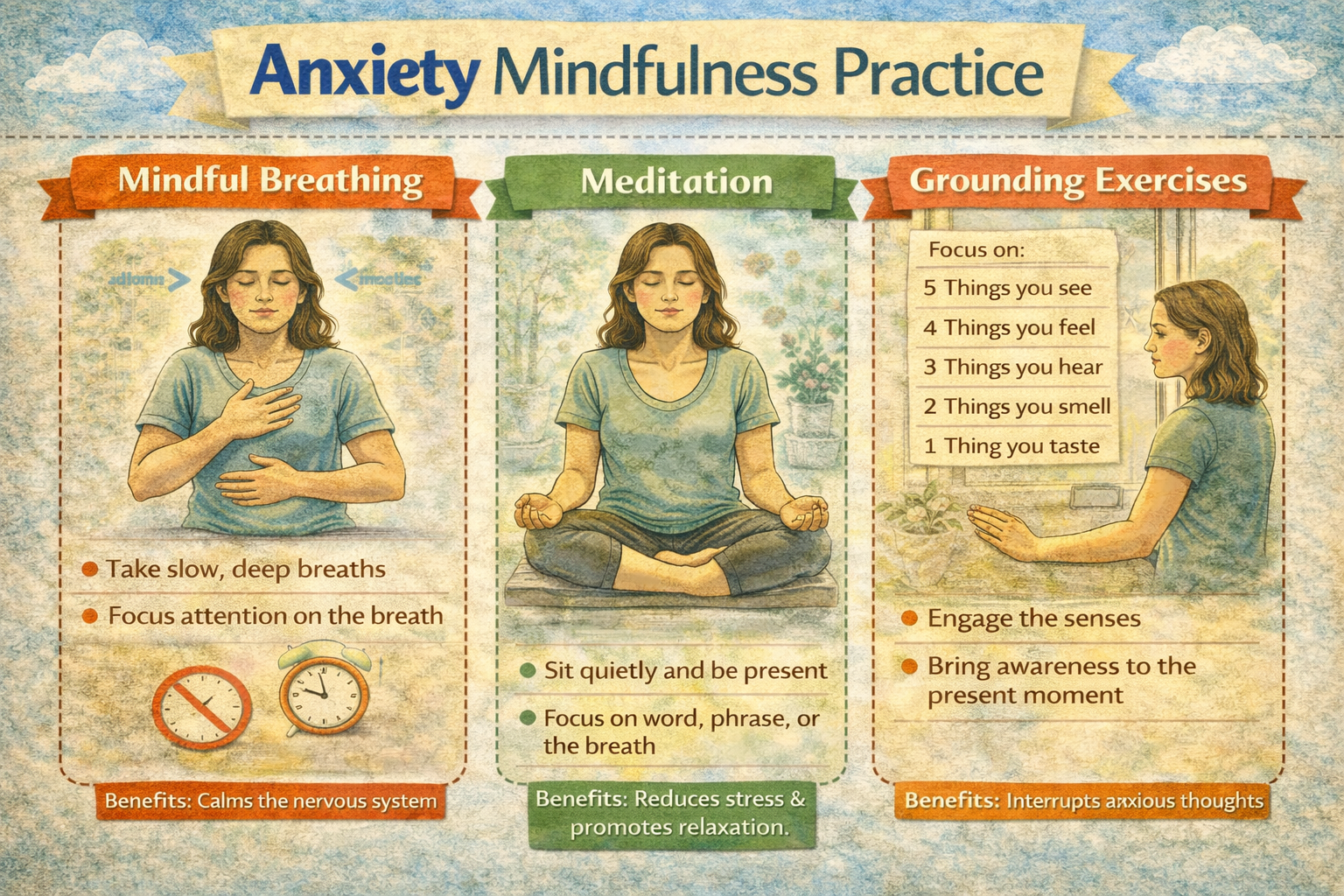
- Focus on your breath, inhaling deeply through your nose and exhaling slowly; if thoughts intrude, gently redirect your attention back without judgment.
Start with free online resources or apps for narration, which can make the process less intimidating.
Mindfulness Breathing Exercises for Anxiety
The 4-7-8 breathing technique involves inhaling for 4 counts, holding for 7, and exhaling for 8, which activates the body’s relaxation response.
Diaphragmatic breathing, or belly breathing, encourages deep inhales that expand the abdomen, promoting calm and reducing shallow chest breathing common in anxiety.
Practice these during stressful moments for quick relief.
How to Practice Mindfulness for Anxiety
Incorporate mindfulness into your morning routine by starting the day with a brief session, setting a positive tone.
Track progress with a journal, noting anxiety levels before and after practice to observe patterns and improvements.
If challenges arise, adjust by shortening sessions or seeking guidance.
We recommend beginner-friendly apps like Headspace, which offers tailored anxiety programs with guided sessions.
Pro Tip: Pair breathing exercises with a sensory anchor, like holding a smooth stone, to enhance focus during high-anxiety times.
Daily Mindfulness Practices for Anxiety
Building daily habits around mindfulness can create a buffer against anxiety’s daily toll. These practices are simple to integrate and may accumulate benefits over time. Focus on consistency rather than perfection for the best results.
Free Mindfulness Exercises for Anxiety
Mindful walking in nature involves paying attention to each step, the feel of the ground, and surrounding sounds, which grounds you in the present.
A body scan for tension release starts at your toes and moves upward, noting and relaxing tight areas to ease physical anxiety manifestations.
These require no cost or equipment, making them highly accessible.
Mindfulness Exercises to Reduce Anxiety
The 5-4-3-2-1 grounding technique engages your senses: name 5 things you see, 4 you can touch, 3 you hear, 2 you smell, and 1 you taste.
Progressive muscle relaxation tenses and releases muscle groups sequentially, promoting deep relaxation.
Use these during breaks to reset.
Best Practices for Consistency
Set reminders on your phone and build habits by linking practice to existing routines, like after brushing teeth.
Combine with physical activity, such as yoga, to amplify anxiety-reducing effects through movement and mindfulness synergy.
What Are Effective Mindfulness Exercises to Reduce Anxiety?
Effective exercises go beyond basics, offering targeted ways to address anxiety’s nuances. Anxiety mindfulness practice shines here, providing tools that adapt to your needs. We’ll cover methods that build on foundational skills for deeper relief.
Mindfulness Journaling for Anxiety Relief
Gratitude journaling prompts, like listing three things you’re thankful for daily, shift focus from anxiety to positives.
Reflecting on anxious thoughts by writing them down and questioning their validity helps reframe perspectives.
This practice fosters self-compassion and clarity.
Beginner Mindfulness Meditation for Anxiety
Short sessions for starters, like 3-minute breath focuses, prevent overwhelm and build confidence.
Common challenges include restlessness; solutions involve acknowledging it kindly and returning to the anchor.
Progress at your pace for sustainable anxiety mindfulness practice.
Advanced Techniques
Loving-kindness meditation directs compassion toward yourself and others, reducing self-criticism often tied to anxiety.
Visualization for peace imagines serene scenes, engaging senses to create a mental refuge during stress.
These advance your practice, enhancing resilience.
Important: If anxiety symptoms intensify during practice, pause and consult a healthcare professional, as mindfulness can sometimes surface buried emotions.
Best Mindfulness Apps for Anxiety
Apps make mindfulness accessible, offering on-demand support for anxiety management. This comparison highlights top options based on features and user feedback. Choose one that fits your lifestyle for optimal results.
Top Apps Overview
Headspace provides guided sessions for beginners, with anxiety-specific tracks narrated by experts.
Calm focuses on sleep and anxiety-focused tracks, including stories and music for relaxation.
Both have high ratings for ease of use.
Features and Benefits
Free versions offer basic content, while premium unlocks full libraries and progress tracking.
User ratings average 4.5 stars, with effectiveness backed by studies showing symptom reductions.
How to Choose the Right App
Base your choice on personal needs, like preferring voice-guided or music-based sessions.
Most offer trial periods—test a few to find the best fit.
A popular option is Calm, known for its comprehensive anxiety relief tools.
| App | Key Features | Best For | Rating |
| Headspace | Guided meditations, anxiety courses | Beginners | 4.7 |
| Calm | Sleep stories, breathing exercises | Sleep issues with anxiety | 4.6 |
How Does Mindfulness-Based Therapy for Anxiety Work?
Mindfulness-based therapy combines traditional therapy with mindfulness principles for structured anxiety relief. It works by teaching skills to observe thoughts non-judgmentally. Professional guidance ensures safe application.
Overview of MBSR and MBCT
Mindfulness-Based Stress Reduction (MBSR) is an 8-week program focusing on meditation and yoga for anxiety.
Mindfulness-Based Cognitive Therapy (MBCT) targets relapse prevention by blending cognitive techniques.
Both can be group or individual, suiting different preferences.
Integrating Therapy with Practice
Professional guidance from therapists helps tailor practices to your anxiety profile.
Combining with other treatments, like medication, may enhance outcomes, as research suggests.
When to Seek Therapy
Seek help for severe anxiety, such as panic attacks or interference with daily life.
Scientific Evidence & Research
Mindfulness has garnered strong support from clinical research for anxiety management. Studies demonstrate its potential to rival traditional treatments. This section reviews key findings.
Clinical Studies
A Harvard-led study in 2023 found MBSR as effective as escitalopram for anxiety reduction, with fewer side effects.
A Georgetown trial showed it lowers stress hormones in anxiety patients, improving physiological markers.
Recent 2025 research in Neuroscience & Biobehavioral Reviews suggests matching mindfulness methods to symptoms boosts outcomes.
Expert Opinions
Dr. Madhav Goyal from Johns Hopkins notes meditation provides relief comparable to antidepressants for some.
NIH reviews indicate moderate evidence for anxiety symptom improvement through mindfulness programs.
Statistical Data
According to NIMH, 19.1% of U.S. adults have anxiety disorders annually, affecting over 40 million people.
A 2024 meta-analysis of 47 studies showed mindfulness reduces anxiety similar to medication, with effect sizes around 0.28.
External links: NIH on Anxiety Disorders, JAMA Psychiatry Study, Harvard Gazette Article.
Common Mistakes to Avoid
While anxiety mindfulness practice is beneficial, certain pitfalls can hinder progress. Avoiding these ensures a more effective experience. Approach with patience and self-kindness.
Mistake #1: Expecting Immediate Results
This leads to frustration and abandonment, as benefits often emerge gradually over weeks.
A better approach: Start small, like 5-minute sessions, and be patient with the process.
Mistake #2: Judging Your Thoughts
Judging increases self-criticism and anxiety, defeating the purpose of non-judgmental awareness.
Instead, observe without attachment, treating thoughts like passing clouds.
Mistake #3: Inconsistent Practice
Inconsistency prevents habit formation and sustained benefits.
Frequently Asked Questions (FAQs)
What Are Mindfulness Techniques for Anxiety?
Mindfulness techniques for anxiety include focused breathing and body scans to stay present and break worry cycles. These practices help reduce symptoms effectively when done consistently, as supported by research showing lowered stress responses.
Start with short daily sessions to build the habit. For best results, combine with professional therapy if anxiety is severe. Always consult a healthcare provider for tailored advice.
How Does Mindfulness Meditation Provide Anxiety Relief?
Mindfulness meditation for anxiety relief involves observing thoughts without judgment, which can lower stress hormones and promote long-term calm. Studies, including a 2023 JAMA Psychiatry trial, show it’s comparable to medication.
Practice regularly to rewire neural pathways for better emotional control. If starting out, use guided apps to ease in. Seek professional help if symptoms persist.
What Are Daily Mindfulness Practices for Anxiety?
Daily mindfulness practices for anxiety encompass short meditations, mindful eating, and grounding exercises to build resilience against stressors. Incorporate them into routines like morning or bedtime for cumulative benefits.
Research indicates consistent practice may reduce anxiety by 20-30%. Track your progress to stay motivated. Consult a doctor if anxiety impacts daily functioning.
How to Practice Mindfulness for Anxiety?
To practice mindfulness for anxiety, start with 5-minute breath focus sessions, gradually increasing duration while using apps for guidance to manage symptoms. This builds awareness and reduces reactivity over time.
Evidence from meta-analyses supports its efficacy. Be gentle with yourself during lapses. If anxiety worsens, speak with a healthcare professional promptly.
What Are the Benefits of Mindfulness for Anxiety?
Benefits of mindfulness for anxiety include improved emotional regulation, reduced physical tension, and enhanced mental resilience. Research, such as NIH reviews, indicates it boosts overall mental health.
Many experience better sleep and focus. It’s a complementary tool, not a cure-all. Discuss with your provider for integration into your care plan.
Are There Free Mindfulness Exercises for Anxiety?
Free mindfulness exercises for anxiety feature online guided sessions, breathing techniques, and body scans accessible via apps or websites for relief. Resources like YouTube or NIH sites offer quality options without cost.
Studies show these can effectively lower symptoms. Start simple to avoid overwhelm. Professional evaluation is recommended for persistent issues.
What Is Mindfulness-Based Therapy for Anxiety?
Mindfulness-based therapy for anxiety, like MBSR, combines meditation with cognitive strategies and is effective for chronic cases per clinical trials. It teaches skills to observe thoughts non-reactively.
Programs last 8 weeks typically. It’s often as effective as meds with fewer side effects. Consult a therapist to determine if it’s right for you.
Conclusion
Anxiety mindfulness practice provides proven relief by reducing symptoms, enhancing resilience, and promoting daily calm—empowering you to navigate life’s stresses with greater ease. Incorporating these techniques fosters a healthier, more balanced life, where worry takes a backseat to presence and peace.
Take a clear next action: Begin with a 5-minute daily meditation using a free app or exercise from this guide. You’re making a positive investment in your mental health.
Medical Disclaimer:
This article is for informational purposes only and is not a substitute for professional medical advice, diagnosis, or treatment. Always seek the advice of your physician or other qualified health provider with any questions you may have regarding a medical condition. If you’re experiencing a mental health crisis, please call the 988 Suicide & Crisis Lifeline or visit your nearest emergency room. For non-emergency support, contact the Substance Abuse and Mental Health Services Administration (SAMHSA) National Helpline at 1-800-662-4357. The content in this article is based on current research and expert consensus as of 2026, but medical knowledge evolves. Always verify information with your healthcare provider.