Introduction
Did you know that over 40 million adults in the USA experience anxiety disorders each year, making it one of the most common mental health challenges? For those feeling overwhelmed by racing thoughts, restlessness, or constant worry, simple dietary adjustments might offer some relief. Anxiety can disrupt daily life, leading to fatigue, sleep issues, and even physical health problems, often worsened by diets high in processed foods, sugar, or caffeine. The good news is that focusing on anxiety diet and nutrition may help stabilize mood and reduce symptoms through nutrient-rich choices that support brain health.
For a broader foundation, see our guide on Signs of Mental Health Issues: Types of Anxiety Disorders
What is Anxiety Diet and Nutrition?
Anxiety diet and nutrition refers to a targeted eating approach that emphasizes foods and nutrients known to support mental health and potentially reduce anxiety symptoms. This isn’t about strict rules but focusing on whole, nutrient-dense options that influence brain function and mood regulation. Research suggests that what people eat affects neurotransmitter production, inflammation levels, and gut health—all factors in anxiety.
Understanding the Link Between Diet and Anxiety
Diet directly impacts brain chemicals like serotonin, which regulates mood, and inflammation that can heighten anxiety. Poor nutrition, such as diets low in essential nutrients, may worsen symptoms by disrupting these processes. For instance, deficiencies in omega-3 fatty acids or magnesium are linked to increased anxiety risk. A balanced intake helps maintain mental stability, potentially easing worry and restlessness.
Key nutrients play starring roles: omega-3s from fatty fish reduce inflammation, magnesium from leafy greens promotes calmness, and antioxidants from berries protect brain cells. Studies show that “healthy” dietary patterns correlate with lower anxiety levels.
Core Principles of an Anxiety-Reducing Diet
Focus on whole foods like vegetables, fruits, and lean proteins while incorporating complex carbs for steady energy. Anti-inflammatory items, such as olive oil and nuts, form the foundation. Avoid common triggers like excessive caffeine or refined sugars, which can spike jitteriness.
Hydration matters too—dehydration may amplify anxiety symptoms. Aim for regular meal timing to prevent blood sugar dips that mimic or worsen anxiety. This approach aligns with patterns like the Mediterranean diet, associated with better mental health outcomes.
How Nutrition Impacts Mental Health
The gut-brain axis connects the digestive system to mood: probiotics and fiber nurture beneficial bacteria, influencing anxiety. Vitamin D deficiencies, common in many, are tied to higher anxiety rates. Addressing these through diet may improve resilience.
For example, a disrupted microbiome from poor eating habits could contribute to mood swings. Prioritizing nutrition in anxiety diet and nutrition strategies supports overall mental wellness without making absolute promises.
Research Shows: A 2021 scoping review in Nutrients found associations between reduced anxiety and higher intake of fruits, vegetables, omega-3s, and healthy dietary patterns.
For a broader foundation, see our guide on Signs of Mental Health Issues: Complete Guide to Anxiety Disorders
Why Does Anxiety Diet and Nutrition Matter?
Adopting an anxiety diet and nutrition plan isn’t just about food—it’s a tool for fostering mental resilience. Evidence indicates that nutrient-rich eating may help mitigate anxiety’s grip on daily life, complementing other strategies like therapy.
Benefits of Nutrition for Anxiety Relief
This approach can reduce inflammation, which research links to mood disorders, leading to more stable emotions. It also boosts energy and improves sleep, both crucial for managing anxiety. Over time, it might aid in preventing escalation of symptoms.
Imagine feeling less on edge after incorporating omega-3-rich foods—studies suggest such changes support brain health.
The Role in Overall Mental Wellness
Nutrition complements therapy or medication by building stress resilience. Dietary patterns affect anxiety levels, with healthier choices linked to better outcomes. It’s empowering: control is gained through everyday choices.
For more on stress management techniques, explore our guide.
Impact on Daily Life and Long-Term Health
Enhanced focus and productivity follow, reducing risks like depression. Long-term, it promotes holistic health, lowering anxiety’s toll.
Expert Insight: As noted by Harvard Health, a diet rich in whole grains, vegetables, and fruits is healthier than processed options, potentially easing underlying anxiety.
For a broader foundation, see our guide on Signs of Mental Health Issues: Anxiety Lifestyle Changes
What Are the Best Foods for Anxiety?
Incorporating specific foods into an anxiety diet and nutrition routine may help by providing key nutrients for brain support. Focus on variety for sustained benefits.
Foods to Reduce Anxiety
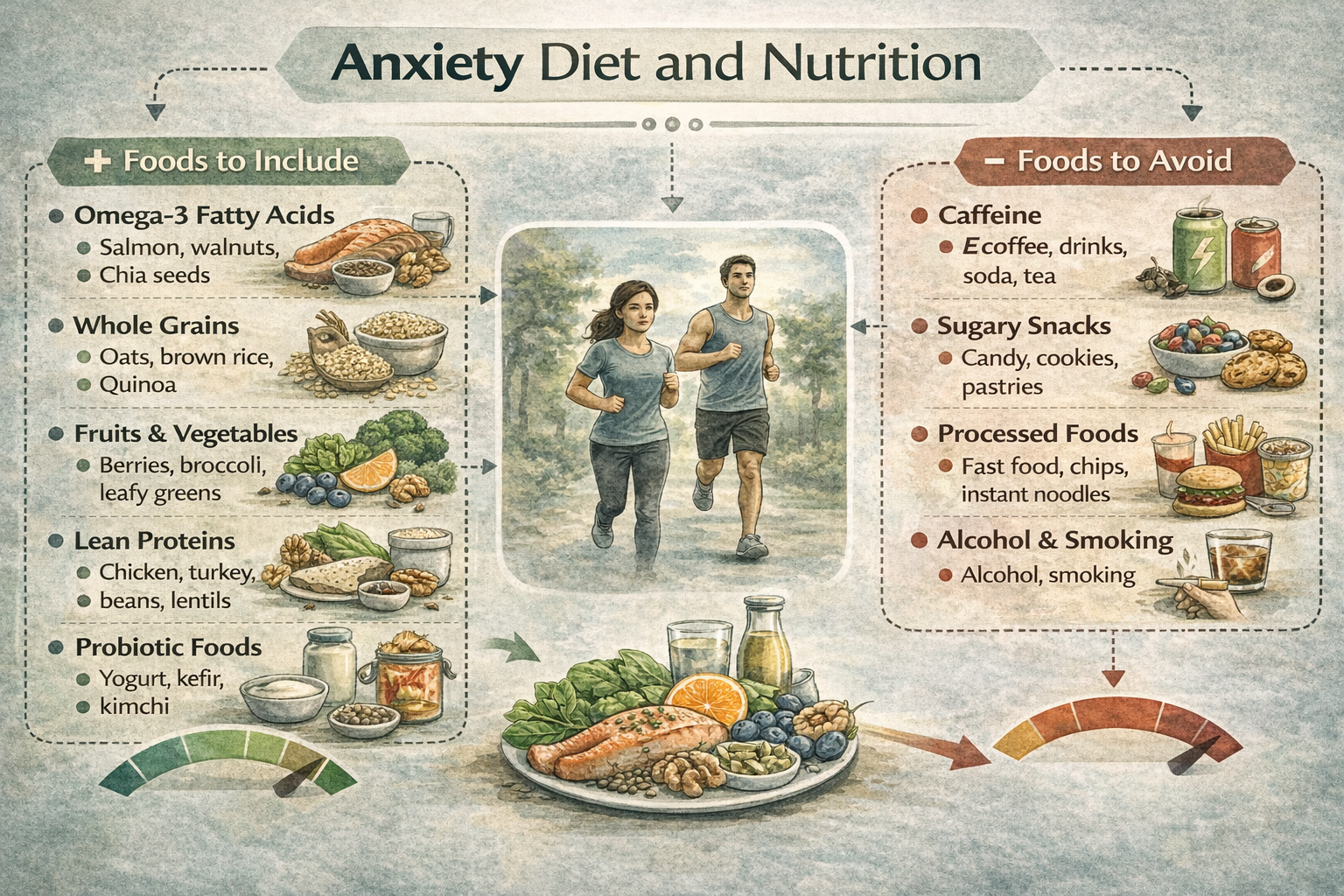
Leafy greens like spinach and Swiss chard offer magnesium, aiding calmness. Fatty fish such as salmon deliver omega-3s to lower inflammation. Berries, especially blueberries, provide antioxidants that protect against stress.
These choices may gradually ease symptoms when part of a balanced diet.
Foods That Help Anxiety
Nuts and seeds, including almonds and chia, supply zinc and healthy fats for mood stability. Yogurt and fermented foods introduce probiotics, supporting the gut-brain axis. Whole grains like oats and quinoa ensure steady energy, avoiding crashes.
Anxiety Reducing Foods List
- Turmeric: Its curcumin fights inflammation.
- Dark chocolate: Contains mood-boosting compounds in moderation.
- Bananas: Rich in vitamin B6 for serotonin production.
We recommend omega-3 supplements if fish intake is low, like [Quality Brand Fish Oil] for inflammation reduction.
Pro Tip: Start the day with oatmeal topped with berries—complex carbs and antioxidants team up for sustained calm.
What Foods to Avoid for Anxiety?
Certain foods can exacerbate anxiety by disrupting blood sugar or promoting inflammation. Identifying and limiting them is key in an anxiety diet and nutrition plan.
Foods to Avoid Anxiety Triggers
Caffeine ramps up heart rate, mimicking anxiety. Sugary foods cause spikes and crashes. Processed meats contribute to inflammation.
Moderation helps, but reduction may stabilize mood.
Impact of Unhealthy Eating on Anxiety
Fried foods increase oxidative stress. Alcohol disrupts sleep and neurotransmitters. Refined carbs lead to mood swings.
These habits compound anxiety over time.
Healthy Eating for Anxiety Alternatives
Swap soda for herbal tea. Choose whole fruits over juices for fiber.
Important: Excessive caffeine can worsen symptoms—limit to one cup daily and monitor how it feels.
Supplements for Anxiety Relief
Supplements may fill nutritional gaps in an anxiety diet and nutrition strategy, but evidence varies. Always consult a doctor first.
Key Supplements for Anxiety Management
Magnesium (400mg daily) regulates serotonin. Omega-3s (1000-2000mg EPA/DHA) reduce inflammation. Vitamin D (2000 IU if deficient) supports mood.
These show promise in trials.
Herbal Options and Evidence
Chamomile binds to receptors for calm. Ashwagandha acts as an adaptogen. L-theanine promotes relaxation.
Short-term use appears safe.
When to Consider Supplements
If diet lacks nutrients or tests show deficiencies. Combine with food for best results.
How to Create a Diet Plan for Anxiety?
Building a personalized anxiety diet and nutrition plan starts with small steps. This guide outlines how.
Steps to Build an Anti Anxiety Diet Plan
- Assess current diet: Note triggers like sugar.
- Incorporate balanced meals: Include protein, carbs, fats.
- Plan weekly menus using anxiety-friendly foods.
- Track progress.
Sample Daily Diet to Manage Anxiety
- Breakfast: Oatmeal with berries and nuts.
- Lunch: Salmon salad with greens and olive oil.
- Dinner: Quinoa stir-fry with veggies and turmeric.
- Snacks: Yogurt or almonds.
Tips for Sustaining the Plan
Meal prep weekly. Stay hydrated. Track mood to refine.
For meal planning how-to, see our resource.
Best Practices and Diet Tips for Anxiety
Implementing these tips enhances anxiety diet and nutrition efforts.
Nutrition and Anxiety Management Strategies
Eat regular meals to stabilize blood sugar. Include probiotics daily via yogurt. Limit caffeine to mornings.
Expert Tips for Healthy Eating for Anxiety
Practice mindful eating to savor meals. Pair with exercise for synergy.
Integrating into Lifestyle
Make gradual changes for lasting habits.
Scientific Evidence & Research
Research increasingly supports anxiety diet and nutrition links.
Clinical Studies
A 2021 scoping review in Nutrients linked higher fruits/veggies and omega-3s to less anxiety. Frontiers 2021 highlighted omega-3s and vitamin D.
Expert Opinions
Harvard Health: Magnesium-rich foods calm the mind. Mayo Clinic: Complex carbs boost serotonin.
Statistical Data
ALSWH cohort: Plant-based diets lower anxiety risk by 6-7%.
NIH study on diet and anxiety; Medical journal on Mediterranean diet.
Common Mistakes to Avoid
Sidestep these for effective anxiety diet and nutrition.
Mistake #1: Skipping Meals
Blood sugar drops heighten anxiety. Eat balanced every 4 hours.
Mistake #2: Over-Reliance on Caffeine
It mimics symptoms. Switch to green tea.
Mistake #3: Ignoring Gut Health
Poor microbiome worsens mood. Add fermented foods.
Frequently Asked Questions (FAQs)
What is the Best Diet for Anxiety?
A Mediterranean-style diet rich in fruits, vegetables, omega-3s, and whole grains is ideal for anxiety. It reduces inflammation and supports brain health, as supported by studies showing lower anxiety with plant-based intake. This pattern may ease symptoms when combined with lifestyle changes, but consult a professional.
What Are Natural Foods for Anxiety?
Foods like salmon, berries, nuts, and leafy greens help naturally. They provide omega-3s, antioxidants, and magnesium to calm the nervous system and improve mood. Incorporate them daily for potential benefits, alongside other strategies.
Can Supplements Provide Anxiety Relief?
Yes, supplements like magnesium, omega-3s, and vitamin D can help if deficient. Research shows they reduce symptoms by 20-30% in some trials, but consult a doctor. They’re adjuncts, not replacements, for treatment.
What Foods Trigger Anxiety?
Caffeine, sugar, processed foods, and alcohol can worsen anxiety by spiking blood sugar and inflammation. Avoiding them stabilizes mood. Track personal responses.
How Does Nutrition Affect Anxiety Management?
Nutrition influences serotonin and gut health, key for anxiety. Healthy diets lower risk, per cohort studies showing 15% reduced incidence with better intake. It supports overall management.
Is There a Diet Plan for Anxiety?
Yes, focus on balanced meals with proteins, fats, and carbs. Sample: Breakfast oats, lunch fish salad, dinner veggies—aim for consistency. Customize with a nutritionist.
What Are Common Diet Tips for Anxiety?
Eat regularly, hydrate, include probiotics, and limit stimulants. These tips, from experts, promote steady energy and reduced symptoms. Start small for sustainability.
Conclusion
Anxiety diet and nutrition offers natural symptom relief through anti-inflammatory foods, supplements, and balanced plans, improving mood and resilience. Prioritizing these choices empowers better anxiety control, potentially enhancing daily focus and long-term wellness. Start by assessing diet and incorporating one change today, like adding leafy greens.
Consult a healthcare professional for personalized advice. Small dietary shifts can lead to significant mental health gains—take the first step toward calmer days. For more, explore our comprehensive mental health guide.
Medical Disclaimer
This content is for informational purposes only and not a substitute for professional medical advice. Consult a healthcare provider before making dietary changes. If experiencing a crisis, call 988 or seek emergency help. Based on current research as of 2026, but knowledge evolves—verify with a provider.