It’s 2 a.m. Your heart is pounding, your chest feels tight, and a wave of dizziness hits as you wonder if this is “just anxiety” or something far more serious. If this scenario sounds familiar, you’re far from alone. Nearly 1 in 5 U.S. adults (19.1%) experienced an anxiety disorder in the past year, according to the National Institute of Mental Health, and many first notice it through alarming physical sensations rather than worry alone.
Millions of Americans confuse the physical effects of anxiety — chest pain, shortness of breath, digestive upset, fatigue — with heart attacks, stomach issues, or other medical emergencies. This leads to repeated ER visits, skyrocketing health-care costs, unnecessary tests, and delayed mental health support. The result? More fear, more symptoms, and a frustrating cycle that feels impossible to break.
For a broader foundation, see our guide on Signs of Mental Health Issues: Complete Guide to Anxiety Disorders
Research Shows:
The lifetime prevalence of any anxiety disorder in U.S. adults is 31.1% (National Institute of Mental Health). Many people seek medical care for physical symptoms before recognizing the anxiety connection.
What Is the Link Between Anxiety and Physical Health?
Anxiety isn’t “all in your head.” It is a whole-body experience rooted in your nervous system’s ancient survival wiring. When your brain perceives danger — real or imagined — it activates the sympathetic nervous system and floods your body with stress hormones. This is the famous fight-or-flight response, and it produces measurable physical changes designed to help you escape or fight a threat.
Understanding Anxiety’s Impact on the Body
The moment anxiety spikes, your adrenal glands release adrenaline and cortisol. Heart rate and blood pressure rise, breathing quickens, muscles tense, and digestion slows. These changes are protective in true emergencies but become problematic when they happen repeatedly or without real danger. Over time, chronic activation keeps your body in a state of high alert, leading to persistent physical symptoms.
Common Physical Symptoms of Anxiety
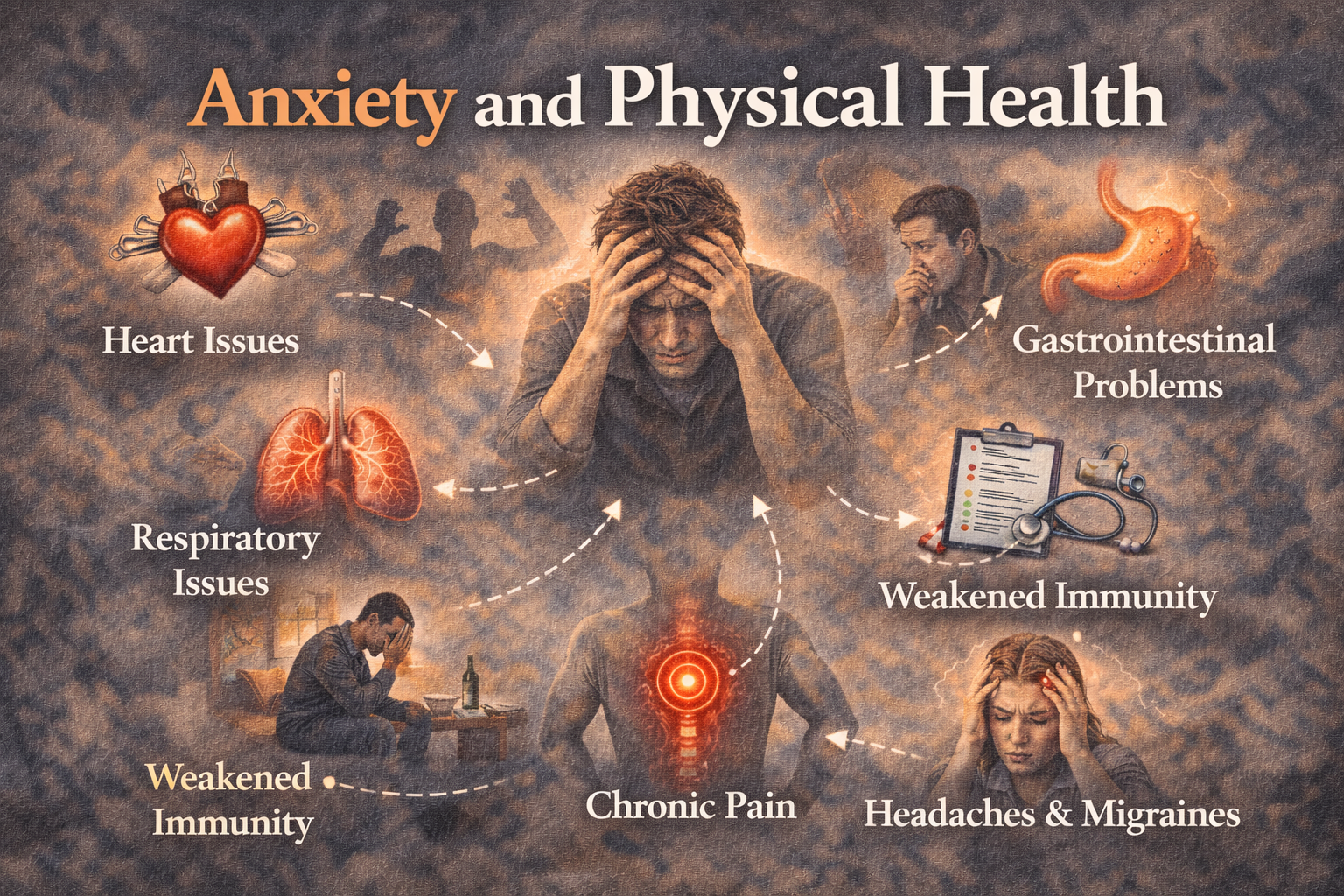
Most people experience a combination of cardiovascular, gastrointestinal, muscular, and neurological effects. These include rapid heartbeat, chest tightness, shortness of breath, muscle tension, fatigue, dizziness, nausea, and stomach cramps. Because these sensations feel medical, they often drive people to doctors’ offices or emergency rooms.
Why Anxiety Often Feels Physical First
Your brain is wired to interpret bodily sensations as potential threats. When anxiety amplifies normal signals (a slightly faster heartbeat, minor stomach discomfort), the mind labels them as dangerous. This creates a feedback loop: worry about the symptom makes the symptom worse. Studies show that somatic (physical) complaints are a leading reason people with anxiety first seek care.
Pro Tip:
Keep a simple symptom journal for one week. Note the time, what you were thinking or doing, and how your body felt. Most people discover clear patterns — symptoms often peak during work stress, after caffeine, or when worrying about health itself.
For a broader foundation, see our guide on Signs of Mental Health Issues: Specific Phobias Explained
Common Physical Symptoms of Anxiety
The physical side effects of anxiety are so convincing that many people initially believe they have a serious medical condition. Learning to recognize them can bring immediate relief and prevent unnecessary worry.
Can Anxiety Cause Chest Pain?
Yes. Anxiety frequently causes chest pain or tightness that feels exactly like a heart attack. The pain usually stems from muscle tension in the chest wall or hyperventilation, which changes blood chemistry and creates pressure sensations. Unlike cardiac pain, anxiety-related chest discomfort often improves with relaxation or breathing exercises and is not typically triggered by physical exertion.
How Anxiety Affects the Body – Digestive Issues and Stomach Problems from Anxiety
The gut and brain are intimately connected through the vagus nerve and microbiome. Anxiety slows digestion, increases stomach acid, and alters gut motility. This leads to nausea, bloating, diarrhea, constipation, or IBS-like flares. Research confirms that people with anxiety disorders report gastrointestinal symptoms at much higher rates than the general population.
Anxiety Causing Muscle Tension and Fatigue
Constant muscle bracing creates chronic tension headaches, jaw pain (TMJ), neck and shoulder stiffness, and overall exhaustion. The body burns energy rapidly in fight-or-flight mode, leaving you drained even after “resting.” This creates a vicious cycle: fatigue worsens anxiety, which worsens fatigue.
Other Manifestations: Dizziness, Shortness of Breath, Heart Palpitations
Hyperventilation from anxiety reduces carbon dioxide in the blood, causing lightheadedness, tingling, and the sensation that you can’t get enough air. Palpitations feel like your heart is racing, fluttering, or skipping beats. All three symptoms are classic and almost always benign when caused by anxiety — but they feel terrifying.
For a broader foundation, see our guide on Signs of Mental Health Issues:Chronic Anxiety Effects
How Anxiety Affects the Body Long-Term
When anxiety becomes chronic, the repeated stress response takes a measurable toll on multiple body systems.
Anxiety and High Blood Pressure
Short bursts of anxiety cause temporary blood-pressure spikes. Over years, chronic activation may contribute to sustained hypertension through ongoing inflammation and vascular changes. The relationship is bidirectional: high blood pressure can also heighten anxiety.
Physical Effects of Anxiety on Body Systems
Long-term anxiety is linked to weakened immune function, disrupted sleep, weight fluctuations, and increased vulnerability to chronic conditions such as heart disease, diabetes, and chronic pain syndromes. Persistent cortisol elevation affects nearly every organ system.
Anxiety Physical Manifestations Over Time
What starts as occasional tension headaches can evolve into chronic daily pain. Episodic digestive upset may become ongoing IBS. The good news? These changes are often reversible with consistent management.
Expert Insight:
“Many patients are surprised to learn that treating their anxiety often improves their physical symptoms more effectively than treating the body alone,” notes a board-certified psychiatrist with 20+ years in mind-body medicine.
Scientific Evidence & Research on Anxiety and Physical Health
The connection between anxiety and physical health is one of the most thoroughly researched areas in psychosomatic medicine.
Clinical Studies
Large epidemiological surveys, including the National Comorbidity Survey Replication, confirm strong associations between anxiety disorders and physical conditions such as cardiovascular disease and gastrointestinal disorders, even after controlling for lifestyle factors.
Expert Opinions
The Mayo Clinic and National Institutes of Health both state that anxiety disorders frequently present with prominent physical symptoms, including palpitations, shortness of breath, and dizziness. Experts emphasize the bidirectional relationship: untreated anxiety worsens physical health, and chronic illness increases anxiety risk.
Statistical Data
- 19.1% of U.S. adults had an anxiety disorder in the past year (NIMH).
- A significant portion experience somatic symptoms that prompt medical visits.
- Recent 2026 umbrella review of 81 meta-analyses found aerobic exercise reduces anxiety symptoms with a standardized mean difference of -0.47 — comparable to medication or therapy for many people.
National Institute of Mental Health – Any Anxiety Disorder
Mayo Clinic – Anxiety Disorders
How to Manage the Physical Effects of Anxiety
You don’t have to live with these symptoms. Evidence-based techniques can interrupt the cycle quickly.
Immediate Relief Techniques
- 4-7-8 Breathing: Inhale quietly through the nose for 4 seconds, hold for 7, exhale through the mouth for 8. Repeat 4 times.
- Grounding (5-4-3-2-1): Name 5 things you see, 4 you can touch, 3 you hear, 2 you smell, 1 you taste.
- Progressive Muscle Relaxation: Tense and release muscle groups from toes to head.
Lifestyle Changes for Long-Term Relief
- Aim for 150 minutes of moderate aerobic exercise weekly (walking, swimming, cycling).
- Prioritize consistent sleep (7–9 hours) and a Mediterranean-style diet.
- Limit caffeine and alcohol, both of which can amplify physical symptoms.
- Practice daily mindfulness or basic CBT skills to reframe catastrophic thoughts.
When to Seek Professional Help
See a doctor or mental health professional if symptoms interfere with work, relationships, or daily activities; if you have frequent panic attacks; or if physical symptoms persist despite self-help. Effective treatments include cognitive behavioral therapy (CBT), medications when appropriate, and integrated mind-body programs.
Common Mistakes to Avoid When Dealing with Anxiety and Physical Health
Mistake #1: Ignoring Symptoms or Self-Diagnosing Serious Illness
Googling symptoms at 3 a.m. fuels the fear cycle. Better approach: Get a thorough medical check-up once to rule out physical causes, then work with a professional on the anxiety component.
Mistake #2: Avoiding Physical Activity Due to Symptoms
Fear of palpitations or shortness of breath leads many to become sedentary, which actually worsens anxiety sensitivity. Better approach: Start gently with supervised exercise — it desensitizes your body to normal sensations.
Mistake #3: Relying Only on Medication Without Lifestyle Changes
Medication can be life-changing, but long-term success is highest when combined with therapy and daily habits. Holistic approach: Use all available tools.
Important:
Never stop prescribed anxiety medication suddenly. Always consult your prescribing provider.
Frequently Asked Questions (FAQs)
What are the physical symptoms of anxiety?
Common physical symptoms of anxiety include rapid heartbeat, chest tightness, shortness of breath, muscle tension, fatigue, dizziness, sweating, trembling, and digestive upset such as nausea or stomach cramps. These stem directly from the body’s fight-or-flight response and adrenaline surge. Most are uncomfortable but not dangerous. Learning to recognize the pattern is the first step toward relief.
Can anxiety cause chest pain?
Yes, anxiety frequently causes chest pain that feels like pressure, tightness, or sharpness, usually from chest-wall muscle tension or hyperventilation. It is rarely a heart attack in younger, otherwise healthy adults, but any new or severe chest pain warrants immediate medical evaluation to rule out cardiac issues.
How does anxiety affect the body long-term?
Chronic anxiety is linked to higher risks of hypertension, weakened immunity, gastrointestinal disorders, chronic pain, and sleep disruption through sustained elevation of stress hormones. The good news is that effective management often reverses or improves many of these effects.
Does anxiety cause shortness of breath or heart palpitations?
Yes — hyperventilation and adrenaline surges commonly cause both. Grounding and slow breathing techniques usually calm these sensations within minutes and help you differentiate them from medical emergencies.
What is the link between anxiety and physical health?
Anxiety activates physiological changes that mimic illness, creating a feedback loop where physical sensations increase worry, which increases symptoms. Managing the anxiety component reliably improves physical health outcomes.
Can anxiety make you dizzy or cause stomach problems?
Absolutely. Dizziness often results from hyperventilation; stomach problems arise via the gut-brain axis, leading to nausea, bloating, or IBS-like flares. These are among the most common physical side effects of anxiety.
When should I see a doctor for anxiety physical manifestations?
See a healthcare provider promptly if symptoms are new, severe, persistent, or interfere with daily life; if accompanied by red-flag signs (crushing chest pain, fainting, severe shortness of breath); or if self-help strategies aren’t enough. Ruling out medical causes first brings peace of mind.
Conclusion
Understanding anxiety and physical health transforms fear into empowerment. The racing heart, tight chest, churning stomach, and crushing fatigue are not signs of impending doom — they are your body’s understandable but misguided alarm system. By recognizing the patterns, applying proven techniques, and addressing the root anxiety, you can break the cycle and reclaim comfort in your own body.
The transformation is real: people who learn these skills report fewer ER visits, better sleep, steadier energy, and dramatically improved quality of life. You now have the knowledge. The next step is simple and powerful.
Start today: Choose one immediate technique (4-7-8 breathing or a 10-minute walk) and commit to using it the next time symptoms appear. Track your progress for two weeks. If symptoms remain intense or disruptive, schedule that appointment with your doctor or a therapist — relief is closer than you think.
You’re not alone in this. Millions have walked this path and emerged stronger, calmer, and healthier in both mind and body. You can too. Take that first breath, then the next step. Your future self — with a quieter mind and a calmer body — is waiting.
Medical Disclaimer (repeated for emphasis):
This article is for informational and educational purposes only and does not constitute medical advice. Always consult a qualified healthcare professional for personalized guidance, especially if experiencing severe or persistent symptoms.