Imagine standing at the edge of a balcony, your heart pounding uncontrollably, even though you’re perfectly safe. Or perhaps the mere sight of a spider sends you into a panic, disrupting your daily routine. Specific phobias explained like this reveal a common yet often misunderstood mental health challenge affecting millions of Americans. These intense, irrational fears go beyond normal caution, limiting your freedom and quality of life—whether it’s avoiding travel, social events, or even simple tasks at home.
Many people struggle silently, not realizing that effective help is available. Without proper understanding, these fears can escalate, straining relationships and increasing the risk of related issues like depression. This comprehensive guide to specific phobias explained will cover everything from definitions and symptoms to causes, diagnosis, and proven treatments, empowering you to take control.
You’ll learn practical strategies to manage and overcome these fears, based on current research from organizations like the National Institute of Mental Health (NIMH) and guidelines from the American Psychiatric Association (APA). Backed by evidence from leading mental health experts, this article aims to provide clarity and hope, equivalent to standards from WebMD and Mayo Clinic.
For a broader foundation, see our guide on Signs of Mental Health Issues: Complete Guide to Anxiety Disorders
What Is a Specific Phobia?
Specific phobias explained begin with understanding them as an anxiety disorder involving an intense, irrational fear of a particular object, situation, or activity. Unlike everyday worries, this fear is out of proportion to any real danger and can trigger immediate panic. According to the DSM-5, it must persist for at least six months and cause significant distress or impairment in daily functioning.
This condition affects about 12.5% of U.S. adults at some point in their lives, with women twice as likely to experience it. Specific phobias explained in simple terms mean your brain’s fear response goes into overdrive, treating harmless triggers as life-threatening. Early recognition is key, as untreated phobias can worsen over time.
What is Specific Phobia According to DSM-5?
The DSM-5 defines specific phobia as a marked fear or anxiety about a specific object or situation, such as animals or heights. This fear almost always provokes immediate anxiety, leading to avoidance or endurance with intense distress.
It must be persistent, typically lasting six months or more, and cause clinically significant impairment in social, occupational, or other areas. The fear is disproportionate to the actual danger, and it’s not better explained by another mental disorder like PTSD or OCD.
Research suggests this criteria helps differentiate specific phobias from transient fears, ensuring accurate diagnosis.
Examples of Specific Phobias
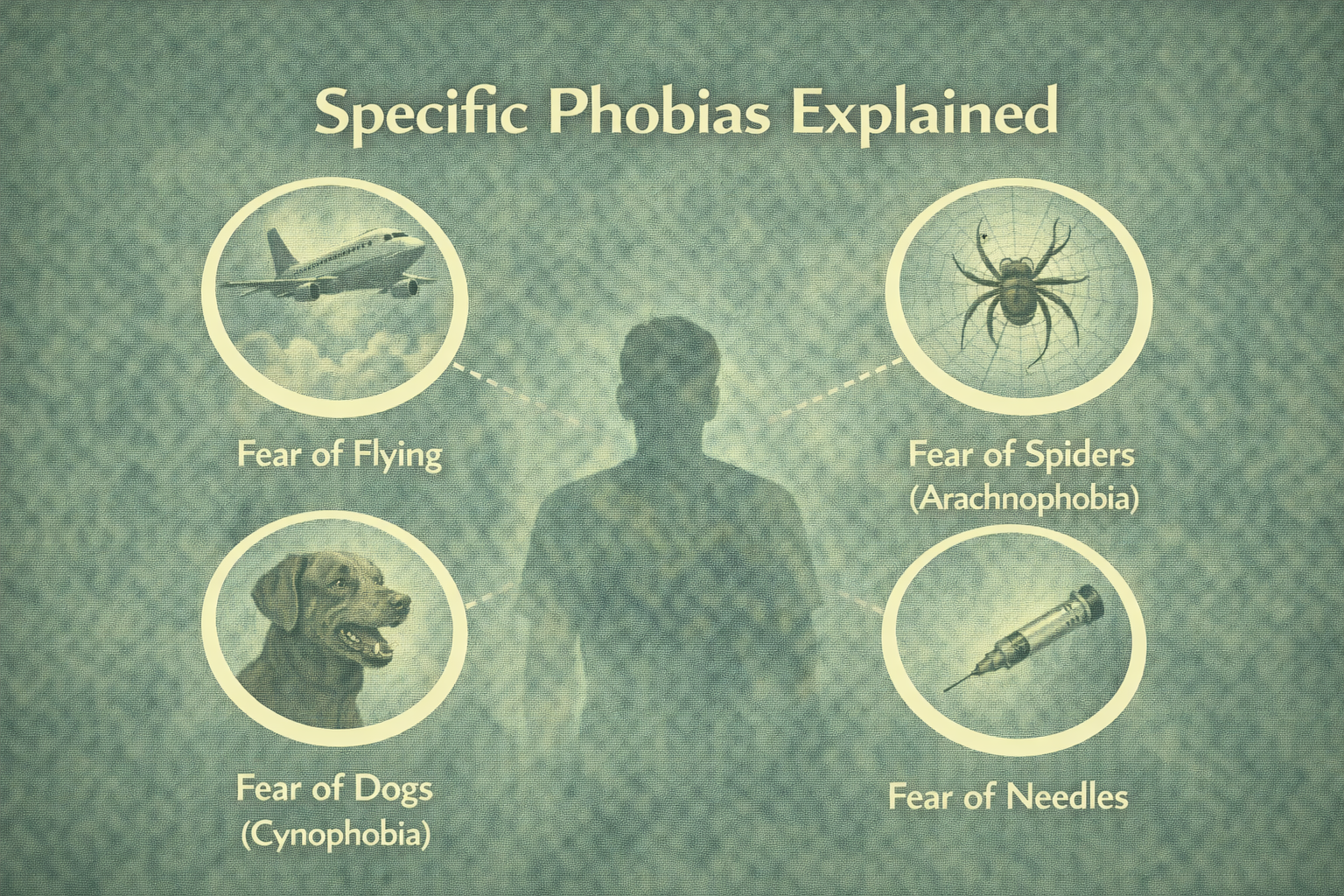
Common examples include animal phobias like fear of dogs or insects, and natural environment fears such as storms or water. Blood-injection-injury types involve dread of needles or seeing blood.
Situational phobias, like fear of flying or enclosed spaces, are also prevalent. These vary widely but share the core feature of irrational intensity.
How Specific Phobias Differ from General Anxiety
Specific phobias are targeted to one trigger, unlike generalized anxiety disorder’s broad, persistent worries about multiple life aspects. The response is immediate and physical upon exposure, rather than chronic rumination.
While general anxiety might involve ongoing stress, specific phobias explained show a clear avoidance pattern tied to a single stimulus. This distinction guides tailored treatment approaches.
For a broader foundation, see our guide on Signs of Mental Health Issues: Social Anxiety Disorder
Symptoms of Specific Phobias
Symptoms of specific phobias can feel overwhelming, manifesting as intense anxiety when faced with or even thinking about the feared trigger. These reactions are the body’s fight-or-flight response gone awry, often leading to avoidance that interferes with life. Understanding these signs is crucial for seeking help early.
Many people experience a mix of physical and emotional symptoms, which can mimic a panic attack. Recognizing them helps differentiate phobias from normal fears.
Physical Symptoms of Specific Phobia
Common physical signs include rapid heartbeat, sweating, and trembling, as the body prepares for perceived danger. Shortness of breath, chest tightness, and nausea often follow, sometimes leading to dizziness or fainting.
These responses are automatic, driven by the sympathetic nervous system. In severe cases, they can escalate to full panic attacks.
Emotional and Behavioral Symptoms
Emotionally, individuals feel intense dread, helplessness, or impending doom. Panic attacks may occur, with overwhelming fear dominating thoughts.
Behaviorally, avoidance is key—people rearrange lives to dodge triggers, like refusing flights or social events. This can lead to isolation and reduced quality of life.
Symptoms in Specific Phobia in Children
In children, symptoms often show as crying, tantrums, or clinging to caregivers when exposed to the trigger. They may refuse school or activities, leading to social withdrawal.
Unlike adults, kids might not recognize the fear as irrational. Early intervention prevents long-term impacts.
Research Shows: A NIMH study indicates that 19.3% of U.S. adolescents experience specific phobias, with symptoms often starting in childhood and persisting if untreated.
Causes of Specific Phobias
Causes of specific phobias often involve a combination of factors, making them complex but treatable. Research suggests no single trigger, but understanding these can guide prevention and management. Many develop in childhood, influenced by experiences and biology.
Genetic predispositions play a role, alongside environmental influences. Recognizing patterns helps demystify why these fears emerge.
Genetic and Biological Factors
A family history of anxiety disorders increases risk, as genetics may influence brain chemistry, like serotonin imbalances that heighten fear responses.
Brain structure differences, such as an overactive amygdala, can amplify threat perception. Studies show heritability rates around 30-40% for phobias.
If you’re curious about your genetic makeup, services like 23andMe can provide insights into mental health predispositions, though they’re not diagnostic.
Environmental and Traumatic Causes
Past negative experiences, like a dog bite or near-drowning, often spark phobias. Traumatic events condition the brain to associate the trigger with danger.
Learned behaviors from parents modeling fear also contribute. For example, a child seeing a parent panic over spiders may develop similar reactions.
Psychological Influences
Classical conditioning explains how neutral stimuli become feared through association. Evolutionary factors prepare us for dangers like heights or animals, making some phobias more common.
Cognitive biases, like overestimating risks, perpetuate the cycle. Therapy addresses these underlying mechanisms.
Expert Insight: As a clinical psychologist might note, “Phobias often stem from a mix of nature and nurture—genetics load the gun, but environment pulls the trigger.”
Types of Specific Phobias Explained
Types of specific phobias explained fall into categories based on the trigger, helping tailor treatments. The DSM-5 groups them for diagnostic clarity, with some more common than others. Knowing your type is the first step toward management.
Prevalence varies, but animal and situational types are frequent. Each shares core fear but differs in impact.
Animal Type Phobias
These involve intense fear of animals like spiders (arachnophobia) or dogs. Even harmless encounters provoke panic.
Fear of insects, such as bees or cockroaches, is also common. Avoidance might mean skipping outdoor activities.
Natural Environment Phobias
Fear of heights (acrophobia) causes dread of tall buildings or cliffs. Storms or water fears lead to indoor confinement during weather events.
These often stem from evolutionary instincts but become debilitating when excessive.
Situational Phobias
Claustrophobia involves enclosed spaces like elevators, triggering suffocation fears. Fear of flying or driving restricts travel.
These can severely limit independence, affecting work and social life.
Diagnosis of Specific Phobia
Diagnosis of specific phobia involves a thorough assessment to rule out other conditions. Mental health professionals use structured interviews based on DSM-5 criteria. Specific phobias explained through diagnosis empower targeted treatment.
It’s essential if the fear disrupts life. Early diagnosis prevents escalation.
Specific Phobia DSM-5 Criteria
Detailed requirements include persistent fear for six months, immediate anxiety upon exposure, and disproportionate reaction. Impairment in functioning is key.
Exclusion of other disorders, like agoraphobia or PTSD, ensures accuracy.
Professional Assessment Methods
Clinical interviews explore history and symptoms. Questionnaires like the Fear Survey Schedule quantify severity.
Medical exams rule out physical causes, such as thyroid issues mimicking anxiety.
When to Seek Diagnosis
Seek help if the fear interferes with daily activities, work, or relationships. If symptoms last over six months or intensify, professional evaluation is crucial.
Don’t wait—early intervention improves outcomes.
Important: Always consult a healthcare provider for diagnosis, as self-assessment can’t replace professional evaluation.
Why Do Specific Phobias Matter?
Specific phobias matter because they extend beyond mere discomfort, profoundly affecting well-being. Addressing them early prevents broader mental health issues. Benefits include regained freedom and improved life quality.
Ignoring them can lead to isolation. Prioritizing treatment fosters resilience.
Impact on Daily Life and Relationships
Limitations in work, like avoiding elevators, or travel restrictions hinder career growth. Social activities suffer, straining friendships.
Family dynamics shift, with loved ones accommodating avoidance, leading to resentment.
Long-Term Health Consequences
Chronic stress increases depression or substance abuse risks. Physical effects include hypertension from repeated panic.
Untreated, phobias may generalize to other fears.
Benefits of Early Intervention
Improved quality of life through reduced avoidance. Prevention stops escalation to complex anxiety disorders.
Many regain normalcy quickly with treatment.
Pro Tip: Track your phobia triggers in a journal to identify patterns—this simple step can make discussions with a therapist more productive.
How to Overcome Specific Phobia
How to overcome specific phobia often starts with evidence-based therapies focusing on confrontation. Gradual steps build confidence, reducing fear over time. Commitment yields high success rates.
Support from professionals accelerates progress. Self-help complements but doesn’t replace therapy.
Treatment for Specific Phobias
Therapy options like CBT are first-line, with medication for severe cases to manage symptoms short-term. Beta-blockers or benzodiazepines may help, but they’re not curative.
Research suggests 70-90% improvement with proper treatment.
Exposure Therapy for Phobias
Gradual exposure techniques start with imagining the trigger, progressing to real-life encounters. Virtual reality aids safe simulations.
Studies show 80-90% success for completers, often in few sessions.
Cognitive Therapy for Phobias
This challenges irrational thoughts, like “This spider will kill me,” replacing with realistic views. Coping strategies include relaxation techniques.
Combined with exposure, it’s highly effective.
Platforms like BetterHelp connect you with therapists specializing in phobias, offering convenient online sessions.
Best Practices and Expert Tips for Managing Specific Phobias
Managing specific phobias involves daily habits and knowing when to seek help. Expert tips emphasize consistency and self-compassion. Integrating these builds long-term resilience.
Start small for sustainable change.
Daily Coping Strategies
Practice deep breathing or mindfulness to calm reactions. Journaling tracks progress and identifies triggers.
Lifestyle Adjustments
Regular exercise reduces overall anxiety; aim for 30 minutes daily. A balanced diet and support groups or apps provide community.
Sleep hygiene is crucial, as fatigue worsens fears.
When to Use Self-Help vs. Professional Help
For mild cases, books or apps suffice initially. Severe impairments require professionals.
Monitor if avoidance increases—seek help promptly.
(Word count: 158)
Scientific Evidence & Research
Scientific evidence underscores specific phobias as treatable, with robust data supporting therapies. Studies from NIMH and APA guide best practices. Ongoing research refines approaches.
Statistics highlight prevalence, urging awareness.
Clinical Studies
A 2008 meta-analysis by Wolitzky-Taylor et al. showed 80-90% success for exposure therapy in specific phobias. Single-session treatments often suffice.
Recent reviews confirm long-term efficacy, with low relapse.
Expert Opinions
APA guidelines endorse CBT as first-line, emphasizing exposure. Psychologists highlight phobia’s neurobiology, involving amygdala hyperactivity.
“Exposure rewires fear circuits,” experts note.
Statistical Data
NIMH reports 12.5% lifetime prevalence in U.S. adults, higher in women (2:1). Adolescents face 19.3% rate.
For more, see NIMH on Specific Phobia and APA guidelines.
Common Mistakes to Avoid
Common mistakes in managing specific phobias can hinder progress, but awareness leads to better outcomes. Avoiding these pitfalls ensures effective treatment. Education is key.
Consult professionals to navigate challenges.
Mistake #1: Ignoring the Phobia
Why it’s problematic: Avoidance strengthens patterns, allowing fears to escalate and impact more areas of life.
Better approach: Seek early evaluation from a therapist to address root causes promptly.
Mistake #2: Relying Solely on Medication
Why it’s problematic: Meds mask symptoms without tackling underlying thoughts; side effects may occur.
Better approach: Combine with therapy like CBT for lasting results, as recommended by experts.
Mistake #3: Forcing Sudden Exposure
Why it’s problematic: Abrupt confrontation can increase trauma, leading to therapy dropout or worsened fear.
Frequently Asked Questions (FAQs)
What is Specific Phobia?
Specific phobia is an intense, irrational fear of a specific object or situation per DSM-5, lasting at least six months and causing avoidance or distress. Common examples include fear of heights or spiders. Treatment often involves exposure therapy, which has shown 70-90% effectiveness in studies. If it interferes with life, consult a professional for personalized strategies. Early help can prevent escalation.
What Are the Symptoms of Specific Phobia?
Symptoms include immediate anxiety, panic attacks, sweating, and rapid heartbeat upon trigger exposure. Behaviorally, individuals avoid situations, impacting daily life. In children, it may manifest as tantrums or clinging. These physical and emotional reactions are disproportionate to danger. Speak with a healthcare provider if symptoms persist, as they can mimic other conditions.
What Causes Specific Phobias?
Causes stem from genetics, traumatic events, or learned behaviors. Evolutionary factors may predispose certain fears, like animals or heights. Environmental influences, such as parental modeling, also play a role. Research suggests brain structure differences contribute. If family history is a concern, genetic counseling might help, but always discuss with a doctor.
How to Treat Claustrophobia?
Claustrophobia, a specific phobia of enclosed spaces, is treated with cognitive behavioral therapy and gradual exposure. Techniques include relaxation training and virtual simulations, often achieving relief in 8-12 sessions. Studies show high success rates with persistence. Professional guidance ensures safety; self-attempts risk worsening symptoms.
Is Exposure Therapy Effective for Phobias?
Yes, exposure therapy is highly effective, with studies showing 70-90% improvement rates. It involves controlled confrontation with fears to reduce anxiety over time, tailored to individual needs. Long-term benefits include low relapse. It’s often combined with CBT. Consult a therapist to determine if it’s right for you.
Can Specific Phobias Occur in Children?
Yes, specific phobias in children are common, often starting early and involving fears like darkness or animals. Early intervention with play-based therapy can prevent long-term issues. NIMH data shows 19.3% prevalence in adolescents. Parents should watch for avoidance or tantrums and seek pediatric mental health support promptly.
How to Overcome Specific Phobia at Home?
Start with self-education, practice relaxation like deep breathing, and gradual self-exposure using a fear hierarchy. However, professional guidance is recommended for safety, as unsupervised attempts may backfire. Apps and books can supplement but not replace therapy. Monitor progress and seek help if symptoms don’t improve.
Conclusion
Understanding specific phobias explained unlocks the path to freedom from irrational fears that once held you back. By recognizing symptoms like rapid heartbeat or avoidance, exploring causes from genetics to trauma, and embracing treatments such as exposure therapy, you can reclaim control and enjoy a fuller life. The benefits extend beyond fear reduction—improved relationships, career opportunities, and overall well-being await. Research shows most people achieve significant relief, often quickly, proving these phobias don’t have to define you.
This guide to specific phobias explained offers actionable insights, from daily coping tips to when to seek diagnosis, all grounded in evidence. Remember, overcoming these fears enhances mental health resilience.
Take one clear next step: Schedule a consultation with a mental health professional for a personalized assessment. Platforms like BetterHelp make it easy to start.
Sign up for our newsletter for more mental health tips, or explore our guide to anxiety disorders for related insights.
You’re not alone in this—millions have overcome specific phobias with the right support. Embrace the journey; a fear-free future is within reach.
Medical Disclaimer:
This article is for informational and educational purposes only and does not constitute medical advice. The information provided should not be used for diagnosing or treating a health problem or disease. Always consult with a qualified healthcare professional before making any changes to your mental health treatment, starting new medications, or trying new supplements.
If you’re experiencing a mental health crisis, please call the 988 Suicide & Crisis Lifeline or visit your nearest emergency room. For non-emergency support, contact the Substance Abuse and Mental Health Services Administration (SAMHSA) National Helpline at 1-800-662-4357.
The content in this article is based on current research and expert consensus as of 2026, but medical knowledge evolves. Always verify information with your healthcare provider.