Anxiety disorders affect millions, yet many people dismiss their symptoms as everyday stress. Nearly 1 in 5 U.S. adults—about 19.1%—experienced an anxiety disorder in the past year, according to the National Institute of Mental Health (NIMH). For many in their 25-55 age range, this means constant worry that spills into work deadlines, family time, or even simple errands, leaving them exhausted and on edge.
If someone has ever lain awake at night with racing thoughts about what might go wrong tomorrow, or felt their heart pound for no clear reason, they know how disruptive this can feel. The problem isn’t just the worry—it’s how it interferes with life, relationships, and sense of control. Many wonder: Is this normal stress, or something more?
This guide breaks down what is anxiety disorder, including its definition, common types, symptoms, causes, and how it differs from everyday anxiety. Readers will gain clear, evidence-based insights to help recognize patterns and decide on next steps. Drawing from DSM-5 criteria, NIMH data, and Mayo Clinic guidelines, this article aims to empower with trustworthy information.
What Is Anxiety Disorder? (Definition & Overview)
Anxiety disorder refers to a group of mental health conditions where fear or worry becomes excessive, persistent, and hard to control. Unlike fleeting stress, it often lasts for months and disrupts normal functioning.
Anxiety Disorder Definition According to DSM-5
The DSM-5, the standard diagnostic manual used by mental health professionals, defines anxiety disorders as involving excessive anxiety and fear that is out of proportion to the actual threat. Key features include:
- Persistent worry or fear occurring more days than not, often for at least six months.
- Significant interference with daily activities, such as work, social interactions, or self-care.
- Frequent avoidance of situations that trigger the anxiety.
This definition applies across types, but specifics vary.
What Does Anxiety Disorder Feel Like?
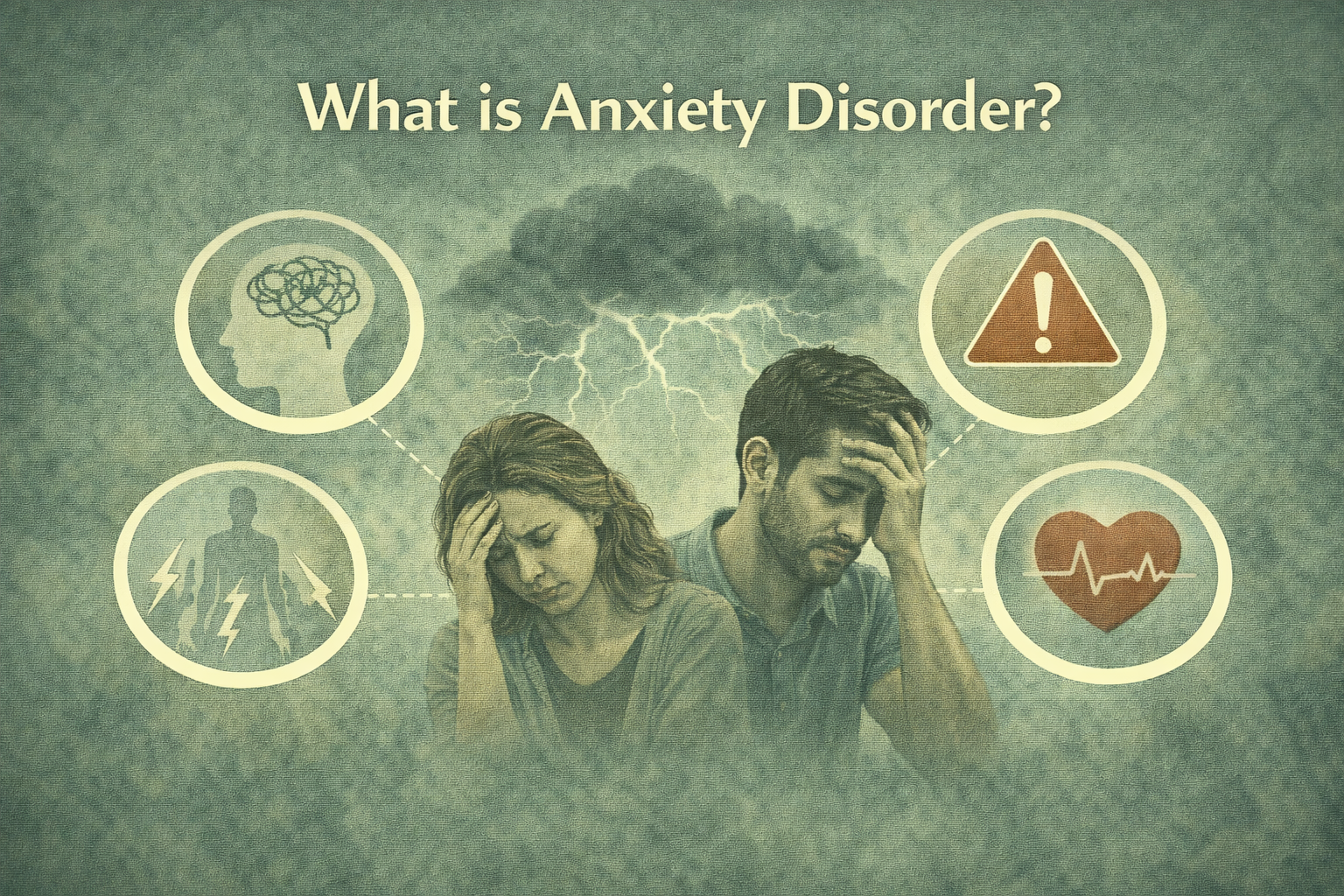
People often describe it as a constant background hum of dread. Someone might feel restless, keyed up, or like something bad is about to happen—even when life seems fine. Physical sensations, such as a racing heart, tight chest, or muscle tension, add to the distress. Sleep becomes elusive because the mind won’t quiet down.
Many report difficulty focusing at work or enjoying time with loved ones because worry takes over.
Anxiety Disorder vs Normal Anxiety
Normal anxiety is adaptive—it alerts people to real dangers and fades once the situation resolves. For example, feeling nervous before a job interview is typical and usually helps with preparation.
In contrast, anxiety disorder involves worry that feels uncontrollable, lasts longer (often six months or more), and impairs life even without a clear trigger. What starts as helpful caution can spiral into avoidance or exhaustion.
Note: Tracking worry patterns in a simple journal for a week can help. Note triggers, intensity (1-10), and duration—this can reveal if it’s tipping into disorder territory and provide useful info for a doctor.
Common Types of Anxiety Disorders
Anxiety disorders aren’t one-size-fits-all. Several main types share core features but differ in focus.
What Is Generalized Anxiety Disorder (GAD)?
Generalized anxiety disorder involves chronic, excessive worry about various everyday concerns—like health, finances, or family safety—for at least six months. People might find it hard to stop worrying, even when they know it’s excessive.
NIMH estimates 2.7% of U.S. adults had GAD in the past year, with lifetime prevalence around 5.7%. Women are affected more often.
What Is Social Anxiety Disorder?
Social anxiety disorder centers on intense fear of social situations where someone might be judged, embarrassed, or scrutinized. This can lead to avoiding conversations, parties, or even eating in public.
It affects about 7.1% of U.S. adults, per Anxiety and Depression Association of America (ADAA) data drawing from NIMH.
What Is Panic Disorder Anxiety?
Panic disorder features recurrent, unexpected panic attacks—sudden surges of intense fear peaking within minutes. Symptoms include chest pain, shortness of breath, dizziness, or fear of dying or losing control.
Many then worry about future attacks, creating a cycle. It impacts around 2.7% of adults annually.
What Is Anxiety Disorder Symptoms?
Symptoms vary but often blend emotional, physical, and behavioral elements.
Emotional and Behavioral Signs of Anxiety Disorder in Adults
People may feel persistent worry, irritability, or restlessness. Concentration becomes difficult, and they might avoid certain places or activities to prevent anxiety spikes.
Over time, this can lead to withdrawal from social or work commitments.
Physical Symptoms of Anxiety Disorder
Common physical signs include rapid heartbeat, sweating, trembling, fatigue, digestive upset (like nausea or stomachaches), and muscle tension. These can mimic heart or thyroid issues, prompting medical checks.
Signs of Severe Anxiety Disorder or Chronic Anxiety Disorder
In severe cases, symptoms become debilitating—frequent panic attacks, extreme avoidance, or constant interference with daily life. Chronic forms may persist for years without relief.
Research Shows: NIMH data indicates that among those with anxiety disorders, impairment ranges from mild to serious, with many experiencing moderate effects on work or relationships.
What Causes Anxiety Disorders?
Causes involve a mix of factors—no single trigger explains every case.
Biological and Genetic Factors
Brain chemistry plays a role; imbalances in neurotransmitters like serotonin or GABA can heighten anxiety. Family history increases risk—if a close relative has an anxiety disorder, someone is more likely to develop one.
Environmental and Life Experiences
Trauma, chronic stress, major life changes (like job loss or divorce), or childhood adversity can contribute. Mayo Clinic notes that learned behaviors from overprotective or anxious parents may also factor in.
Medical Conditions and Other Triggers
Underlying issues like thyroid problems, heart disease, or substance use (caffeine, alcohol withdrawal) can trigger or worsen symptoms.
Expert Insight: As mental health experts often explain, anxiety disorders arise from an interaction of genetics and environment—understanding this reduces self-blame and opens paths to effective help.
How to Know If You Have Anxiety Disorder
Recognizing the signs is the first step toward relief.
Self-Reflection Questions
Ask: Is my worry uncontrollable and excessive? Does it interfere with work, relationships, or sleep? Have symptoms lasted six months or more?
If yes to several, professional input is wise.
When to Seek Professional Help
Seek help if symptoms cause significant distress, persist, or lead to avoidance that limits life. Early intervention often improves outcomes.
Professional Diagnosis Process
A clinician conducts a thorough interview, reviews symptoms against DSM-5 criteria, and may rule out medical causes with tests.
Important: Never ignore sudden chest pain or severe symptoms—rule out physical causes with a doctor first, as anxiety can mimic serious conditions.
Scientific Evidence & Research
Research underscores that anxiety disorders are real, common, and treatable.
Clinical Studies
NIMH reports show 19.1% past-year prevalence among U.S. adults, higher in females (23.4%). Lifetime prevalence reaches 31.1%.
Expert Opinions
Mayo Clinic experts note anxiety often begins in childhood or teens and can link to medical issues, emphasizing early recognition.
Statistical Data
Many with anxiety disorders experience daily interference, but evidence-based treatments like therapy help most manage symptoms effectively.
NIMH Anxiety Disorders page, Mayo Clinic Anxiety overview,
Common Mistakes to Avoid
Avoiding pitfalls can speed progress.
Mistake #1: Ignoring Symptoms as “Just Stress”
Why problematic: Untreated anxiety often worsens, leading to burnout or depression. Better approach: Track symptoms and consult a professional early.
Mistake #2: Self-Medicating with Alcohol or Substances
Why problematic: It offers short-term relief but increases dependence and rebound anxiety. Better approach: Opt for evidence-based therapy or prescribed medication under guidance.
Mistake #3: Avoiding Triggers Without Addressing Root Cause
Why problematic: This reinforces the anxiety cycle long-term. Better approach: Work with a therapist on gradual exposure techniques.
For a broader foundation, see our guide on Signs of Mental Health Issues: Complete Guide to Anxiety Disorders
Frequently Asked Questions (FAQs)
What is anxiety disorder definition?
Anxiety disorder is a group of mental health conditions marked by excessive, persistent fear or worry that interferes with daily life, according to DSM-5 criteria. Unlike temporary stress, it lingers and often requires treatment to manage effectively.
What is the difference between anxiety and anxiety disorder?
Normal anxiety is short-term, tied to specific stressors, and resolves naturally. Anxiety disorder is chronic, excessive, and impairs functioning—even without obvious triggers—often lasting months.
What are the physical symptoms of anxiety disorder?
Common physical symptoms include rapid heartbeat, sweating, trembling, fatigue, digestive issues, and muscle tension. These can feel alarming and sometimes mimic other health problems.
How to know if you have anxiety disorder?
If worry feels uncontrollable, persists for months, or disrupts work, relationships, or daily routines, consult a professional for assessment. Self-reflection helps, but diagnosis requires expert evaluation.
What causes anxiety disorders?
Anxiety disorders stem from a combination of genetics, brain chemistry imbalances, trauma, chronic stress, and sometimes medical conditions. No single cause applies to everyone.
What does severe anxiety disorder look like?
Severe cases involve intense, debilitating episodes—frequent panic attacks, extreme avoidance, and major life interference—often needing prompt professional intervention.
Conclusion
Understanding what is anxiety disorder gives people power: They can spot when normal worry crosses into something more, differentiate types like GAD or social anxiety, and recognize symptoms early. This knowledge reduces isolation and opens doors to relief—whether through therapy, lifestyle adjustments, or medical support. Anxiety disorders are common but respond well to treatment; many people reclaim full, vibrant lives.
The next step? Track symptoms for a week—note patterns in a notebook or app—then reach out to a healthcare provider or therapist. Small actions build momentum.
If someone is struggling, don’t wait—book a consultation or explore options today. Everyone deserves freedom from constant worry. Taking that step shows strength, and brighter days are possible.
Medical Disclaimer
This article is for informational and educational purposes only and does not constitute medical advice. The information provided should not be used for diagnosing or treating a health problem or disease. Always consult with a qualified healthcare professional before making any changes to mental health treatment, starting new medications, or trying new supplements.
If experiencing a mental health crisis, please call the 988 Suicide & Crisis Lifeline or visit the nearest emergency room. For non-emergency support, contact the Substance Abuse and Mental Health Services Administration (SAMHSA) National Helpline at 1-800-662-4357.
The content in this article is based on current research and expert consensus as of 2026, but medical knowledge evolves. Always verify information with a healthcare provider.