Imagine waking up every day feeling overwhelmed by a persistent cloud of sadness that makes even simple tasks feel insurmountable. According to recent Gallup data, nearly 1 in 5 U.S. adults—about 18.3%—experiences depression or is currently being treated for it, impacting roughly 48 million people and disrupting work, relationships, and overall well-being. If you’re among those aged 25-55 navigating these challenges, you’re not alone, and exploring depression therapy options can be a vital step toward reclaiming your life.
Many people struggle with ongoing symptoms like loss of interest in activities, fatigue, or feelings of hopelessness, often without knowing the range of effective treatments available. This can lead to delayed help-seeking, worsening the condition over time. The good news is that depression is highly treatable, with various therapy approaches tailored to your needs.
In this article, you’ll discover a comprehensive overview of depression therapy options, including traditional methods like cognitive behavioral therapy, online alternatives, and holistic approaches. We’ll cover benefits, how to choose the right one, and evidence-based insights to empower your decision-making. Backed by authoritative sources like the National Institute of Mental Health (NIMH) and recent clinical research, this guide ensures medically accurate, practical guidance to help you find lasting relief.
For a broader foundation, see our guide on Signs of Mental Health Issues: Ultimate Guide to Understanding Depression
What Are Depression Therapy Options?
Depression therapy options encompass a variety of structured approaches designed to alleviate symptoms and improve daily functioning. These therapies address the emotional, cognitive, and behavioral aspects of depression, offering tools for long-term management. Understanding these options is crucial because they can be tailored to individual needs, severity, and preferences, potentially leading to better outcomes than medication alone.
Overview of Traditional Psychotherapy for Major Depression
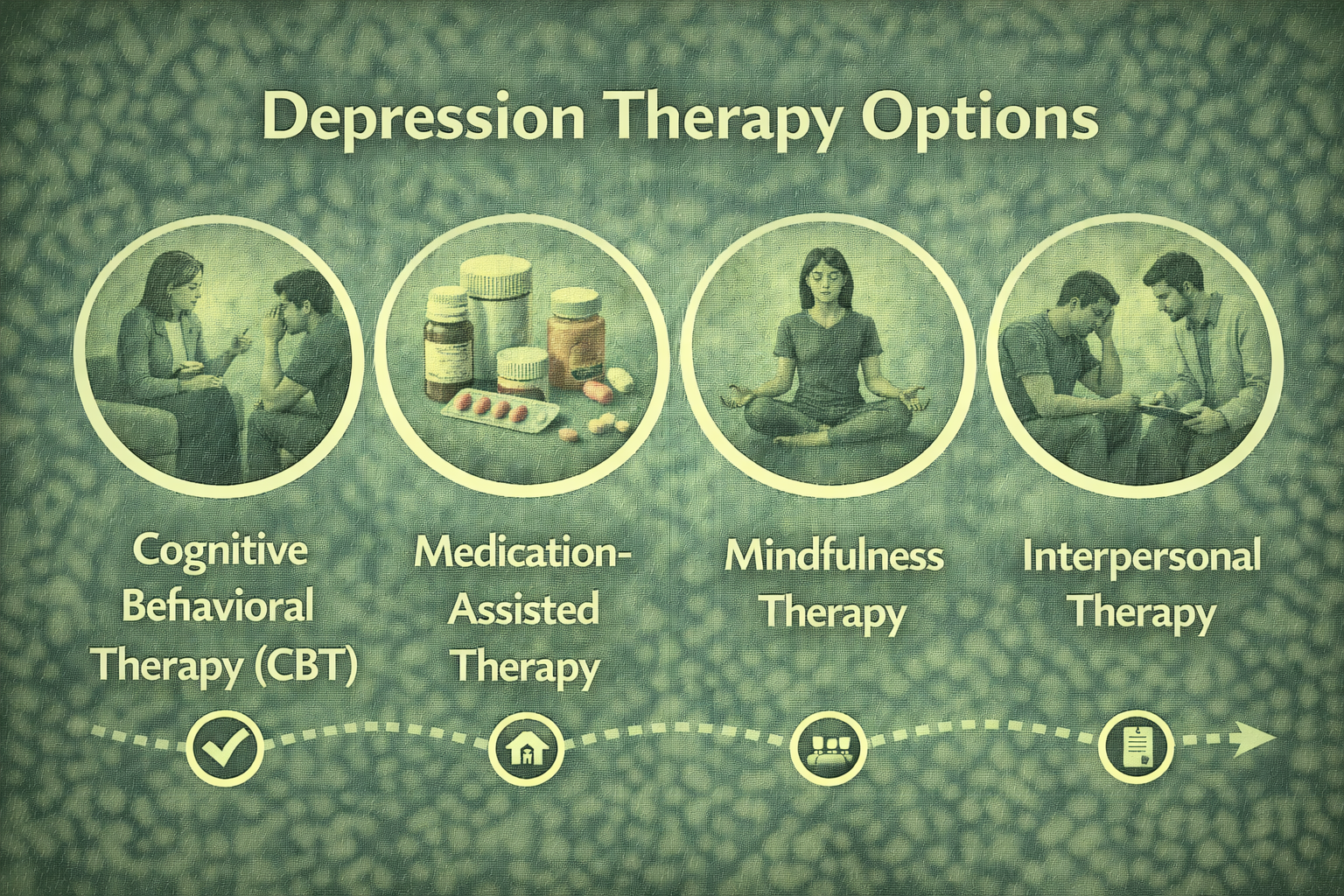
Traditional psychotherapy, often referred to as talk therapy, involves working with a licensed therapist to explore thoughts, feelings, and behaviors contributing to depression. It can be delivered in individual sessions, where the focus is personalized, or group formats that foster shared experiences. Evidence-based options like cognitive behavioral therapy (CBT) and interpersonal therapy (IPT) are particularly effective, as they target distorted thinking patterns and relationship issues, respectively.
Research suggests that these therapies can reduce symptoms in about 50-60% of people with major depression. For instance, in individual therapy, you might unpack personal triggers, while group settings provide validation from others facing similar struggles.
However, it’s important to note that therapy works best when combined with lifestyle adjustments, and results vary based on consistency.
Natural Remedies for Depression Therapy
Natural remedies can complement professional depression therapy options by promoting overall well-being. Approaches like regular exercise, a balanced diet rich in omega-3s, and mindfulness practices help regulate mood through physiological changes, such as increased endorphin release or reduced inflammation.
These methods support formal treatment by enhancing resilience but have limitations—they’re not substitutes for severe cases and should be integrated under guidance. For example, combining daily walks with therapy sessions may amplify benefits, but always consult a doctor to avoid interactions.
Studies show that exercise alone can reduce mild depression symptoms by up to 40%, similar to some medications.
Group Therapy for Depression Treatment
Group therapy offers unique benefits through shared experiences and peer support, reducing feelings of isolation common in depression. Types include support groups for open discussions and structured sessions focused on skill-building, like coping strategies.
In the USA, accessibility is high via community centers, online platforms, or insurance-covered programs. Participants often report improved social skills and motivation, with research indicating similar efficacy to individual therapy for mild to moderate cases.
Pro Tip: If you’re hesitant about sharing in groups, start with a smaller, themed session focused on specific challenges like work-related stress—it can ease you in while building connections.
For a broader foundation, see our guide on Signs of Mental Health Issues:Seasonal Affective Disorder (SAD)
Why Is Therapy Important for Depression?
Therapy plays a pivotal role in managing depression by providing tools to break cycles of negative thinking and behavior. It’s important because untreated depression can lead to chronic health issues, strained relationships, and reduced productivity. This section explores key benefits and available depression treatment options, helping you see why investing in therapy matters.
Benefits of Effective Depression Therapy Near Me
Effective therapy near you can significantly reduce core symptoms like persistent sadness and fatigue, allowing you to regain energy for daily activities. It also enhances quality of life by fostering better relationships through improved communication and emotional regulation.
Moreover, therapy equips you with long-term strategies to prevent relapse, such as identifying early warning signs. Local options make consistency easier, leading to sustained improvements.
Depression Treatment Options Available
Treatment is tailored to depression severity—mild cases might start with therapy alone, while severe ones often combine it with medication for optimal results. In the USA, access includes insurance-covered sessions or telehealth for convenience.
Integration with meds can boost efficacy by 20-30%, addressing both biological and psychological factors.
Holistic Treatment for Depression
Holistic approaches address the mind-body connection, incorporating therapy with nutrition, exercise, and stress management. This combination promotes comprehensive healing, often leading to fewer side effects than meds alone.
For many, it empowers self-management, but always pair it with professional oversight.
Research Shows: A NIMH-backed study found that combining therapy with lifestyle changes reduces relapse rates by up to 50% compared to medication alone.
Cognitive Behavioral Therapy for Depression
Cognitive behavioral therapy (CBT) stands out among depression therapy options for its structured, goal-oriented approach. It helps you identify and modify negative thought patterns that fuel depression, leading to measurable improvements in mood and behavior. Here’s how specific techniques work in practice.
CBT Techniques for Depression
CBT begins by helping you spot negative thought patterns, such as all-or-nothing thinking. Then, you learn to challenge these distortions with evidence-based reframing, turning “I always fail” into “I’ve succeeded before.”
This process reduces emotional intensity over time. Behavioral activation encourages engaging in positive activities to counteract withdrawal.
Behavioral Activation for Depression
Step 1: Identify enjoyable or meaningful tasks, like a short walk Step 2: Schedule them daily, even if motivation is low. Step 3: Track mood changes to reinforce progress.
Studies show this technique boosts efficacy, with many experiencing symptom relief in weeks.
Mindfulness Based Therapy for Depression
Mindfulness integrates meditation to heighten awareness, reducing rumination on past regrets or future worries. Simple practices like focused breathing help anchor you in the present.
It complements CBT by preventing thought spirals, with evidence supporting its role in long-term management.
Expert Insight: As per NIMH guidelines, CBT is a first-line treatment, often more enduring than meds alone for preventing relapse.
Interpersonal Therapy for Depression
Interpersonal therapy (IPT) focuses on improving relationships as a key to easing depression. Among depression therapy options, it’s particularly useful if social conflicts or life changes contribute to your symptoms. It emphasizes practical strategies over deep psychoanalysis.
Focus on Relationships in Therapy
IPT addresses interpersonal conflicts by teaching skills to resolve disputes and express needs clearly. It also helps navigate role transitions, like job loss, and processes grief to reduce emotional burden.
This targeted approach can lead to quicker improvements in social functioning.
Talk Therapy for Depression
In short-term, focused sessions—typically 12-16 weeks—IPT builds social support networks, encouraging outreach to friends or family. This reduces isolation, a common depression amplifier.
Research supports its efficacy, especially for those with relationship-based triggers.
Online Therapy Options for Depression
Online therapy has revolutionized access to depression therapy options, offering flexibility without compromising effectiveness. It compares favorably to in-person sessions, with platforms providing licensed therapists via video or chat.
Advantages of Virtual Sessions
For busy USA adults aged 25-55, virtual sessions eliminate travel, fitting easily into schedules. Rural residents gain access to specialists otherwise unavailable.
Platforms like BetterHelp ensure privacy with encrypted tools, making it a convenient choice.
Best Therapy for Depression Online
Online CBT shows similar outcomes to in-person, with added benefits like text-based support. Privacy is robust, and costs often range $60-90 per week, sometimes covered by insurance.
Integrate it with occasional in-person care for hybrid effectiveness.
Alternative Therapies for Depression
Alternative therapies expand depression therapy options beyond conventional methods, often serving as adjuncts. They appeal to those seeking non-pharmacological paths, but evidence varies, so consult professionals.
Exploring Non-Traditional Approaches
Acupuncture may ease symptoms by stimulating endorphins, with some studies showing mild benefits. Yoga combines movement and breathwork to reduce stress, while herbal supplements like St. John’s wort aid mild cases but risk interactions.
Safety is key—evidence is promising but not conclusive for severe depression.
Integrating Alternatives with Standard Care
Use alternatives as complements, like yoga alongside CBT, when symptoms are stable. Always discuss with doctors to monitor effects and avoid conflicts.
This integrated approach can enhance overall recovery.
Important: Herbal remedies like St. John’s wort can interact with antidepressants, potentially causing serious side effects—consult your healthcare provider before starting.
How to Choose the Best Therapy for Depression
Selecting among depression therapy options requires self-reflection and practical steps. Consider what fits your lifestyle and symptoms to maximize benefits.
Assessing Your Needs
Evaluate symptom severity—mild cases might suit online CBT, while severe ones need intensive care. Factor in preferences like group vs. individual and costs.
Personalization ensures better adherence.
Finding Providers in the USA
Use directories like Psychology Today to locate licensed therapists. Check insurance for coverage, including telehealth options.
Best Practices in Depression Therapy Options
To get the most from depression therapy options, follow expert-recommended practices. Consistency and integration are key to lasting results.
Expert Tips for Success
Attend sessions regularly to build momentum. Complete homework, like journaling thoughts, to reinforce learning.
Track progress with mood logs to celebrate small wins.
Combining Therapies
Pair therapy with medication if needed, as this duo often yields better outcomes. Discuss with your provider for a balanced plan.
Include primary keyword naturally here: These best practices enhance all depression therapy options.
Scientific Evidence & Research
Backing depression therapy options with solid evidence ensures trustworthiness. This section highlights key studies, opinions, and data.
Clinical Studies
A meta-analysis revealed CBT’s moderate effects in reducing symptoms, outperforming controls and showing long-term advantages over meds alone.
Expert Opinions
NIMH recommends CBT and IPT as evidence-based first-lines for depression.
Statistical Data
Therapy can cut relapse rates by up to 50% in studies, promoting sustained recovery.
Common Mistakes to Avoid
Navigating depression therapy options means steering clear of pitfalls that hinder progress. Awareness can lead to better outcomes.
Mistake #1: Ignoring Professional Help
Delaying therapy worsens symptoms and complicates recovery. Instead, seek help early to prevent escalation.
Mistake #2: Assuming One-Size-Fits-All
Not all therapies suit everyone; ineffective matches waste time. Personalize by trying different approaches with guidance.
Mistake #3: Poor Self-Care
Neglecting routines like sleep exacerbates depression. Maintain habits and monitor changes to support therapy.
Frequently Asked Questions (FAQs)
What Are the Best Depression Therapy Options?
Common options include CBT, IPT, and online therapy, effective for most with evidence from NIMH. CBT focuses on thoughts, IPT on relationships; choose based on needs for 50-70% improvement rates. These therapies empower self-management, but consult a professional for personalization, especially if symptoms persist.
How Effective Is Cognitive Behavioral Therapy for Depression?
CBT shows moderate to large effects in reducing symptoms, with long-term benefits over meds in studies. It helps reframe negative thoughts, suitable for adults 25-55. Many see improvements in 8-12 weeks, but consistency is key; it’s ideal for those motivated to practice skills.
What Are Natural Remedies for Depression Therapy?
Exercise, mindfulness, and diet can complement therapy but aren’t substitutes. Consult professionals to integrate safely. These boost endorphins and reduce inflammation, offering mild relief; however, they’re most effective alongside structured treatment.
Are Online Therapy Options for Depression Reliable?
Yes, virtual CBT and IPT are effective, especially for accessibility in the USA. Platforms offer licensed therapists with similar outcomes to in-person. They’re convenient for busy schedules, but ensure a stable internet connection and privacy.
What Is the Role of Group Therapy for Depression Treatment?
It provides peer support and reduces isolation, effective for mild-moderate cases. Often combined with individual therapy. Sharing experiences builds empathy, but it may not suit those preferring privacy.
How Do I Find Effective Depression Therapy Near Me?
Use directories like Psychology Today or insurance providers for local options. Consider telehealth for convenience. Check credentials and reviews; start with a trial session to assess fit.
What Are Common Alternative Therapies for Depression?
Yoga, acupuncture, and herbal aids, but evidence varies; use alongside standard care. Discuss with doctor to avoid interactions. These can enhance mood, but they’re not proven for severe cases.
Conclusion
Exploring depression therapy options empowers you to reduce symptoms, rebuild resilience, and enjoy fuller relationships and daily life. From CBT’s thought-reframing tools to online accessibility, these approaches offer personalized paths to recovery, often outperforming meds long-term.
Restating the value: Understanding and choosing among depression therapy options leads to effective, tailored care that fits your lifestyle.
Your next clear step: Consult a mental health professional to discuss options and start a plan.
Medical Disclaimer:
This article is for informational purposes only and not a substitute for professional medical advice. Consult a qualified healthcare provider for personalized treatment. If you’re experiencing a mental health crisis, please call the 988 Suicide & Crisis Lifeline or visit your nearest emergency room. For non-emergency support, contact the Substance Abuse and Mental Health Services Administration (SAMHSA) National Helpline at 1-800-662-4357.
The content in this article is based on current research and expert consensus as of 2026, but medical knowledge evolves. Always verify information with your healthcare provider.