Over 47.8 million American adults are currently living with or being treated for depression, a condition that can leave you feeling overwhelmed, isolated, and trapped in a fog of hopelessness. If you’re between 25 and 55, juggling work, family, and daily stresses, these feelings might seem like just another part of life—but they don’t have to be. Many people delay seeking help, unsure where to start, which can lead to worsened symptoms, strained relationships, and even physical health issues like fatigue or chronic pain.
This depression first steps guide is designed to empower you with practical, actionable strategies to recognize symptoms, take initial actions, and build a path toward recovery. You’ll learn how to identify depression early, seek professional support, and incorporate evidence-based habits that promote healing. Drawing from authoritative sources like the National Institutes of Health (NIH), Mayo Clinic, and recent studies on early intervention, this guide emphasizes that recovery is possible with timely steps. Remember, you’re not alone, and taking that first step today can make a profound difference in reclaiming your life.
For related reading, see our guide on Signs of Mental Health Issues: Signs and Symptoms of Depression
What is Depression?
Depression is more than just feeling sad—it’s a serious mood disorder that affects your thoughts, feelings, and daily functioning, often making even simple tasks feel insurmountable. In this depression first steps guide, understanding the basics is crucial for recognizing when to seek help. Unlike temporary blues that pass with time, clinical depression persists and can disrupt your life significantly.
How to Start Overcoming Depression Basics
Depression manifests as a persistent low mood that interferes with work, relationships, and self-care. It’s classified into common types like major depressive disorder, where symptoms last at least two weeks, and persistent depressive disorder, a milder but longer-lasting form that can endure for years. Research suggests depression involves imbalances in brain chemicals like serotonin and norepinephrine, combined with life stressors.
Distinguishing it from everyday sadness is key: while everyone experiences down days, depression feels unrelenting and hopeless. According to the NIH, it affects about 18.3% of U.S. adults, with higher rates among young adults under 30 at 26.7%. Early awareness in this depression first steps guide can prevent escalation.
First Steps for Managing Depression Symptoms
Key symptoms include persistent sadness, loss of interest in activities (anhedonia), fatigue, and changes in appetite or sleep—either insomnia or oversleeping. You might also experience irritability, difficulty concentrating, or feelings of worthlessness. These can lead to physical issues like unexplained aches or digestive problems.
The impact extends beyond the individual, straining relationships through withdrawal and affecting work productivity with increased absenteeism. Studies show untreated depression raises risks for conditions like heart disease. Recognizing these signs early allows for prompt intervention, as outlined in this depression first steps guide.
Beginning Guide to Depression Recovery Factors
Biological factors, such as genetics or hormonal changes, play a role—family history increases risk by up to 30%. Environmental triggers include chronic stress, loss, or financial strain, while psychological aspects like low self-esteem exacerbate vulnerability. Trauma, especially in childhood, is a significant risk factor, per Mayo Clinic research.
Combining these elements, depression often emerges from a mix rather than a single cause. Addressing them holistically in your depression first steps guide promotes better outcomes.
Research Shows: A 2025 Gallup survey found 18.3% of U.S. adults (47.8 million) experience depression, with rates doubling among young adults since 2017, highlighting the need for early action to prevent chronicity.
Why Taking the First Steps Matters
Initiating action against depression isn’t just about symptom relief—it’s about reclaiming your quality of life and preventing long-term complications. In this depression first steps guide, we emphasize that early steps can transform your trajectory, fostering resilience and hope where isolation once dominated.
Initial Actions to Fight Depression Benefits
Prompt intervention prevents depression from becoming chronic or severe, reducing the likelihood of hospitalization or disability. It improves overall prognosis, allowing you to return to work and relationships sooner. Research suggests early treatment can halt brain changes associated with prolonged depression, preserving cognitive function.
Moreover, it enhances daily functioning, helping you maintain routines and avoid the downward spiral of inactivity. This proactive approach in your depression first steps guide leads to sustained well-being.
What Are First Steps for Depression Importance
Early steps reduce relapse risks and comorbidities like anxiety or substance use disorders, which affect up to 50% of those with untreated depression. They build emotional resilience, equipping you to handle future stresses better.
Functionally, timely action minimizes disruptions in career and family life, potentially saving thousands in healthcare costs annually. As per NIH data, early treatment prevents chronicity in many cases.
Guide to First Depression Help Outcomes
Studies show early intervention yields quicker remission—up to 73% in targeted therapies like PCIT-ED for young individuals, with long-term benefits reducing medication needs. Programs like Penn Resiliency cut onset by 50% in at-risk groups.
These outcomes underscore that following this depression first steps guide can lead to full recovery, not just management.
Expert Insight: “Early intervention alters trajectories by fostering emotional awareness,” note Washington University researchers, emphasizing that prompt action promotes flourishing beyond symptom relief.
How to Recognize If You’re Depressed
Wondering if your persistent low mood is more than just a rough patch? Recognizing depression early is a vital part of this depression first steps guide, as it empowers you to act before symptoms intensify. Self-awareness can bridge the gap between feeling off and seeking help.
Steps to Take When Depressed Signs
Emotional signs like hopelessness, irritability, or excessive guilt often signal depression, making everyday interactions feel burdensome. Physical manifestations include unexplained aches, headaches, or weight changes without dietary shifts.
These indicators, if lasting two weeks or more, warrant attention. Ignoring them can lead to deeper isolation, but acknowledging them is your first empowering step.
Beginning Steps for Depression Treatment Triggers
Behavioral changes such as social withdrawal or loss of motivation in hobbies are red flags, often accompanied by reduced productivity at work. If symptoms persist beyond two weeks and interfere with daily life, it’s time to seek help.
Triggers like major life events—job loss or relationship strain—can exacerbate these. Early recognition prevents escalation, aligning with this depression first steps guide.
How to Take First Step Depression Indicators
Self-assessment tools, like online quizzes from reputable sources, can highlight patterns, but professional screening via a doctor or therapist is essential for accuracy. Blood tests may rule out medical causes like thyroid issues.
Starting with a primary care visit demystifies the process, leading to tailored support.
A popular self-help app like Moodpath can aid initial tracking—many find it helpful for daily mood logs.
Important: If thoughts of self-harm arise, contact the 988 Suicide & Crisis Lifeline immediately—don’t wait, as professional help can save lives.
For related reading, see our guide on Signs of Mental Health Issues: Ultimate Guide to Understanding Depression
What Are the First Steps for Managing Depression?
Feeling overwhelmed by depression? This depression first steps guide outlines practical, sequential actions to regain control. Starting small builds momentum, turning helplessness into empowerment through consistent effort.
Basic Guide to Beating Depression Starts
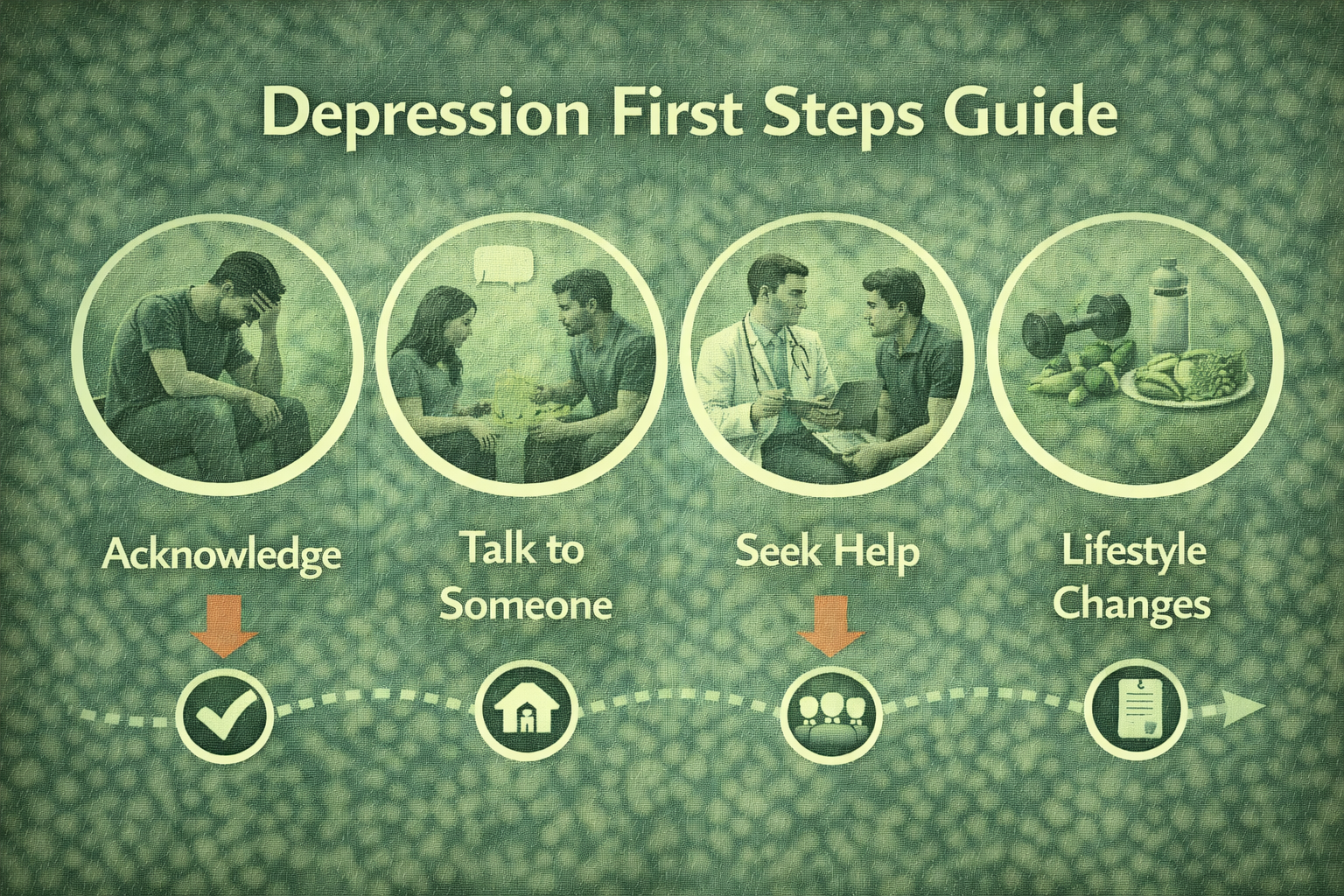
Step 1: Acknowledge your symptoms without judgment—admit you’re struggling, as denial prolongs suffering. Track them in a journal, noting patterns in mood, sleep, and energy to identify triggers.
Step 2: Reach out to a trusted friend or family member for support. Sharing lightens the load and combats isolation, a common depression amplifier.
First Actions Against Depression
Step 3: Schedule an appointment with a primary care doctor for evaluation—they can rule out physical causes and refer you to specialists.
Step 4: Explore lifestyle changes like incorporating balanced meals and light exercise, such as a daily walk, which boosts endorphins and mood naturally.
Starting Point for Depression Recovery
Step 5: Consider therapy options like cognitive behavioral therapy (CBT), effective for reframing negative thoughts, or join support groups for shared experiences.
Consistency is key—combine these with professional guidance for optimal results in this depression first steps guide.
Check our how-to article on finding a therapist for personalized tips.
How to Seek Professional Help
Navigating depression alone can feel daunting, but professional help is accessible and transformative. This section of the depression first steps guide details how to connect with experts, ensuring you get the support you deserve.
Initial Steps to Reduce Depression Support
Begin by contacting your primary care doctor or a mental health specialist—they can assess symptoms and recommend next steps. In the USA, resources like the SAMHSA helpline (1-800-662-HELP) offer free, confidential guidance and local referrals.
Guide for First Depression Steps Options
Professionals include psychiatrists for medication management, psychologists for therapy, and counselors for ongoing support. Choose based on needs—therapy for talk-based help, meds if symptoms are severe.
Consider insurance coverage; many plans include mental health benefits. Affordable alternatives exist through employee assistance programs or online platforms.
What to Do First for Depression Consultation
Prepare by listing symptoms, duration, and family history—this aids accurate diagnosis. Bring questions about treatment options and side effects.
During the visit, be open; honesty leads to effective plans. Follow-up is crucial for adjustments.
Pro Tip: Before your first session, jot down three specific goals, like “improve sleep,” to focus discussions and track progress effectively.
Best Practices for Initial Depression Management
Effective management begins with daily habits that nurture your mind and body. This depression first steps guide highlights proven practices to stabilize mood and build resilience, turning small changes into lasting improvements.
How to Start Overcoming Depression Practices
Build a routine with small, achievable daily goals—like making your bed or a short walk—to create structure and a sense of accomplishment. Incorporate self-care, such as mindfulness meditation or pursuing hobbies, even if motivation is low initially.
These actions counteract inertia, fostering gradual momentum.
First Steps for Managing Depression Habits
Adopt healthy eating with nutrient-rich foods like omega-3s from fish, which support brain health. Engage in physical activity, aiming for 30 minutes most days, to release endorphins and reduce symptoms.
Beginning Guide to Depression Recovery Strategies
Journal emotions and progress daily to gain insights and celebrate wins. This practice enhances self-awareness and tracks improvements over time.
Combine with relaxation techniques like deep breathing for stress reduction.
See our related guide on daily mental health routines for more ideas.
For related reading, see our guide on Signs of Mental Health Issues: Depression Warning Signs Checklist
Expert Tips for Starting Recovery
Recovery from depression is a journey, not a sprint—experts emphasize patience and strategy. In this depression first steps guide, these tips provide actionable wisdom to sustain progress and avoid setbacks.
Initial Actions to Fight Depression Tips
Set realistic expectations: understand recovery takes time, often weeks or months, but consistency pays off. Build a support network of friends, family, or groups to share burdens and gain perspectives.
These connections provide accountability and emotional uplift.
What Are First Steps for Depression Expert Advice
Practice gratitude by noting three positives daily, shifting focus from negatives. Monitor progress weekly, adjusting habits as needed to maintain motivation.
These mindfulness techniques foster positivity amid challenges.
Guide to First Depression Help Recommendations
Combine therapy with lifestyle changes for optimal results—experts note this synergy boosts remission rates. Stay engaged in treatment, even on good days.
Scientific Evidence & Research
Backing up strategies with science builds trust in recovery. This section explores studies showing early treatment’s efficacy, offering hope through data-driven insights.
Clinical Studies
Parent-Child Interaction Therapy-Emotion Development (PCIT-ED) demonstrates 73% remission in preschoolers, with long-term benefits reducing medication reliance. Programs like TEAMS and Penn Resiliency slash depression onset by up to 50% in at-risk teens.
These interventions highlight early action’s power in altering trajectories.
Expert Opinions
Washington University researchers assert early intervention fosters emotional awareness, preventing chronic paths. Randomized trials confirm positive self-help reduces symptoms and promotes flourishing.
Experts agree: timely care reshapes outcomes favorably.
Statistical Data
18.3% of U.S. adults (47.8 million) face depression; early treatment averts chronicity and relapse. Prevalence hits 26.7% in young adults under 30, underscoring prompt intervention’s necessity.
Link to NIH on depression statistics; Mayo Clinic on early intervention; Lancet Psychiatry study on remission rates.
Common Mistakes to Avoid
Navigating depression requires avoiding pitfalls that hinder progress. This guide highlights errors to sidestep for smoother recovery.
Mistake #1: Isolating Yourself
Why it’s problematic: Isolation amplifies loneliness and hopelessness, deepening depression’s grip. Social withdrawal reinforces negative thoughts.
Better approach: Reach out to support networks or join groups—even small interactions build connection and perspective.
Mistake #2: Ignoring Sleep Issues
Why it’s problematic: Poor sleep exacerbates fatigue and irritability, creating a vicious cycle.
Better approach: Establish a routine with consistent bedtimes; seek professional help if insomnia persists.
Mistake #3: Self-Medicating
Why it’s problematic: Using alcohol or substances masks issues, leading to dependency and worsened symptoms.
Frequently Asked Questions (FAQs)
How to Start Overcoming Depression?
The first step is acknowledging symptoms like persistent sadness or fatigue. Consult a doctor for evaluation, start with lifestyle changes like exercise, and consider therapy. Early action promotes quicker recovery and prevents worsening, as studies show up to 73% remission with targeted interventions. Building a support system and tracking moods daily can accelerate progress—remember, professional guidance ensures personalized strategies.
What Are the First Steps for Managing Depression?
Begin by tracking symptoms, seeking professional help, and building a support system. Incorporate daily routines, healthy habits, and avoid isolation. Treatment may include therapy or medication for effective management. Evidence indicates early steps reduce relapse risks by fostering resilience. Journaling and small goals help maintain momentum, leading to improved functioning and quality of life over time.
Beginning Guide to Depression Recovery – Where to Start?
Start with self-assessment and a medical checkup. Focus on small goals, such as walking daily or journaling. Early intervention, per studies, leads to better outcomes and remission. Combine self-care with therapy like CBT for comprehensive healing. Professional evaluation rules out underlying issues, setting a strong foundation for sustained recovery.
Initial Actions to Fight Depression?
Take immediate steps like scheduling a therapy session, improving sleep, and connecting with loved ones. Avoid self-medication; professional guidance ensures safe, effective progress. Research supports these actions in preventing chronicity. Lifestyle tweaks, like nutrition and activity, complement treatment for faster relief.
Steps to Take When Depressed?
Prioritize rest, nutrition, and activity. Reach out for help promptly. Combining self-care with expert treatment reduces symptoms and builds resilience. Studies affirm early outreach enhances remission rates. Establish routines to combat inertia, fostering gradual improvement.
How to Take First Step Depression Recovery?
The initial step is recognizing the need for help. Visit a healthcare provider, explore options like CBT, and track improvements. Consistency is key to long-term relief. Evidence shows timely care yields up to 50% reduction in onset risks. Support networks amplify efforts.
What to Do First for Depression?
Contact a doctor or helpline immediately. Document symptoms, avoid alcohol, and start simple self-care. Early treatment can lead to full remission. Per NIH data, prompt action prevents complications like comorbidities. This sets the stage for effective, holistic management.
Conclusion
Taking early steps in managing depression unlocks profound benefits: higher remission rates, reduced relapse risks, and enhanced life quality through symptom recognition, professional help, and daily practices. This depression first steps guide equips you to shift from survival to thriving, fostering resilience and joy where despair once lingered.
Restating the core value: This depression first steps guide empowers you to take control and start healing, transforming overwhelming feelings into manageable actions.
Your clear next step: Schedule a professional consultation today—contact your doctor or the SAMHSA helpline at 1-800-662-HELP.
Seek help from a mental health expert or hotline; consider email opt-ins for weekly tips.
Medical Disclaimer:
This article is for informational purposes only and is not a substitute for professional medical advice. Consult a healthcare provider for personalized guidance. If you’re experiencing a mental health crisis, please call the 988 Suicide & Crisis Lifeline or visit your nearest emergency room. For non-emergency support, contact the Substance Abuse and Mental Health Services Administration (SAMHSA) National Helpline at 1-800-662-4357. The content in this article is based on current research and expert consensus as of 2026, but medical knowledge evolves. Always verify information with your healthcare provider.