Did you know that nearly 1 in 5 U.S. adults—about 18.3%—reports currently having or being treated for depression, according to recent Gallup data? This staggering statistic highlights a widespread challenge, yet many people remain undiagnosed because they overlook subtle signs or dismiss them as temporary setbacks. Millions grapple with persistent feelings of sadness, fatigue, and disinterest in activities they once enjoyed, often mistaking these for normal life stresses without recognizing they might signal clinical depression.
If you’re questioning your mood or seeking clarity, depression self-assessment tools can be a valuable starting point. In this guide, you’ll learn about reliable options like the PHQ-9 and BDI, how to use them effectively, interpret your results, and decide on next steps for better mental health. We’ll cover everything from selecting the right tool to integrating it with professional care, empowering you to take informed action.
Backed by insights from leading organizations like the American Psychological Association (APA) and the National Institutes of Health (NIH), this information draws on extensive research and expert consensus to provide trustworthy guidance.
For related reading, see our guide on Signs of Mental Health Issues: Ultimate Guide to Understanding Depression
What Are Depression Self-Assessment Tools?
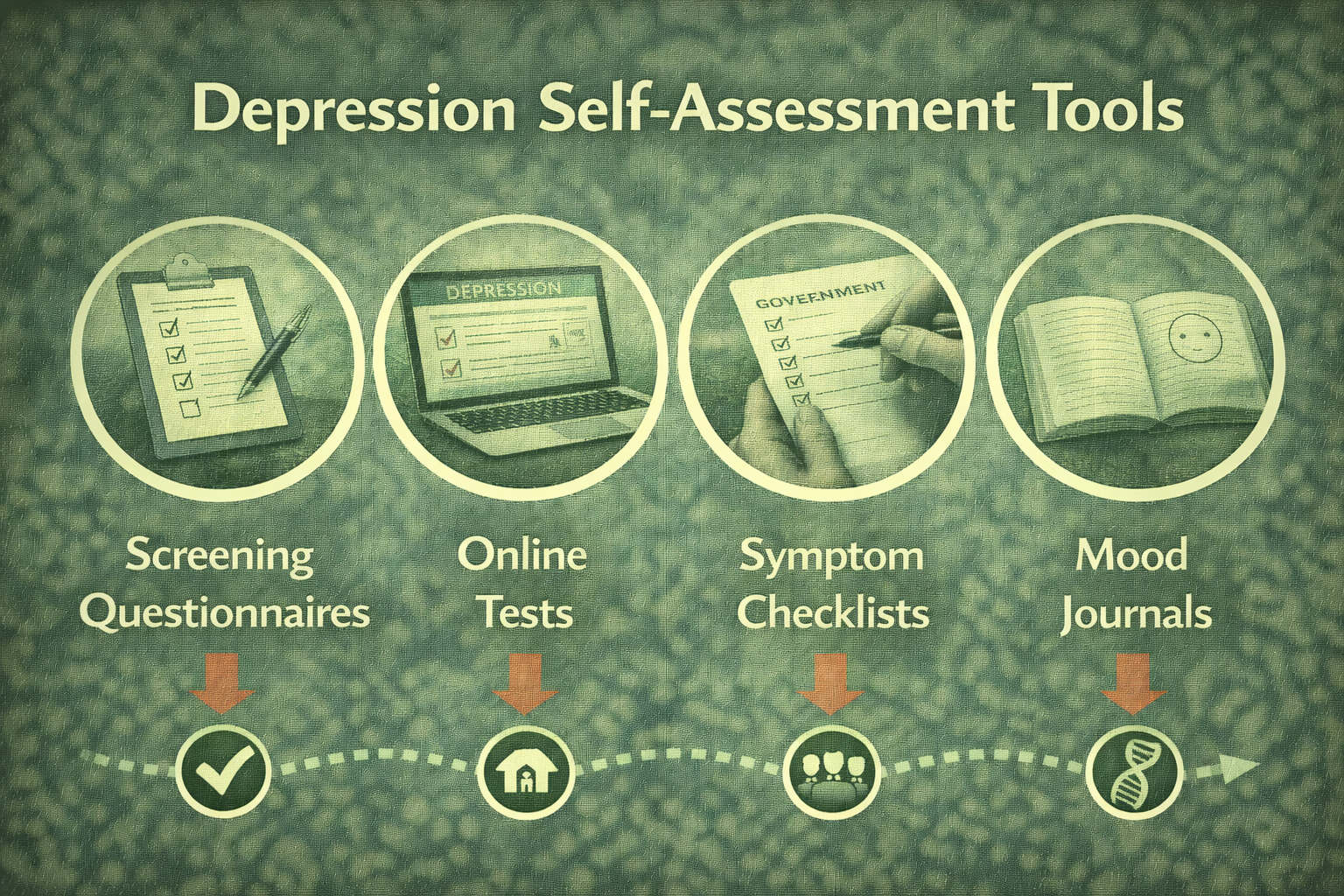
Depression self-assessment tools are structured questionnaires that help individuals evaluate their symptoms and gauge the potential presence of depression. These tools, often based on established diagnostic criteria like those in the DSM-5, offer a private and accessible way to reflect on your mental state. While they can’t replace a professional diagnosis, they play a key role in raising awareness and prompting timely help.
Understanding these tools is essential because early recognition can lead to better outcomes. In the sections below, we’ll explore their overview, types, and pros and cons.
Overview of Am I Depressed Quiz and Similar Tools
Self-assessments like the “am I depressed quiz” are typically short questionnaires that prompt you to rate how often you’ve experienced symptoms such as low mood or loss of interest. They draw from standardized criteria, ensuring a consistent approach to screening.
Many include free online versions, making them easy to access from home. For instance, you might answer questions on a scale from “not at all” to “nearly every day.”
Importantly, these are not diagnostic—they’re tools for initial awareness. Research suggests they can help identify risks, but always follow up with a healthcare provider.
Types of Online Depression Screening Tools
Validated instruments form the backbone of effective screening. The PHQ-9, for example, is a nine-item tool widely used in primary care settings.
Variations cater to different needs, such as quick quizzes for busy individuals or more detailed inventories for in-depth evaluation.
For U.S. audiences, reputable sites like Mental Health America (MHA) or Kaiser Permanente offer accessible versions, often with privacy protections and immediate feedback.
Research Shows:
A meta-analysis in The BMJ found that the PHQ-9 has a sensitivity of 88% and specificity of 85% at a cutoff of 10, making it a strong option for detecting major depression in primary care.
Benefits and Limitations of Self Test for Depression
One major benefit is empowering early recognition, which can reduce stigma around mental health. By highlighting patterns, these tools encourage proactive steps.
They also promote self-awareness, helping you track changes over time.
However, limitations exist—results might be misinterpreted without context, leading to unnecessary worry or false reassurance. Professional input is crucial to avoid these pitfalls.
Depression self-assessment tools bridge the gap to care, but they’re most effective when used thoughtfully.
For related reading, see our guide on Signs of Mental Health Issues: Clinical Depression vs Sadness
Why Use Depression Self-Assessment Tools?
In a fast-paced world, it’s easy to ignore mental health signals until they become overwhelming. Depression self-assessment tools provide a simple, evidence-based way to check in with yourself, potentially catching issues early. This section explains their importance, from fostering awareness to supporting ongoing care.
Importance of Signs of Depression Quiz for Early Detection
A signs of depression quiz can spotlight subtle symptoms like ongoing fatigue or irritability that might otherwise go unnoticed. Catching these early prevents escalation into more severe episodes.
It supports proactive management, allowing you to address factors like stress before they deepen.
Expert Insight:
As a clinical psychologist might note, “Early detection through self-screening isn’t about self-diagnosis—it’s about opening the door to conversations that can change lives.”
Empowering Self-Awareness with Free Depression Self Assessment
These tools build a deeper understanding of your mental health patterns, revealing how symptoms fluctuate with life events.
They encourage regular tracking, helping you spot trends and make informed lifestyle adjustments.
How They Complement Professional Care
Self-assessments serve as a conversation starter with healthcare providers, providing data to guide discussions.
They also aid in monitoring treatment progress, such as noting improvements after starting therapy or medication.
For related reading, see our guide on Signs of Mental Health Issues: Depression and Relationships Impact
Popular Depression Self-Assessment Tools
Choosing the right tool can feel daunting, but focusing on validated options ensures reliability. Popular depression self-assessment tools like the PHQ-9 and BDI are backed by research and widely recommended. Below, we compare key features in a table for clarity.
| Tool | Number of Questions | Time to Complete | Reliability |
| PHQ-9 | 9 | 2-5 minutes | High (sensitivity 88%, specificity 88%) |
| BDI | 21 | 5-10 minutes | Excellent (internal consistency α=0.92) |
| GAD-7 (for anxiety overlap) | 7 | 1-3 minutes | Strong for co-occurring issues |
PHQ-9 Depression Assessment Online
The PHQ-9 is a nine-question tool that measures how often symptoms like little interest in activities have bothered you over two weeks.
It’s highly valid and commonly used in primary care to screen for depression severity.
Beck Depression Inventory (BDI)
This 21-item self-report assesses depression severity, focusing on cognitive, emotional, and physical symptoms.
It emphasizes thoughts like feelings of failure or guilt, providing a comprehensive view.
Other Options Like Mental Health Depression Quiz
For those with anxiety alongside depression, the GAD-7 screens for generalized anxiety disorder, often used in tandem.
The WHO self-assessment offers a global standard, focusing on core symptoms like low energy and sleep issues.
How to Take a Depression Test Online Free
Taking a depression test online free is straightforward and can be done in minutes. Start by finding a trusted source to ensure accuracy and privacy. This section walks you through the process step by step.
Selecting a Reliable Quick Depression Test Online
Choose platforms from established organizations like MHA or the APA, which offer validated tools without hidden costs.
Prioritize sites with clear privacy policies to protect your data.
Step-by-Step Process for Depression Symptoms Self Test
- Find a quiet space where you won’t be interrupted, allowing honest reflection.
- Answer questions based on the past two weeks, rating frequency from “not at all” to “nearly every day.”
- Submit for instant results, noting any severity indicators.
What to Expect After Completion
You’ll receive a score breakdown, often categorizing as minimal, mild, moderate, or severe.
Many tools provide follow-up recommendations, like seeking professional help if scores are elevated.
Explore our guide to online mental health resources for more options.
Pro Tip:
Take the test at a consistent time, like morning, to minimize daily mood fluctuations for more reliable trends.
Interpreting Your Do I Have Depression Test Results
Results from a do I have depression test can be eye-opening, but interpretation requires care. Scores indicate symptom severity, not a definitive diagnosis. Let’s break down what they mean and how to proceed.
Understanding Scores from Depression Questionnaire Online Free
Low scores (e.g., 0-4 on PHQ-9) suggest minimal symptoms, while higher ones point to potential moderate or severe depression.
For PHQ-9, thresholds are: 0-4 none, 5-9 mild, 10-14 moderate, 15-19 moderately severe, 20-27 severe.
What Mild, Moderate, and Severe Mean
Mild depression might respond to lifestyle tweaks like exercise, but moderate to severe often needs professional intervention.
Consider contextual factors, such as symptom duration or life stressors, which influence overall impact.
Next Steps Based on Self Evaluation for Depression
If scores are high, consult a doctor promptly to discuss options like therapy.
Track changes by retesting every few weeks, sharing results with your provider for personalized advice.
When Should You Seek Professional Help After Using an Online Tool for Depression Assessment?
An online tool for depression assessment is a helpful indicator, but certain results demand immediate action. Knowing when to escalate ensures safety and effective management. This section highlights key signs and resources.
Recognizing Red Flags from Check If Depressed Quiz
Watch for suicidal thoughts or plans—these require urgent help.
Persistent symptoms lasting weeks or impairing daily function also signal the need for support.
Important:
If you’re experiencing thoughts of self-harm, call the 988 Suicide & Crisis Lifeline immediately. Delaying can worsen outcomes; help is available 24/7.
Transitioning to Therapy or Medication
Start by contacting a hotline like 988 for crisis support.
Then, schedule an appointment with a mental health professional, such as a therapist or psychiatrist.
USA Resources for Support
Use the SAMHSA treatment locator to find local services tailored to your needs.
Best Practices for Using Depression Self-Assessment Tools
To get the most from depression self-assessment tools, follow best practices that enhance accuracy and integration into your life. This ensures meaningful insights without overreliance.
Tips for Accurate Results
Be completely honest in your responses, even if it’s uncomfortable.
Avoid taking tests during high-stress moments, like after a bad day, for a balanced view.
Integrating with Lifestyle Changes
Combine assessments with habits like regular exercise, which research links to mood improvement.
Prioritize sleep hygiene, aiming for 7-9 hours nightly, as poor sleep exacerbates symptoms.
Regular Monitoring and Follow-Up
Retest every 2-4 weeks to monitor progress or changes.
Always share results with a healthcare provider to refine your approach.
Scientific Evidence & Research
Depression self-assessment tools are grounded in rigorous research, validating their role in screening. This section reviews key studies, expert views, and data.
Clinical Studies
The PHQ-9 has been validated in primary care, showing high sensitivity (88%) and specificity (88%) for detecting major depression, per a study in The Journal of General Internal Medicine.
Similarly, the BDI demonstrates strong reliability, with internal consistency alphas around 0.92 in various populations.
Expert Opinions
The APA recommends tools like the BDI for screening, emphasizing they guide but don’t replace clinical diagnosis.
Experts stress combining self-assessments with professional evaluation for best results.
Statistical Data
According to CDC data from 2021-2023, 13.1% of U.S. adults aged 12+ reported depression symptoms in the past two weeks, underscoring the need for accessible screening to combat underdiagnosis.
For more, visit the NIH’s page on depression.
Common Mistakes to Avoid
While depression self-assessment tools are user-friendly, common pitfalls can skew results or delay care. Avoiding these ensures safer, more effective use.
Mistake #1: Treating Self-Assessment as a Formal Diagnosis
Tools screen for symptoms, not diagnose; mislabeling yourself can lead to inappropriate actions.
Instead, use results as a prompt to consult professionals for accurate evaluation.
Mistake #2: Misinterpreting Instructions or Scores
Ambiguous terms like “bothered by little interest” might cause over- or underestimation.
Read instructions carefully and seek clarification from reliable sources if needed.
Mistake #3: Ignoring Results or Not Following Up
High scores ignored can allow symptoms to worsen, impacting quality of life.
Act promptly by scheduling follow-ups and tracking changes.
Frequently Asked Questions (FAQs)
What is an Am I Depressed Quiz?
An am I depressed quiz is a brief online questionnaire, often based on tools like the PHQ-9, that evaluates symptoms over the past two weeks. It helps spot potential depression but isn’t a substitute for diagnosis.
These quizzes typically ask about mood, energy, and interest levels. If results suggest issues, consult a doctor for confirmation and guidance. Research shows they have good screening accuracy when used properly.
How Accurate is a Depression Test Online Free?
Validated depression tests online free, like the BDI, show 80-90% accuracy in studies for detecting symptoms, though this varies with honest responses. They’re effective for initial screening.
Accuracy relies on standardized questions and user input. Professional follow-up refines precision, as self-tests can’t account for all contexts. Always pair with expert evaluation.
What Should I Do After a Self Test for Depression?
After a self test for depression, review your scores: mild might mean self-monitoring, while moderate or severe calls for professional help. If suicidal thoughts emerge, contact 988 immediately.
Discuss results with a therapist or doctor. Retest periodically to track progress, and consider lifestyle adjustments. Seeking help early improves outcomes.
Is the PHQ-9 Depression Assessment Online Reliable?
Yes, the PHQ-9 depression assessment online is reliable, with research demonstrating strong validity in primary care for identifying depression. It’s free on sites like MHA and quick to complete.
Studies report 88% sensitivity and specificity at a cutoff of 10. Use it as a starting point, not a final verdict. Combine with clinical advice for best results.
Can a Mental Health Depression Quiz Replace Therapy?
No, a mental health depression quiz offers insight into symptoms but doesn’t provide treatment. It’s a tool to initiate awareness.
Quizzes highlight patterns, but therapy delivers personalized strategies like CBT. Use them to spark expert conversations for comprehensive care plans.
How Often Should I Take a Free Depression Self Assessment?
Take a free depression self assessment every 2-4 weeks if tracking symptoms, or during major life changes. Regular use reveals patterns for better management.
Consistency aids in spotting improvements or declines. Share trends with your provider, but don’t over-test to avoid fixation. Balance with holistic self-care.
What Are Common Signs in a Depression Symptoms Self Test?
Common signs in a depression symptoms self test include persistent low mood, sleep disturbances, appetite changes, and fatigue. Elevated scores signal further evaluation.
Tests assess frequency over two weeks. Contextual factors matter, so professional input is key. Early recognition can lead to effective interventions.
Conclusion
Depression self-assessment tools offer powerful benefits, from sparking early awareness to enabling accurate tracking of symptoms and guiding informed recovery paths. By using them, you gain insight into your mental health, empowering proactive changes that can transform daily life. These resources aren’t just quizzes—they’re bridges to professional care, helping millions in the USA recognize depression and seek support effectively.
If your results indicate symptoms, take the clear next step: schedule a consultation with a mental health provider today. This could involve talking to your primary care doctor or using telehealth services.
Reach out to 988 for immediate support, or explore related articles for more tips. Sign up for our newsletter to receive weekly mental health insights.
Remember, seeking help is a sign of strength—you’re not alone in this journey, and with the right tools and support, brighter days are possible.
For a deeper dive, visit our comprehensive guide on managing depression.
Medical Disclaimer:
This content is for informational purposes only and not a substitute for professional medical advice, diagnosis, or treatment. Always seek the advice of your physician or qualified health provider. If you’re experiencing a mental health crisis, please call the 988 Suicide & Crisis Lifeline or visit your nearest emergency room. For non-emergency support, contact the Substance Abuse and Mental Health Services Administration (SAMHSA) National Helpline at 1-800-662-4357. The content in this article is based on current research and expert consensus as of 2026, but medical knowledge evolves. Always verify information with your healthcare provider.