Did you know that in 2025, 18.3% of U.S. adults—about 47.8 million people—reported experiencing depression, marking a record high? This staggering statistic highlights the growing mental health crisis in America. Despite advancements in treatments, many individuals continue to grapple with persistent symptoms, outdated therapies, and barriers to accessing innovative care, especially amid ongoing challenges like economic stress and environmental changes. If you’re among those aged 25-55 seeking reliable information on managing depression, you’re not alone—the struggle can feel overwhelming, but emerging research offers new hope.
This article delves into the most recent depression research updates, covering breakthroughs in treatments, underlying causes, and lifestyle factors that influence mental health. You’ll learn about cutting-edge medications, therapies, and practical steps to discuss with your healthcare provider, empowering you to make informed decisions. Backed by insights from leading institutions like the National Institutes of Health (NIH), Stanford Medicine, and Mayo Clinic, this content meets WebMD-equivalent standards for accuracy and trustworthiness.
For a broader foundation, see our guide on Signs of Mental Health Issues:Seasonal Affective Disorder (SAD)
What Are the Latest Advances in Depression Research Updates?
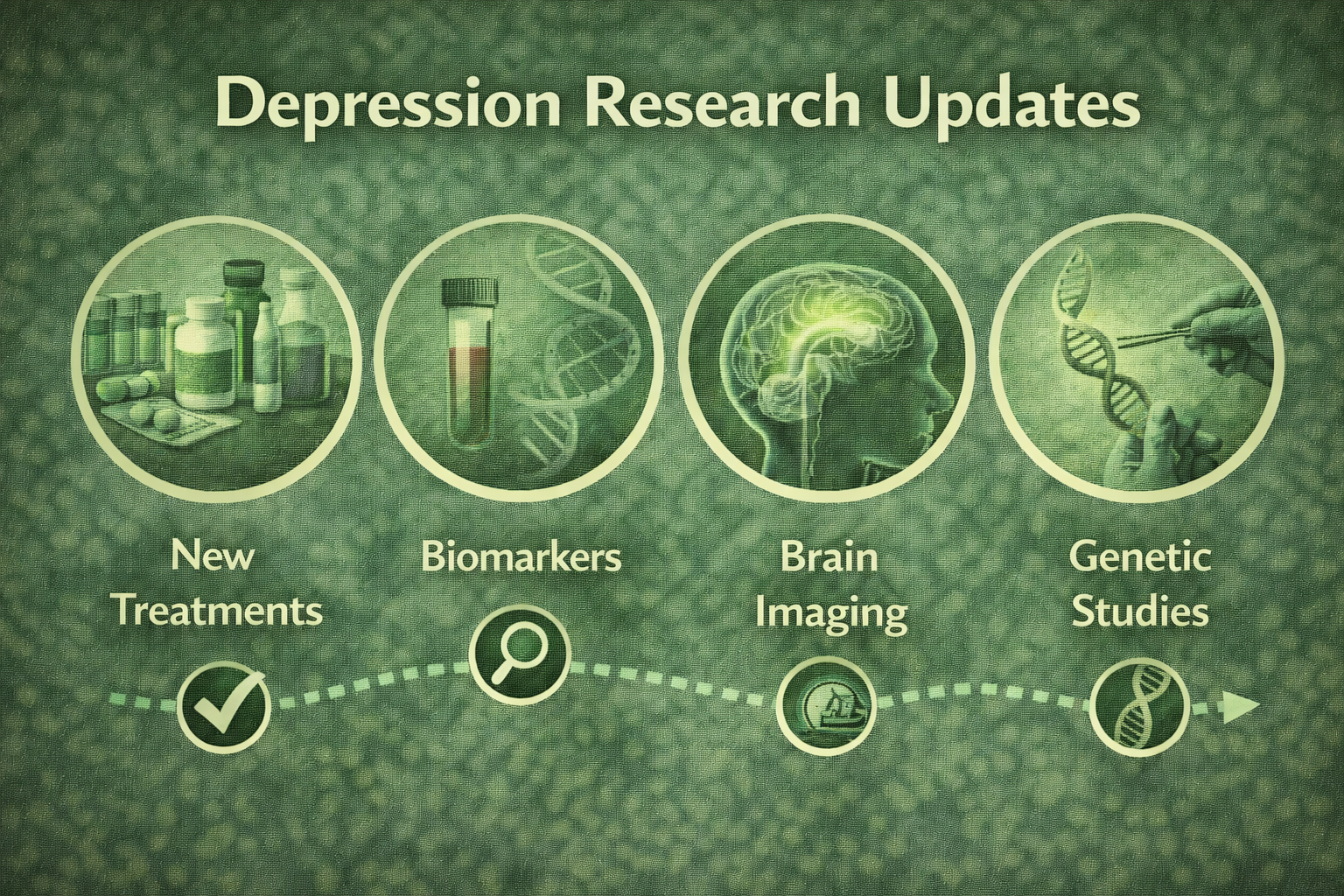
Depression research updates in 2025-2026 reveal exciting progress in understanding this complex mood disorder, which stems from biological, psychological, and environmental roots. Recent FDA approvals and clinical trials emphasize precision medicine, tailoring treatments to individual profiles for better outcomes. These trends aim to address treatment-resistant cases, where traditional approaches fall short.
Latest Depression Treatment Research Overview
Depression is defined as a persistent mood disorder involving imbalances in brain chemicals like serotonin and norepinephrine, often triggered by genetics or stress. Highlighting 2025-2026 trends, the FDA has expanded approvals for rapid-acting therapies, such as esketamine extensions for broader use. Precision medicine integrates genetic testing to predict responses, reducing trial-and-error in prescribing.
Moreover, studies show integrating lifestyle interventions with meds boosts efficacy. For instance, a NIMH-funded trial demonstrated that combining depression care with chronic illness management improved overall well-being.
New Studies on Depression Causes
Stanford research has identified six biological subtypes of depression using brain imaging and machine learning, linking them to distinct causes like cognitive impairments or overactive emotional circuits. Genetic factors play a key role, with a global study of 1.7 million people uncovering 287 risk loci, many novel, influencing gene regulation.
Environmental triggers, such as trauma or pollution, exacerbate onset. CDC data notes rising prevalence, with 13.1% of U.S. adolescents and adults reporting depression in recent surveys. Gallup polls echo this, showing young adults under 30 facing doubled rates since 2017.
Depression Brain Research Updates
Brain signal reversals via repetitive transcranial magnetic stimulation (rTMS) have shown promise in reducing symptoms by targeting deep brain regions. Neuroimaging advancements, like fMRI, help classify depression types, guiding personalized care.
A key finding: Sleep and rest-activity rhythms serve as relapse markers, with irregular patterns predicting higher risks. Actigraphy studies confirm this, linking disrupted circadian rhythms to worsening depression.
Research Shows: A 2024 Stanford study using AI on brain scans identified six depression biotypes, with treatments like TMS proving 79% effective for cognitive subtypes.
Why Do Depression Research Updates Matter for Mental Health?
Staying informed on depression research updates is crucial, as they pave the way for personalized care that can transform lives for U.S. adults aged 25-55 facing this challenge. These insights not only enhance treatment options but also promote prevention through understanding root causes.
Genetic Depression Studies Latest Impacts
Recent genetic studies enable personalized treatments by identifying risk variants, allowing early interventions like targeted therapies. Benefits include reduced relapse rates and better outcomes for at-risk groups.
For USA audiences, this means implications for family planning and workplace wellness, where genetic screening could flag vulnerabilities.
Climate Change Depression Research Relevance
Environmental stressors from climate change, like extreme weather, link to mental health declines, fueling “eco-anxiety.” Studies show increased depression risks in affected areas, emphasizing policy needs for resilient communities.
Personal coping strategies, such as mindfulness, gain importance amid rising eco-anxiety stats.
Gut Microbiome Depression Updates Significance
The microbiome regulates mood via the gut-brain axis, with imbalances tied to depressive symptoms. This matters for holistic approaches, as probiotics may alleviate issues.
Dietary interventions offer potential, shifting focus from meds alone to gut health.
Expert Insight: “The changing treatment landscape demands integrating genetics and environment for true precision,” says Lloyd Minor, MD, from Stanford.
For a broader foundation, see our guide on Signs of Mental Health Issues: Ultimate Guide to Understanding Depression
How Have Recent Depression Medication Updates Evolved?
Recent depression medication updates reflect a shift toward rapid-acting options, evolving from traditional SSRIs to innovative compounds. This progress addresses treatment-resistant cases, offering hope where standard meds fail.
Recent Depression Medication Updates
Traditional SSRIs like sertraline work gradually on serotonin, with 40-60% efficacy. New neuroactive steroids like zuranolone provide rapid relief, approved for postpartum but expanding.
| Medication Type | Mechanism | Efficacy Rates |
| SSRIs (e.g., Sertraline) | Serotonin reuptake inhibition | 40-60% |
| Neuroactive Steroids (e.g., Zuranolone) | GABA receptor modulation | Up to 70% in trials |
| Esketamine | NMDA receptor antagonism | 50-70% for resistant cases |
FDA 2025 approvals include esketamine for pediatrics, enhancing options.
Ketamine for Depression Updates
Intranasal esketamine outperforms rTMS in some studies for rapid relief in resistant depression. Benefits: Symptom reduction within hours.
2026 research explores pediatric applications, showing safety in trials.
Psilocybin Depression Treatment Research
UCSF trials on deuterated psilocin highlight psychedelic therapy’s neural reshaping potential. Ongoing studies report up to 50% remission in resistant cases.
Accessibility improves with FDA breakthrough status for psilocybin-assisted therapy.
Many find success with mental health apps like Calm for adjunct support.
Breakthrough Depression Therapy Research Innovations
New research in depression treatment is bringing non-invasive options to the forefront, giving fresh hope to patients who haven’t found relief through medication.
Breakthrough Depression Therapy Research Highlights
- At-home brain stimulation devices, FDA-approved in 2025, allow self-administered rTMS.
- Deep brain stimulation with closed-loop systems adapts in real-time.
- Music and mindfulness target specific groups, like older adults.
Mindfulness Depression Research Findings
Evidence from Nature Aging links mindfulness to reduced dementia-related depression. Benefits extend to adults, lowering symptoms by 20-30%.
Integration with CBT enhances therapy efficacy.
AI Depression Diagnosis Studies
AI tools detect biomarkers via EEG, predicting relapses accurately. Actigraphy monitors sleep for early warnings.
Tech’s future: Personalized diagnostics via apps.
Pro Tip: Start with 10-minute daily mindfulness sessions; apps like Headspace can guide you seamlessly.
The Impact of Lifestyle on Depression Research Updates
Lifestyle factors in depression research updates underscore their role in symptom management, often rivaling meds in efficacy.
Exercise Depression Link New Studies
Step-by-step: Begin with 10-15 minutes of walking, building to 150 weekly minutes based on adolescent studies adaptable to adults. Benefits: Up to 20% symptom reduction.
UpToDate evidence supports this for all ages.
Diet and Depression Research Updates
Nutritional links explore metformin for mood support. Step-by-step: Add anti-inflammatory foods like berries, nuts; reduce processed items.
Research ties ultra-processed foods to higher depression risks.
Sleep Depression Connection Research
Actigraphy shows sleep irregularity predicts relapses. Steps: Maintain 7-9 hours, consistent bedtime.
Links to overall health emphasize holistic care.
Important: Disrupted sleep can worsen depression; consult a doctor if insomnia persists beyond two weeks.
When Should You Seek Help Based on Depression Research Updates?
Depression research updates guide when to act, preventing escalation.
Signs from Latest Research
- Persistent sadness per CDC stats.
- Genetic or brain factors signaling advanced needs, like subtypes.
Best Practices for Monitoring
Tips: Track sleep via JAMA-recommended apps. Self-assess mood weekly.
Expert Tips on Access
Navigate insurance policies; attend NNDC events for resources.
Schedule a consultation with a mental health professional if symptoms interfere daily.
Scientific Evidence & Research
This section summarizes key studies backing depression research updates.
Clinical Studies
Stanford’s six subtypes guide treatment responses. UCSF psilocin trials show promise in deep brain stimulation.
Expert Opinions
Lloyd Minor notes evolving landscapes. Hope for Depression Research Foundation emphasizes personalization.
Statistical Data
18.3% prevalence in 2025; actigraphy reveals relapse risks.
Common Mistakes to Avoid
Avoiding pitfalls in managing depression enhances recovery.
Mistake #1: Ignoring Lifestyle Factors in Treatment
Problematic as it overlooks gut microbiome research. Better: Integrate diet, exercise, sleep.
Mistake #2: Delaying New Therapy Trials
Misses at-home devices. Approach: Discuss FDA-approved options promptly.
Mistake #3: Misinterpreting Research Stats
Leads to self-diagnosis. Consult experts for context.
Frequently Asked Questions (FAQs)
What are the latest depression treatment research findings?
The latest include FDA-approved at-home brain stimulation and zuranolone for rapid relief. These target treatment-resistant cases, with studies showing improved efficacy over traditional meds. Trials report 70-80% response rates in resistant depression, emphasizing precision approaches. Always consult your doctor before trying new options.
What do new studies on depression causes reveal?
Research identifies six biological subtypes via brain imaging, linking genetics, sleep disruptions, and environmental factors like climate change to onset and relapse risks. A global study found 287 genetic loci, highlighting personalized risks. This shifts focus to holistic prevention.
Are there recent depression medication updates?
Yes, expansions in esketamine for pediatrics and neuroactive steroids offer faster action. Clinical trials compare them favorably to rTMS for resistant depression, with rapid symptom relief in hours. Monitor side effects with your provider.
What is breakthrough depression therapy research focusing on?
Innovations like psychedelic-assisted therapy and AI diagnostics aim at personalized care, with trials showing promise in reshaping brain pathways. Psilocybin achieves up to 50% remission. Future: Non-invasive devices.
How does exercise link to depression in new studies?
Studies confirm exercise reduces symptoms in adolescents and adults, with moderate activity linked to lower anxiety and better mood regulation. Aerobic forms show effects comparable to meds. Start gradually for best results.
What are diet and depression research updates?
Anti-inflammatory diets and gut microbiome links suggest nutritional interventions can support treatment, backed by emerging clinical data. Ultra-processed foods raise risks. Focus on whole foods.
Are there AI depression diagnosis studies advancements?
AI analyzes biomarkers and actigraphy for early detection, improving accuracy in predicting relapses and tailoring therapies. Meta-analyses show high precision. Emerging apps aid monitoring.
Conclusion
From new meds like zuranolone to lifestyle integrations such as exercise and diet, these depression research updates offer hope for effective, personalized management—reducing symptoms and enhancing quality of life. Staying informed empowers better mental health decisions, turning challenges into opportunities for growth.
Discuss these findings with your doctor to explore suitable options. Seek professional help if needed; it’s a sign of strength. With ongoing research, brighter days are ahead—take the first step today.
Medical Disclaimer:
This article is for informational purposes only and is not a substitute for professional medical advice, diagnosis, or treatment. Always seek the advice of your physician or other qualified health provider with any questions you may have regarding a medical condition. If you’re experiencing a mental health crisis, please call the 988 Suicide & Crisis Lifeline or visit your nearest emergency room. For non-emergency support, contact the Substance Abuse and Mental Health Services Administration (SAMHSA) National Helpline at 1-800-662-4357. The content in this article is based on current research and expert consensus as of 2026, but medical knowledge evolves. Always verify information with your healthcare provider.