Imagine feeling overwhelmed by persistent sadness, yet hesitating to speak up due to fear of being labeled “weak” or “unstable”—this is the reality for millions in the USA, where depression affects approximately 18.3% of adults, or about 48 million people, according to recent Gallup data. Depression stigma and society intersect in harmful ways, creating barriers that prevent many from seeking help. This stigma, rooted in misconceptions and cultural norms, leads to isolation, delayed treatment, and exacerbated symptoms, particularly impacting those aged 25-55 who are navigating careers, families, and personal growth.
You may wonder why society still views mental health challenges through a lens of judgment rather than compassion. This article delves into the definitions of depression stigma in society, its profound effects on individuals, how societal factors perpetuate it, and practical strategies to combat it. You’ll gain insights into research-backed approaches, expert tips, and ways to foster change in your community. Drawing from current studies and guidelines from organizations like the American Psychiatric Association (APA) and Centers for Disease Control and Prevention (CDC), this guide empowers you to understand and address this critical issue.
For related reading, see our guide on Signs of Mental Health Issues: Ultimate Guide to Understanding Depression
What is Depression Stigma in Society?
Depression stigma in society refers to the negative attitudes, stereotypes, and discrimination directed toward individuals experiencing depression, often portraying it as a personal failing rather than a treatable medical condition. This stigma discourages open dialogue and help-seeking, perpetuating a cycle that affects millions. Understanding its roots and manifestations is essential for fostering empathy and change.
Reducing Mental Health Stigma in Society – Key Concepts
Stigma involves harmful beliefs that label people with mental illness as dangerous, incompetent, or unworthy of support. Research distinguishes between public stigma, which manifests as societal discrimination like exclusion from jobs or social circles, and self-stigma, where individuals internalize these views, leading to shame and reluctance to seek care. In the USA, historical views have evolved from seeing mental illness as a moral weakness to recognizing it as biological, yet remnants persist due to cultural emphasis on self-reliance.
Studies suggest that education and contact with those affected can challenge these notions. For instance, the APA notes that stigma reduces treatment adherence, worsening outcomes.
Research Shows: A study in JAMA Network Open (1996-2018) found a significant decrease in public stigma toward depression, with reduced social distance in work and family settings.
Social Stigma of Mental Illness – Common Manifestations
Social stigma appears in everyday scenarios, such as employers hesitating to hire someone with a history of depression or media portraying mental illness as violent. Unlike physical health stigmas, like those around cancer, mental health stigma often implies controllability—”just snap out of it.” This leads to discrimination in healthcare, where patients may receive less empathetic care.
In communities, friends might withdraw, fearing contagion or burden. Addressing this requires awareness campaigns to humanize experiences.
Depression in Society Today – Evolving Perceptions
Depression affects over 21 million adults yearly, per CDC estimates, with prevalence rising to 13.1% reporting symptoms in recent surveys. Social media plays a dual role: it can amplify stigma through memes or cyberbullying but also challenges it via advocacy accounts sharing recovery stories.
Younger generations, aged 25-55, show more openness, yet overall, depression stigma in society remains a barrier. Platforms like Instagram have increased visibility, but misinformation persists.
For accompanying reading, please refer to our Adviser on ‘Signs of Mental Health Issues:’ Types of Depression Explained
Why Does Depression Stigma Matter?
Depression stigma in society isn’t just a social issue—it’s a public health crisis that hinders recovery and burdens the economy. By understanding its importance, we can prioritize efforts to dismantle it, improving lives and communities.
Impact of Stigma on Mental Health – Broader Implications
Stigma creates formidable barriers to seeking help, resulting in untreated depression for many. Research indicates this leads to prolonged suffering and higher rates of complications. Economically, untreated depression costs the USA billions annually in lost productivity, with estimates around $333 billion in societal burden.
Moreover, it exacerbates disparities, affecting access to care across demographics.
Mental Health Stigma in America – Cultural Factors
In America, cultural ideals of individualism and self-reliance fuel stigma, portraying depression as a lack of grit. This is pronounced in demographics like ages 25-55, where professional pressures amplify shame.
Disparities exist; for example, minority groups may face compounded stigma due to historical mistrust of healthcare systems.
Expert Insight: According to the APA, “Stigma leads to reduced treatment adherence and worsened symptoms,” emphasizing the need for culturally sensitive approaches.
Stigma Associated with Depression – Long-Term Effects
Long-term, stigma increases suicide risk and comorbidity with conditions like anxiety or substance use. Studies show self-stigma correlates with lower self-esteem and poorer quality of life.
Untreated cases can lead to chronic health issues, straining relationships and finances.
For accompanying reading, please refer to our Adviser on ‘Signs of Mental Health Issues:’ Depression in Different Cultures
The Effects of Depression Stigma on Patients
The toll of depression stigma on patients extends beyond emotional pain, influencing every aspect of life. Recognizing these effects highlights the urgency of change.
Effects of Depression Stigma on Patients – Emotional Toll
Patients often experience heightened shame and isolation, intensifying feelings of worthlessness. This emotional burden can worsen core symptoms like persistent sadness and anxiety, creating a vicious cycle.
Low self-esteem becomes common, as internalized stigma erodes confidence.
Society View on Depression – Interpersonal Challenges
Society’s view often leads to strained relationships, with loved ones withdrawing due to misunderstanding. Social withdrawal follows, deepening loneliness.
Discrimination in employment or healthcare settings adds stress, limiting opportunities.
Important: If stigma is causing severe isolation, consult a healthcare professional promptly, as it may signal worsening depression requiring intervention.
Depression and Social Stigma – Health Outcomes
Social stigma delays diagnosis, reducing treatment adherence and leading to poorer health outcomes. Studies link it to increased suicide risk and comorbidity.
Overall, patients face barriers to recovery, prolonging suffering.
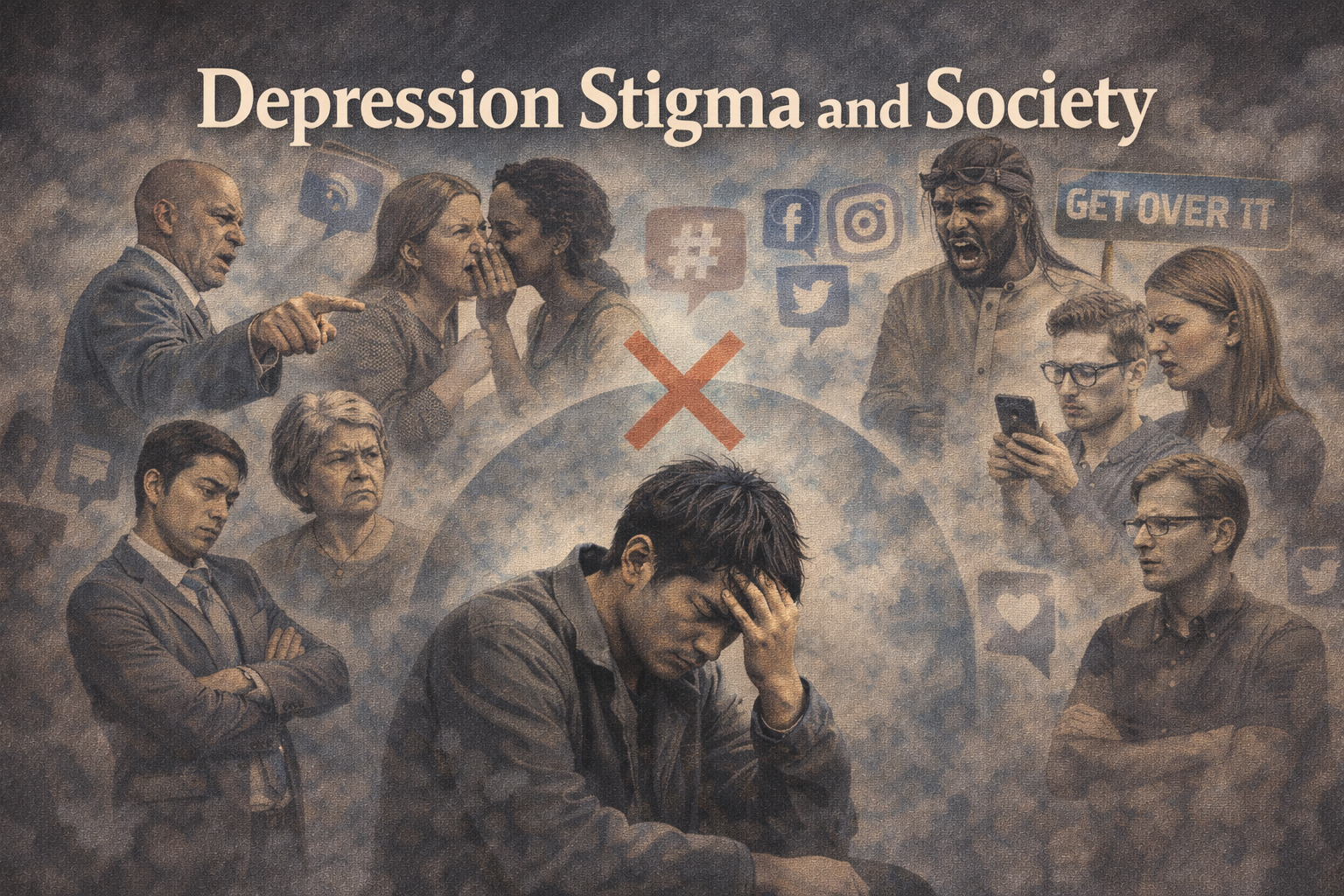
[Illustration alt text: Person facing societal barriers due to stigma]
For strategies, check our article on coping with depression symptoms.
How Society Contributes to Depression Stigma
Society plays a pivotal role in perpetuating depression stigma through media, norms, and systems. Examining these contributions reveals paths to reform.
How Society Contributes to Depression – Media Influence
Media often depicts depression negatively, focusing on extremes like violence, ignoring everyday realities. This lacks positive representation, reinforcing stereotypes.
News sensationalism amplifies fear, deterring open discussions.
Breaking the Stigma of Mental Health – Barriers
Cultural norms emphasizing “toughness” dismiss vulnerability, especially in individualistic societies. Inadequate education in schools and workplaces leaves gaps in understanding.
This fosters environments where stigma thrives.
Fighting Mental Health Stigma – Systemic Issues
Policy gaps, like insufficient mental health parity in insurance, limit access. Systemic biases in healthcare exacerbate disparities.
Advocacy for reforms is crucial.
If you’re seeking support, consider apps like BetterHelp for accessible therapy options.
How to Fight Depression Stigma
Fighting depression stigma requires intentional actions at personal and community levels. Here’s how you can contribute step by step.
How to Fight Depression Stigma – Individual Actions
- Educate yourself using reliable sources like the CDC or APA websites.
- Initiate conversations with trusted friends about mental health to normalize it.
- Share personal stories responsibly, focusing on recovery to inspire others.
These steps build empathy and reduce isolation.
Ways to Reduce Depression Stigma – Community Efforts
Participate in events like Mental Health Awareness Month to raise visibility. Advocate for local policies enhancing mental health resources.
Join support groups to foster inclusive dialogues.
Pro Tip: Use person-first language in advocacy, like “person with depression,” to humanize experiences and shift perceptions.
Overcoming Stigma of Depression – Daily Practices
Challenge stereotypes in daily interactions by correcting misconceptions gently. Practice self-compassion if affected, affirming that seeking help is strength.
Incorporate mindfulness to manage internalized stigma.
[Infographic alt text: Steps for reducing stigma]
Explore our how-to guide on mental health advocacy.
Best Practices and Expert Tips for Addressing Depression Stigma
Implementing best practices can transform how we address depression stigma. Experts recommend starting small for lasting impact.
Reducing Mental Health Stigma in Society – Expert Recommendations
Use person-first language to emphasize humanity over condition. Promote inclusive workplaces with mental health days and training.
These foster supportive environments.
Mental Health Stigma in America – Proven Strategies
Collaborate with organizations like NAMI for community programs. Integrate mental health education into school curricula to build early awareness.
Evidence shows this reduces long-term stigma.
Fighting Mental Health Stigma – Long-Term Approaches
Support research funding to advance understanding. Engage in policy advocacy for better access.
Books like “The Noonday Demon” by Andrew Solomon offer deep insights into depression.
Scientific Evidence & Research
Scientific evidence underscores the pervasive impact of depression stigma and the efficacy of interventions. Key studies provide data-driven insights.
Clinical Studies
A JAMA Network Open study (1996-2018) revealed a significant decrease in stigma toward depression, with reduced social distance in settings like work and family. Another meta-analysis of 97 RCTs on youth interventions showed short-term gains in knowledge and attitudes through social contact and education.
These highlight progress but ongoing needs.
Expert Opinions
The APA states stigma reduces treatment adherence and worsens symptoms. CDC experts note that supportive policies diminish barriers and discrimination.
Statistical Data
An Indiana University study (2006-2018) found stigma toward depression dropped, with fewer people unwilling to interact socially. The Healthy Minds Study reported college depression symptoms at 18% in 2025, tied to awareness efforts.
For more, see NIH studies on mental health and APA resources.
Common Mistakes to Avoid
Avoiding common pitfalls is key to effectively combating depression stigma. Here’s what not to do, and better alternatives.
Mistake #1: Using Stigmatizing Language
This reinforces stereotypes, isolating individuals further. Instead, adopt empathetic terms like “experiencing depression” to promote understanding.
Mistake #2: Ignoring Signs of Stigma in Society
Overlooking discrimination allows it to persist, worsening community outcomes. Actively challenge and educate to create change.
Mistake #3: Assuming Depression is a Personal Weakness
This myth discourages help-seeking and ignores biological factors. View it as a treatable condition, encouraging professional support.
Frequently Asked Questions (FAQs)
What is the impact of stigma on mental health?
Depression stigma reduces help-seeking by creating fear of judgment, leading to untreated symptoms and isolation. Research shows it worsens recovery, with self-stigma linked to lower self-esteem and social difficulties (APA data). Addressing it through education can improve outcomes.
How to fight depression stigma in society?
Start by educating others, using inclusive language, and supporting awareness campaigns. Individual actions like sharing stories and community efforts like policy advocacy can reduce stigma effectively. Consult professionals if needed.
What are the effects of depression stigma on patients?
Patients face emotional tolls like shame, delayed treatment, and strained relationships. Studies indicate increased suicide risk and poorer health outcomes due to societal discrimination. Early intervention mitigates these.
How does society view on depression contribute to stigma?
Society often sees depression as weakness, influenced by media and cultural norms, leading to discrimination and barriers to care for affected individuals. Shifting views requires collective effort.
What are ways to reduce depression stigma?
Promote education, encourage open dialogues, and implement workplace policies. Evidence from interventions shows social contact reduces attitudes and behaviors toward stigma. Community involvement is key.
How can overcoming stigma of depression help individuals?
It fosters better self-acceptance, improves treatment adherence, and enhances social support, leading to faster recovery and reduced isolation. Personal growth follows.
What is mental health stigma in America today?
While decreasing for depression (18% drop in social rejection per IU study), it persists, affecting access to services and quality of life for millions. Ongoing advocacy is essential.
Conclusion
Addressing depression stigma empowers individuals to seek help without fear, improves societal empathy through open conversations, and enhances overall mental health outcomes by reducing isolation and promoting better access to care. By understanding depression stigma and society, we pave the way for a more inclusive USA where mental health is prioritized equally to physical health.
Take a clear next action: Start a conversation about mental health today or seek professional support if you’re struggling. Join a local support group or consult a therapist to begin your journey.
Together, we can break the cycle of stigma and build a supportive community. Remember, seeking help is a sign of strength.
Medical Disclaimer:
This article is for informational purposes only and is not a substitute for professional medical advice, diagnosis, or treatment. Always seek the advice of your physician or other qualified health provider with any questions you may have regarding a medical condition. If you’re experiencing a mental health crisis, please call the 988 Suicide & Crisis Lifeline or visit your nearest emergency room. For non-emergency support, contact the Substance Abuse and Mental Health Services Administration (SAMHSA) National Helpline at 1-800-662-4357. The content in this article is based on current research and expert consensus as of 2026, but medical knowledge evolves. Always verify information with your healthcare provider.