Did you know that an estimated 21 million U.S. adults experienced at least one major depressive episode in 2021, according to the National Institute of Mental Health? Imagine waking up every day feeling an overwhelming sense of emptiness, lacking the energy to tackle simple tasks—it’s a reality for millions, often without them realizing the underlying cause.
Undetected depression affects countless individuals, exacerbating symptoms like persistent sadness, fatigue, and loss of interest in activities. This leads to diminished quality of life, strained relationships, and even physical health complications, with delayed treatment contributing to rising healthcare burdens amid increasing prevalence rates. In the U.S., depression screening tests play a crucial role in bridging this gap, yet many remain unaware of these accessible tools.
In this guide, you’ll discover what depression screening tests are, why they’re essential, popular types like the PHQ-9 and Beck Depression Inventory, how to take and interpret them, best practices, and supporting research. We’ll empower you to recognize when to seek help, drawing from credible sources like the NIMH and CDC to provide evidence-based insights for informed decisions.
Based on current research from leading health organizations, these tools can facilitate early intervention and better outcomes.
What Are Depression Screening Tests?
Depression screening tests are standardized tools designed to help identify potential signs of depression early on. They’re not meant to replace a professional diagnosis but serve as an initial step to flag when further evaluation might be needed. In the U.S., where mental health awareness is growing, these tests are increasingly used in primary care, workplaces, and online platforms to promote proactive health management.
Understanding depression screening tests starts with recognizing their purpose: to catch symptoms that might otherwise go unnoticed. According to experts, early detection through screening can lead to timely interventions, potentially preventing more severe episodes. This guide explores their mechanics and features to help you see how they fit into everyday health routines.
Overview of Depression Screening Tools
Depression screening tools come in various forms, primarily as questionnaires that evaluate emotional, cognitive, and physical symptoms. For instance, they might ask about feelings of hopelessness or changes in sleep patterns. These are standardized to ensure consistency across users.
Importantly, they’re not diagnostic instruments. Instead, they indicate the likelihood of depression, prompting a visit to a healthcare provider. Options include free online versions, clinic-based assessments, or even apps for self-administration.
Many are validated by organizations like the American Psychological Association, making them reliable for initial checks. Availability varies, with some like the PHQ-9 offered in doctor’s offices and others accessible via websites.
How Depression Screening Tests Work
These tests typically assess the frequency and intensity of symptoms over a recent period, such as the past two weeks. Questions cover core depression indicators, including low mood, loss of pleasure in activities, and appetite changes.
Scoring is straightforward: responses are tallied to categorize severity as minimal, mild, moderate, or severe. This helps users gauge their risk level quickly.
Formats differ—self-report tests allow independent completion, while clinician-administered ones involve guided questions for added context. Research suggests this approach enhances accuracy in diverse populations.
Key Features of Effective Screening Tests
Effective depression screening tests boast high sensitivity, detecting most true cases, and specificity, avoiding false positives. This balance ensures they’re useful without causing unnecessary alarm.
They’re also designed for brevity, often taking just 5-10 minutes, which encourages completion. User-friendliness is key, with simple language to suit various education levels.
Validation through clinical studies, like those from the USPSTF, confirms their reliability across age groups and settings.
Research Shows: A meta-analysis in The BMJ found that the PHQ-9, a common screening tool, has 85% sensitivity and 85% specificity at a cutoff of 10 or higher when compared to semistructured interviews.
Why Are Depression Screening Tests Important?
Depression screening tests matter because they can uncover hidden struggles before they escalate. In a fast-paced world, many dismiss symptoms as stress, but screening provides an objective check. This section explains the prevalence, benefits, and broader impact, highlighting why incorporating these tests into routine care is vital for personal and public health.
Prevalence of Depression in the USA
Depression affects a significant portion of the population. According to CDC data from 2021-2023, 13.1% of adolescents and adults aged 12 and older reported depression symptoms in the past two weeks.
Past-year major depressive episodes stood at 8.3% for adults in 2021 per NIMH, impacting 21 million people. Rates are higher among young adults aged 18-25 at 18.6%.
Demographics play a role: females experience it more (10.3% vs. 6.2% males), with elevated figures in multiracial groups (13.9%).
Benefits of Early Detection Through Screening
Early screening prevents depression from worsening into chronic conditions or comorbidities like anxiety. Studies show timely intervention improves recovery rates.
It enhances treatment success, with therapies more effective when started sooner. This reduces long-term disability and boosts daily functioning.
Economically, it lowers healthcare costs by averting hospitalizations. Societally, it decreases productivity losses, estimated in billions annually.
Role in Public Health and Personal Well-Being
The USPSTF recommends depression screening for adults, including pregnant individuals, with a Grade B rating for moderate net benefit. For adolescents aged 12-18, similar guidelines apply.
Screening empowers you to take charge of your mental health, fostering self-awareness and reducing stigma.
In public health, widespread use in primary care can address disparities, ensuring underserved groups get support.
Expert Insight: As a clinical psychologist might note, “Screening isn’t about labeling—it’s about opening doors to resources that can transform lives.”
Popular Types of Depression Screening Tests
Exploring popular depression screening tests reveals a range of options tailored to different needs. From quick self-assessments to clinician tools, these provide accessible ways to check symptoms. We’ll compare key ones, including their structures and uses, to help you understand which might suit you best.
PHQ-9 Depression Screen
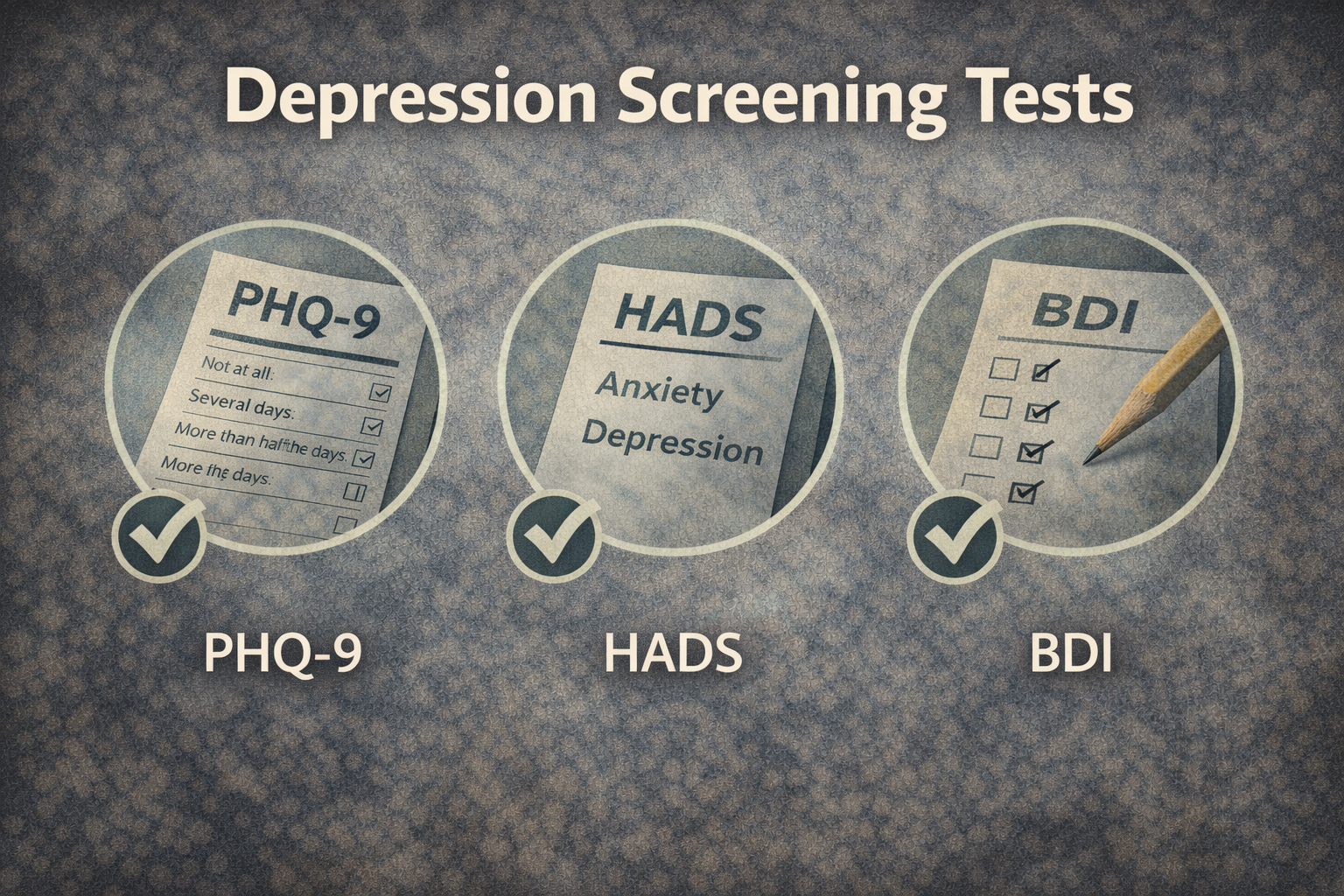
The PHQ-9 is a nine-question tool based on DSM-5 criteria for major depression. It evaluates symptoms like fatigue and concentration issues over two weeks.
Scores range from 0-27: 0-4 minimal, 5-9 mild, 10-14 moderate, 15-19 moderately severe, 20-27 severe. A score of 10 or higher often signals the need for further assessment.
It’s free, quick, and commonly used in primary care. Validated extensively, it’s ideal for adults.
Beck Depression Inventory Online
The Beck Depression Inventory (BDI) is a 21-item self-report scale measuring depression severity. It covers cognitive symptoms like guilt and physical ones like weight loss.
Scoring: 0-13 minimal, 14-19 mild, 20-28 moderate, 29-63 severe. It’s validated for adults and teens, with online versions available.
Endorsed by the APA, it’s reliable for tracking changes over time.
CES-D Depression Scale
The Center for Epidemiologic Studies Depression Scale (CES-D) has 20 questions focusing on emotional symptoms over the past week. It’s suited for general population screening.
Scores: 0-60, with 16 or higher indicating possible depression. It emphasizes feelings like loneliness.
Useful in research and community settings, it’s free and straightforward.
For related reading, see our guide on Signs of Mental Health Issues: Depression Myths Debunked
Other Options Like Zung Depression Scale Test and Hamilton Depression Rating Scale
The Zung Self-Rating Depression Scale is a 20-item self-test assessing symptom frequency. Scores: under 50 normal, 50-59 mild, 60-69 moderate, 70+ severe.
The Hamilton Depression Rating Scale is clinician-administered with 17-21 items for monitoring treatment progress.
Other tools include the Major Depression Inventory for DSM alignment and free PHQ-9 online variants.
| Test | Questions | Focus | Best For |
| PHQ-9 | 9 | DSM-5 symptoms | Primary care |
| BDI | 21 | Cognitive/physical | Adults/teens |
| CES-D | 20 | Emotional | General population |
| Zung | 20 | Frequency | Self-rating |
| Hamilton | 17-21 | Severity | Clinical monitoring |
How to Take a Depression Screening Test
Taking a depression screening test is simple and can be done at home or in a clinic. This step-by-step guide ensures accuracy and safety. Remember, it’s a starting point—professional input is key for any concerns.
Choosing the Right Online Depression Screening Tool
Select validated tools like the free online depression test via PHQ-9 from reputable sites such as the NIMH or APA.
Consider your age group: adults might use the adult depression assessment test, while teens benefit from a teen depression screening test like adapted PHQ-9.
Check for privacy policies and ease of use to ensure a comfortable experience.
Step-by-Step Process for Self-Test for Depression Symptoms
- Find a quiet, distraction-free space to focus on your responses.
- Answer questions honestly about the past two weeks, rating symptom frequency from “not at all” to “nearly every day.”
- Calculate your score as instructed; note if it indicates moderate or higher severity.
- Retake after a week if results vary, but don’t over-rely on one session.
When to Involve a Professional
If your score suggests depression, consult a doctor or therapist promptly. Symptoms like suicidal thoughts require immediate help—call 988.
Avoid self-diagnosis; professionals can rule out other causes like thyroid issues.
Use the test as a conversation starter during appointments.
Pro Tip: Pair screening with a mood journal to track patterns, providing more context for your healthcare provider.
For related reading, see our guide on Signs of Mental Health Issues: Clinical Depression vs Sadness
Interpreting Results from Depression Screening Tests
Interpreting results from depression screening tests requires care to avoid missteps. Scores offer insights but aren’t definitive. This section breaks down what they mean and next steps, emphasizing professional guidance.
Understanding Scores on Quick Depression Quiz Online
Low scores (e.g., PHQ-9 under 5) suggest minimal symptoms—continue monitoring your mood.
Moderate scores (10-14) indicate possible depression; lifestyle adjustments like exercise might help, but watch for persistence.
Always contextualize with your overall health.
What High Scores Mean for Symptoms of Depression Quiz
High scores (PHQ-9 15+) signal a need for clinical evaluation, potentially major depression.
Factors like medications or grief can cause false positives, so don’t panic.
Research suggests screening accuracy improves with follow-up assessments.
Next Steps After a Depression Self Assessment Tool
Discuss results with a healthcare provider to explore causes and options like therapy or medication.
Consider cognitive behavioral therapy, shown effective in studies.
Track symptoms and seek support networks.
Important: If results show severe symptoms or thoughts of harm, seek emergency care immediately—screenings aren’t substitutes for professional diagnosis.
Best Practices for Using Depression Screening Tests
Best practices ensure depression screening tests yield reliable insights. Use them thoughtfully, integrating into your health routine. This section offers tips for accuracy and effectiveness.
Tips for Accurate Adult Depression Assessment Test
Be honest in responses to capture true symptoms—denial can skew results.
Reflect on answers without rushing; consider recent life events.
Combine with lifestyle tracking, like sleep logs, for a fuller picture.
Integrating Into Routine Health Checks
Follow USPSTF guidelines: screen annually if at risk, like postpartum or elderly individuals.
Make it part of check-ups, especially for chronic illness patients.
For teens, incorporate during school physicals.
Expert Recommendations
Experts advise combining screenings with clinical interviews for depth.
Track changes over time to spot trends, aiding treatment adjustments.
Use validated tools only, avoiding unverified apps.
Include LSI like free PHQ9 test online in discussions with providers.
For related reading, see our guide on Signs of Mental Health Issues: Ultimate Guide to Understanding Depression
Scientific Evidence & Research
Scientific evidence underscores the value of depression screening tests. Studies from reputable sources affirm their role in early detection. This section reviews key findings, expert views, and data.
Clinical Studies
A BMJ meta-analysis reported PHQ-9 sensitivity and specificity at 85% for detecting major depression.
JAMA reviews indicate screening interventions reduce depression prevalence odds by 40% (OR 0.60).
USPSTF evidence shows moderate net benefit for adult and adolescent screening.
Expert Opinions
The APA endorses tools like the BDI for reliable screening, noting its utility across ages.
USPSTF states evidence supports depression screening but notes insufficient data for suicide risk alone.
Experts emphasize integration with care management for best outcomes.
Statistical Data
CDC data shows depression prevalence rose from lower rates in 2013-2014 to 13.1% in 2021-2023 for ages 12+.
NIMH reports 20.1% past-year prevalence in teens, highlighting the need for screening.
Common Mistakes to Avoid
Avoiding common mistakes with depression screening tests prevents misinformation. Awareness leads to better use. Here are key pitfalls and corrections.
Mistake #1: Relying Solely on Screening Without Follow-Up
Screens aren’t diagnoses—they miss subtleties like co-occurring conditions.
This is problematic as it delays proper care, worsening symptoms.
Better: Always follow up with a professional for comprehensive evaluation.
Mistake #2: Ignoring Contextual Factors in Results
Medical issues like anemia can mimic depression, leading to inaccurate interpretations.
It causes unnecessary worry or overlooked real problems.
Better: Share full health history with your doctor for accurate context.
Mistake #3: Delaying Action on Positive Results
Procrastination allows symptoms to intensify, impacting life quality.
It worsens outcomes, as early treatment is more effective.
Better: Seek support immediately through hotlines or appointments.
Frequently Asked Questions (FAQs)
What is a free online depression test?
A free online depression test, like the PHQ-9, is a brief questionnaire evaluating symptoms over two weeks to gauge severity. It’s accessible on sites like NIMH but isn’t a formal diagnosis.
These tools help identify risks quickly, often taking minutes. However, results should prompt professional consultation if elevated. Research suggests they’re reliable starters for mental health discussions.
How accurate is the PHQ-9 depression screen?
The PHQ-9 offers 85% sensitivity and specificity for major depression detection, per meta-analyses. It’s effective in primary care settings.
Accuracy varies by population, but it’s validated widely. Follow with expert evaluation to confirm. Studies show it outperforms less structured methods.
Can I take a Beck Depression Inventory online?
Yes, the Beck Depression Inventory is available online for self-assessment, measuring severity via 21 questions. High scores indicate potential need for help.
It’s APA-endorsed and user-friendly. Use from credible sources, then discuss results medically. Validated for adults and teens.
What is the difference between CES-D depression scale and Zung depression scale test?
The CES-D emphasizes weekly emotional symptoms for general screening, while Zung focuses on symptom frequency via self-rating. Both are effective but differ in scope.
CES-D suits community use; Zung for personal tracking. Choose based on needs, consulting professionals for interpretation.
When should I take a teen depression screening test?
Teens should take a screening if experiencing persistent sadness, withdrawal, or academic drops. Adapted tools like PHQ-9 aid early detection, with 19.2% prevalence in 12-19-year-olds per CDC.
It’s crucial amid rising rates. Parents, encourage open talks and professional follow-up if scores concern.
Is a major depression inventory test reliable?
Yes, the Major Depression Inventory is reliable for assessing severity and DSM criteria. It’s validated in studies for accurate symptom capture.
Use alongside expert input for best results. It’s helpful for monitoring but not standalone.
How do I interpret a symptoms of depression quiz?
Scores on a symptoms of depression quiz indicate risk: low means minimal issues, high suggests evaluation. Direct thresholds vary by tool.
Always discuss with healthcare providers. Contextual factors matter; it’s a prompt, not a verdict.
Conclusion
Depression screening tests offer a powerful way to spot issues early, potentially halting progression and enhancing daily life through timely support. By understanding tools like the PHQ-9 and Beck Inventory, you gain accessible means to assess risks, leading to informed choices that foster resilience and well-being.
These depression screening tests democratize mental health awareness, making it easier to prioritize your emotional health without stigma.
If your screening suggests concerns, reach out to a mental health professional today—it’s a step toward clarity and recovery.
Take a free test now and commit to your mental health journey. Remember, seeking help is a strength, and resources abound for a hopeful future.